Editorial Note: This article explores cultural lifestyle inspiration in an editorial way. It does not claim to represent every woman, country, region, or personal experience. WorldsLadies avoids stereotypes and presents these ideas as gentle, adaptable lifestyle reflections.
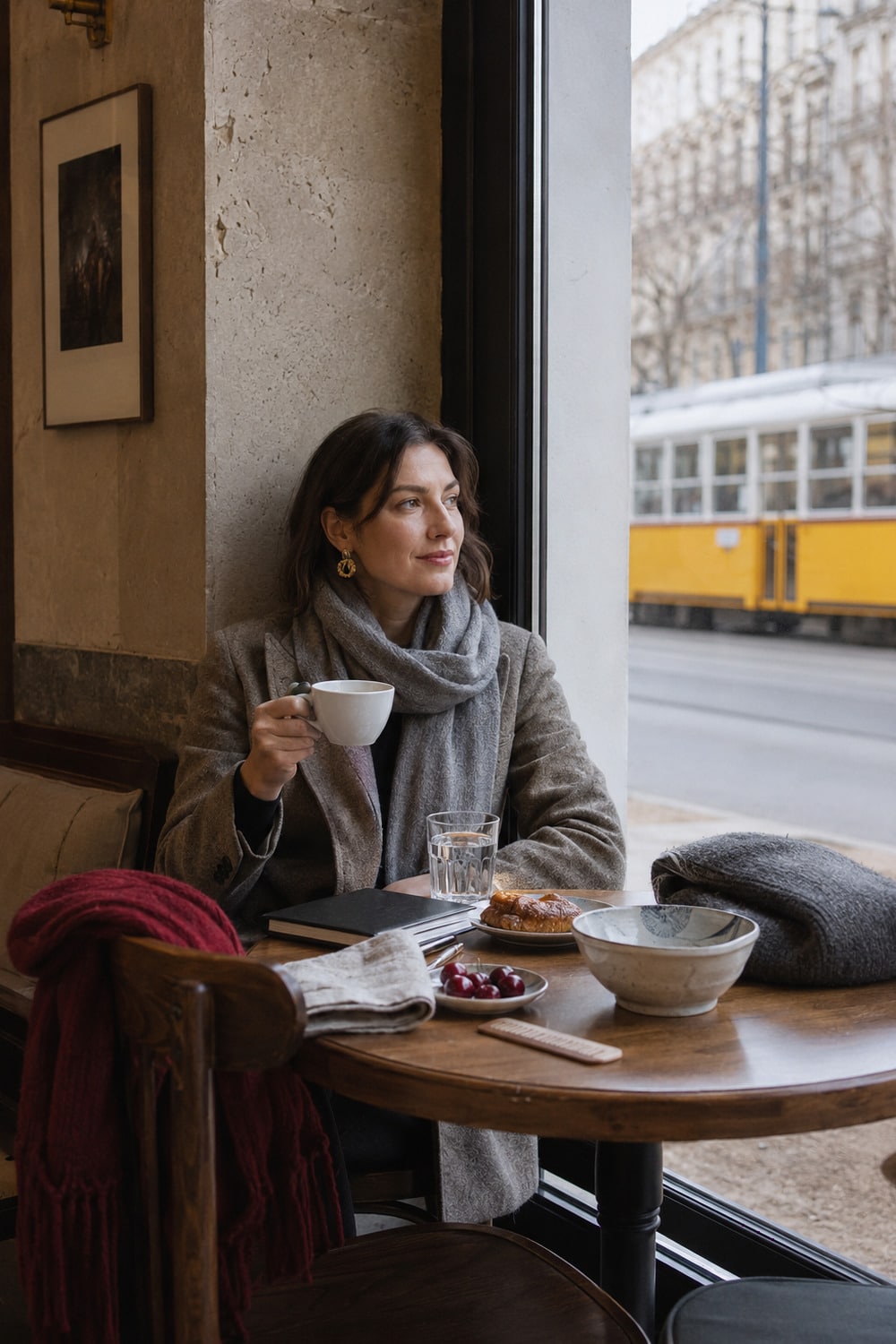
At a marble-topped table in central Pest, a morning coffee can sit beside a notebook while trams move along the Grand Boulevard outside. Later, the same day might include a practical stop at a market, a warm pool in City Park, or a museum visit on Dózsa György Road. These Budapest heritage rituals form a focused study of lifestyle heritage because each one joins an inherited setting to an ordinary present-day task.
The focus here is Budapest from the late nineteenth century to the present, with older bathhouse layers included only where they remain visible in specific buildings. Café interiors, bathing routines, textiles, table details, and grooming are examined through named places and collections. They are not evidence for a single Hungarian lifestyle, and the capital cannot stand in for Hungary’s regions, households, or individual preferences.
The practical question is how to notice material care without turning heritage into costume. In Budapest, that means separating a historic room from the way it is used now, a museum textile from a mass-produced motif, and a public bath from a private spa fantasy. The result is a quieter editorial approach to lifestyle heritage, built around timing, texture, maintenance, and clear limits.
Key Takeaway: Budapest offers a useful study in carrying historic settings into daily life through careful use, seasonal timing, and material restraint.
Lifestyle Heritage at the Café Table
Budapest’s grand coffeehouses belong to particular buildings and periods. Centrál opened on Károlyi Street in the late nineteenth century, while the New York Café occupies the ground floor of an 1890s insurance palace on Erzsébet Boulevard. Their high ceilings, marble tables, mirrors, and chandeliers once supported long hours of writing, editing, conversation, and eating. Today, several restored rooms serve a visitor-heavy trade, so the historic interior and the current social pattern should not be treated as identical.
That difference changes what a Budapest café routine can reveal about lifestyle heritage. The transferable element is not gilding or a staged pastry photograph; it is a table arranged for a complete pause. In a Pest café, the furniture gives the cup, glass of water, coat, book, and conversation a defined place. At home or in a modest local café elsewhere, the same principle can be kept with an uncluttered surface, one drink served properly, and enough time to finish a page without balancing everything on a moving commute.
Contemporary Budapest also includes smaller specialty cafés and cultural venues that do not reproduce the grand-room model. Offbeat Budapest notes that many surviving historic coffeehouses now draw tourist-heavy crowds, while newer places answer different needs. This prevents the café chapter from becoming a frozen city image. A useful routine can move between an ornate room, a neighbourhood counter, and a library table, with the choice guided by purpose, price, noise, and the amount of time available that day.
Bathhouse Time in Buda and City Park
Budapest’s public bathing landscape is not one uniform tradition. Rudas carries a sixteenth-century Ottoman core with an octagonal pool; Széchenyi opened in City Park in the early twentieth century with indoor and outdoor pools; Gellért’s tiled complex opened in 1918. Their plans, rules, temperatures, and crowds differ. The shared lesson for lifestyle heritage is therefore procedural: arrive with the required towel and footwear, read the posted guidance, shower before entering, and build pauses between warmer spaces instead of treating the visit as a beauty performance.
Season changes the experience materially. Steam above an outdoor City Park pool in cold weather produces a different rhythm from crossing sunlit paving in summer, while an early visit can feel unlike a crowded afternoon. No medical benefit needs to be claimed. The relevant practice is the protected interval created by lockers, changing rooms, water, and rest areas. A private adaptation might be a warm shower followed by dry clothes and an unhurried drink, but it should preserve the sequence of preparation and recovery rather than borrow bathhouse imagery or promise therapeutic results.
Textiles as Regional Records Not Decorative Shorthand
The Museum of Ethnography’s textile and costume collection makes a crucial distinction visible: pattern varies widely across the Carpathian Basin, and the holdings represent only a fraction of that variation. Most pieces date from the nineteenth and twentieth centuries, while many are fragments saved because they preserve embroidery or woven decoration. Within this study of lifestyle heritage, a floral border, colour combination, or stitched cuff belongs to a documented object, place, period, and collecting history; it is not a free-floating sign for “Hungarian style.”
That museum limit is useful in a wardrobe. A plain wool coat worn on a windy Budapest street does not need an applied folk motif to feel connected to place. Material weight, a repaired button, a scarf chosen for temperature, and shoes suited to tram platforms are stronger functional references. Where a patterned object is purchased, maker information and regional attribution matter more than visual resemblance. Without that context, a simplified print can collapse several distinct traditions into one decorative label.
Across the Danube in Buda, the Museum of Hungarian Applied Folk Art holds work in embroidery, weaving, pottery, carving, and other folk crafts. Its public workshops emphasize process, raw material, tools, and the knowledge of makers. That setting supports a different form of appreciation: watch how an object is constructed, learn what its material can do, and notice how contemporary function changes the design. The point is not to reproduce a museum piece at home but to understand why a basket bends, a felt surface insulates, or a woven edge needs a particular finish.
Research on Hungarian applied folk art also shows that new functions and modern categories have been debated within the field itself. That matters for lifestyle adaptation because it removes the false choice between exact copying and complete detachment. A contemporary object can acknowledge a craft lineage while serving a new use, provided its maker and context remain visible. For an everyday reader, the safest response is modest: buy fewer objects, ask who made them, and avoid assigning symbolism that the institution or maker has not documented.
Grooming Details in a Working City
Budapest’s daily transitions place practical demands on grooming. Hair and skin move between heated interiors, dry winter air, summer pavement, tram windows, and humid bathhouse changing rooms. In this working-city view of lifestyle heritage, maintenance comes first: a comb in the bag, a small hand cream, clean nails, and a scarf that can protect hair or neck without becoming a heritage prop. These details answer the city’s conditions instead of suggesting that residents share one beauty ideal.
A bathroom shelf can stay equally specific and restrained. A clean brow routine and soft side part hair fit this Budapest setting when they reduce preparation before a café meeting, museum afternoon, or evening tram ride. The connection is functional: tools are easy to store, the result survives a coat collar, and the routine can be refreshed without turning a public bath, historic interior, or regional textile into cosmetic branding.
Texture also belongs to clothing care. Brushing lint from a dark coat, drying leather away from a radiator, and folding a scarf before it goes into a crowded tote protect the materials that appear repeatedly in Budapest’s cool-season streets. In warmer months, lighter cotton or linen may replace wool, while the same maintenance principle remains. The city reference lies in climate, transit, and repeated indoor-outdoor movement; it does not depend on a prescribed palette, face, body, or level of formality.
A Table Built Around Pastry and Season
The Great Market Hall’s iron structure and food counters create a different public rhythm from the grand café. Shopping begins with what can be carried, stored, and used, while upstairs food service and surrounding streets make the market part of a working route. A Budapest-inspired table makes lifestyle heritage useful when it follows that practical order. Start with seasonal fruit, bread or pastry, one serving dish, and a cloth that can be washed. Paprika, cherries, porcelain, or cake should appear only when they belong to the meal, not as a catalogue of national symbols.
Café pastry offers another lesson in portion and presentation. At Gerbeaud or Centrál, a slice arrives on a plate with a fork, water, and enough table space to eat it slowly; the surroundings may be elaborate, but the service is legible. At home, a small plate and a properly cleared corner can retain that clarity. The meal does not need matching antiques. A chipped family cup, a contemporary ceramic bowl, or a plain linen napkin can work when each object has a job and the table remains usable after the photograph is gone.
Carrying Budapest References Without Imitation
The strongest progression through Budapest moves from observation to use. A café shows how a table holds attention; a bathhouse shows how preparation frames rest; a museum collection shows why pattern needs provenance; a market shows how objects serve food and movement. Together, they make lifestyle heritage legible through linked city practices, not personality traits. They can guide decisions about time, storage, clothing care, and hosting while remaining attached to the exact institutions and streets that made the observation possible.
That boundary also helps when reading nearby lifestyle features. Austrian women lifestyle, Danish women lifestyle, and Swedish women lifestyle each work through different places, materials, and public settings. Placing them beside Budapest should sharpen differences in evidence and function, not produce a ranking of national taste. A coffeehouse in Pest, a Copenhagen interior, and a Stockholm design reference remain separate cases even when a reader is interested in all three.
For practical adaptation, keep the least theatrical part of each Budapest observation. Use the café’s clear table layout without copying its gilded interior. Keep the bathhouse sequence of preparation and rest without making wellness claims. Choose a contemporary craft object with a named maker instead of a generic folk-style print. Dress for the city’s temperature and transit rather than for an imagined national look. This approach leaves room for budget, disability, climate, housing, and personal preference while preserving the source setting.
Final Thought
In these Budapest heritage rituals, lifestyle heritage becomes most useful when materials and limits remain visible. The marble café table, tiled bathhouse, museum textile, market plate, and brushed winter coat each solve a different urban task. Carrying those functions forward creates a grounded daily practice without asking one city, one institution, or one visual style to represent Hungary or its people.
References and Further Reading
- The Essential Guide to Budapest’s Thermal Baths
- A Local’s Guide to Budapest, Hungary
- Budapest city guide: Where to eat, drink, shop and stay in the Hungarian capital
- Budapest city guide: what to do, plus the best bars, restaurants and hotels
- Collection of Textiles and Costumes
- Museum
- Reviving Authenticity through Traditional Crafts and Folk Art in Hungary
- 6 Historic Coffeehouses in Budapest
Related Reading