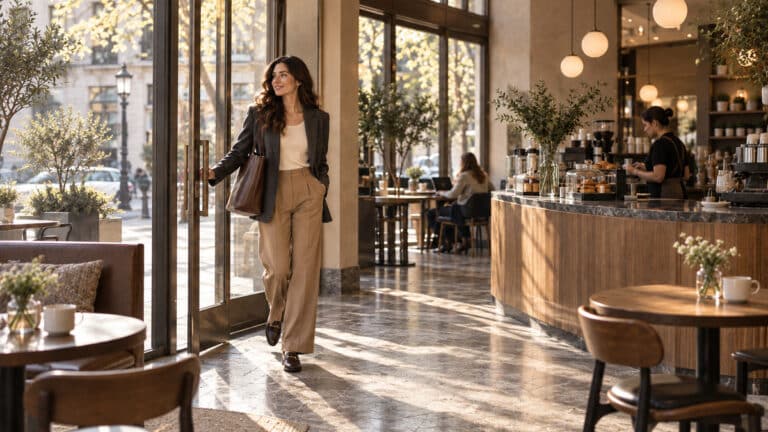
Editorial Note: This lifestyle article is for general editorial inspiration only. It is not financial, medical, legal, travel, safety, or professional advice. Adapt every idea to your personal needs, budget, culture, location, and circumstances.
Late-summer evenings create an awkward wardrobe interval: the light still feels warm, yet dinner may continue after the temperature drops. Chocolate satin style suits that interval because the brown reads grounded while the surface catches enough light to feel ready for evening.
The most useful starting point is not a fixed outfit formula. It is the part of the evening that asks the most from your clothes: a long walk, a seated dinner, an outdoor table, or a room with strong indoor lighting. That choice tells you where satin belongs and how much structure the rest of the outfit needs.
A skirt, shirt, camisole, dress, or small bag can each carry chocolate satin style, while the wider logic of satin outfits still depends on placement. Shine near the face feels luminous; shine through a long skirt creates movement; a satin bag gives a quiet finish without changing the comfort of the clothes.
Key Takeaway: Choose one satin focal point, then use matte layers, practical shoes, and the evening light to decide the rest.
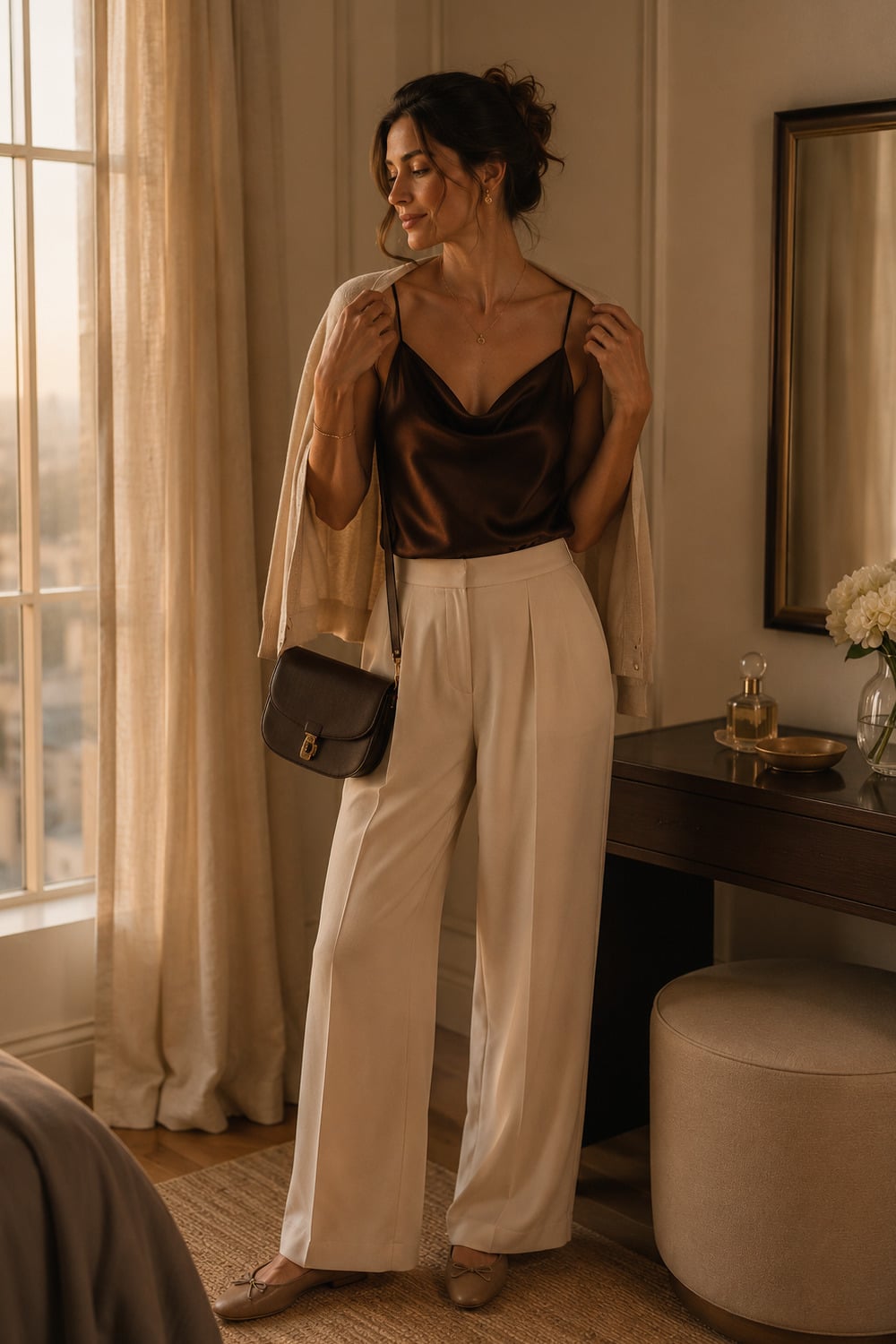
Chocolate Satin Style Starts With the Evening
For a mostly seated dinner, a bias-cut skirt or slip dress can take the lead because movement and walking comfort are less demanding. For a gallery visit, city drinks, or an evening that includes public transport, a satin shirt or camisole is often easier: the glossy surface stays visible while the lower half can be built around shoes you already trust.
Use a short movement check before leaving. Sit, walk, reach for a bag, and look at the outfit from the side. Satin can draw attention to any area where fabric pulls or folds, so a slightly looser shirt, a skirt that releases cleanly over the hip, or a slip dress with room through the stride may look calmer than a closer fit.
This is also the point to decide whether chocolate satin style must work before sunset. A chocolate blouse with straight trousers can move from daytime into dinner with a jewellery change, while a full-length slip dress may need a layer or different shoe to feel natural earlier in the day. The best choice among late summer evening outfits is the one that survives the whole plan and still looks right in the final photograph.
Chocolate Brown Changes With the Light
Chocolate brown can appear redder, cooler, or almost black depending on the fabric and lighting. Check the piece beside the clothes you plan to wear, first near a window and then under indoor light. Cream and ivory usually make the brown look warmer; pale blue can sharpen it; black gives stronger contrast. If your wardrobe already leans toward espresso brown style, keep a small difference in texture or tone so the outfit does not flatten into one dark block.
A tonal outfit works best when the surfaces are distinct. A matte cocoa knit over a fluid chocolate skirt gives the eye two separate layers, even when the colours are close. If the satin itself has a copper cast, muted rose or soft gold can echo it; if it looks cooler, taupe, charcoal, or silver-toned details may sit more quietly.
Matte Layers Give Satin a Clear Shape
Chocolate satin style needs a boundary when the silhouette is very fluid. A ribbed cotton tank defines the top edge of a skirt, a washed linen shirt creates a straighter shoulder line, and a compact cardigan shows where the waist begins. These pieces do not compete with the shine, so the satin remains visible without making the whole outfit look glossy.
Layer length matters. With a midi skirt, a jacket that ends near the waist keeps more of the skirt line open; a longer blazer can work when it falls cleanly and does not bunch at the widest point. Over a slip dress, an unbuttoned shirt gives light coverage while preserving the vertical line. A belted layer changes that line completely, so test it from the side as well as the front.
For evenings that cool quickly, the practical ideas in light jacket outfits fit naturally here. Carry the layer instead of building the outfit around wearing it all night. A soft trench, collarless jacket, or fine cardigan should still make sense when it is folded over a chair or placed on your shoulders.
There is a trade-off between softness and definition. Pairing satin with another fluid fabric creates a relaxed, continuous line, but it can also read like occasionwear or sleepwear. One firmer element—a crisp shirt collar, structured bag, narrow belt, or clean jacket seam—usually gives enough separation.
Proportion Matters More Than Exact Matching
When a fuller piece carries chocolate satin style, keep the neighbouring shape simple. A fuller skirt sits well with a close but not tight top; a relaxed satin shirt benefits from straighter trousers or denim; a narrow slip skirt can take a boxier knit. The aim is to preserve one readable outline instead of letting every layer drift away from the body.
Placement changes emphasis. Tucking a camisole fully into high-rise trousers creates a clear waist, while leaving a satin shirt loose makes the surface itself the focus. With a slip dress, try the outer layer at two lengths: one that ends above the hip and one that falls below it. The stronger option leaves the dress line uninterrupted and avoids an awkward cut across the body.
Shoes Decide How Formal the Satin Feels
Choose shoes by walking distance before choosing them by mood. Slim sandals or low mules suit a short route and a dressier setting. Ballet flats, low-profile trainers, or a soft closed-toe shoe make more sense when the evening includes uneven pavements, standing, or a longer journey home.
The shape of the shoe matters more than whether it is technically casual. A broad, heavy sole can make a narrow satin skirt feel top-heavy, while a lower-profile shape follows the skirt’s movement. The comfort-led logic behind ballet sneaker style is useful when you want a graceful line without relying on heels.
Try the shoes with the final hem length. A skirt that looks balanced in bare feet may sit differently over a flat, mule, or trainer. Check whether the hem clears the ground, whether the shoe disappears completely, and whether you can take a normal stride without holding the fabric.
Denim and Accessories Set the Finish
Denim is the simplest way to make chocolate satin style feel casual during the day or at an informal dinner. A chocolate satin shirt with straight jeans keeps the shine above the waist; a satin skirt with a white tank and denim jacket puts it below. The seasonal logic in transitional denim outfits also works here: keep the denim weight appropriate for the temperature and let the brown introduce the first hint of autumn.
Accessories should answer a practical need before adding another reflective surface. A structured shoulder bag steadies a soft skirt, a small clutch suits a seated evening, and tortoiseshell or dark brown frames repeat the colour without creating more shine. If the satin sits near the face, earrings can stay small; if the satin is below the waist, a warmer earring or bracelet can carry the brown upward.
For a casual version, stop after one glossy focal point. Denim, cotton, suede-effect texture, or a fine knit gives the outfit enough contrast. For a dressier version, a second highlight can be small and controlled—a satin mule, metallic clasp, or pearl earring—so the look still has a clear centre.
Final Thought
Chocolate satin style is most useful in late summer when it is treated as a light-responsive surface, then grounded by the route, temperature, and amount of movement the evening will require.
References and Further Reading
- Yes, You Can Wear Black in the Summer—7 Chic Outfit Formulas to Try
- Pajama Dressing 101: Sleepwear Styling at Its Finest
- How to Style a Slip Skirt in 2025: 10 Chic Ideas
- 7 Satin-Skirt Outfits to Re-Create in Summer 2025
Related Reading