Editorial Note: This lifestyle article is for general editorial inspiration only. It is not financial, medical, legal, travel, safety, or professional advice. Adapt every idea to your personal needs, budget, culture, location, and circumstances.
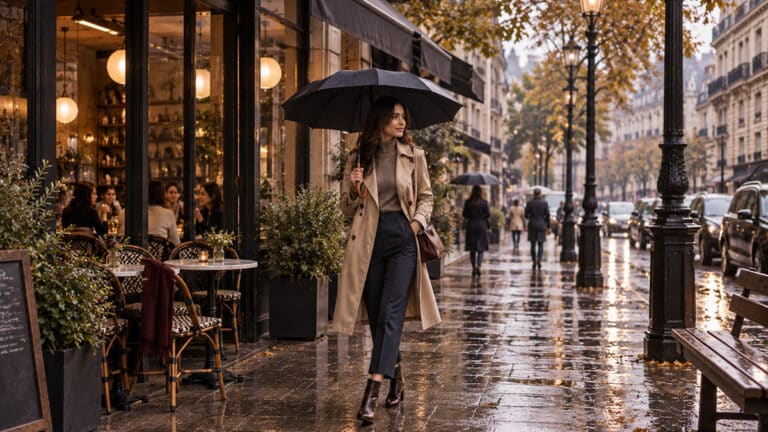
An August plan can begin in bright afternoon heat and end on a shaded terrace, a breezy platform, or beneath strong restaurant air-conditioning. For anyone deciding what to wear on August evenings, light jacket outfits are most useful when the layer answers that change without making the daytime outfit feel as though autumn arrived early.
That calls for a more precise decision than simply choosing the thinnest layer in the wardrobe. Length affects a dress or trouser silhouette, lining changes how easily a jacket folds over an arm, and hardware can make a light fabric feel visually heavy.
Light jacket outfits work best when the base look can stand alone and the extra layer has one clear job: add coverage, sharpen the shape, or handle a change of setting.
Key Takeaway: Choose the lightest jacket that suits the evening setting, then match its length and visual weight to the outfit underneath.
Light Jacket Outfits Begin With the Evening Plan
Begin with where the last part of the day will happen, because summer evening outfits may need to handle more than one setting. A short walk to dinner may need only a cotton blazer carried over the arm, while an outdoor concert or waterfront table may justify a closer collar and sleeves that stay comfortable when rolled down. Indoor plans can create the opposite problem: the street is warm, but the cinema, office, or restaurant feels cool. That is why light jacket outfits should be chosen around the last setting rather than the first temperature.
Next, decide whether the jacket will be worn for ten minutes or most of the evening. A piece that spends hours on the body needs room through the shoulders and enough ease over the base top. A just-in-case layer should be easy to fold, drape, or hold without leaving the rest of the outfit awkwardly incomplete.
This small planning step also prevents buying a jacket for one imagined occasion. A summer-to-fall capsule wardrobe is more useful when the lightest layer works with several existing August outfits before it is asked to serve cooler weather.
Proportion Starts With the Hemline
Look first at the strongest horizontal line in the outfit. A cropped jacket can keep the waist visible above wide trousers or a full midi skirt, while a longer, softly cut blazer can calm a narrow column dress or straight denim. With shorts or a mini dress, check the back view as well as the front; a jacket ending at almost the same point as the hem can look accidental unless the two shapes clearly relate.
These are working guidelines, not fixed rules. The best test is movement: sit, reach for a bag, and walk across the room with the jacket open and closed. That practical check keeps end of summer style anchored in clothes that still look coherent once the evening is underway.
Different Jackets Solve Different Styling Problems
A lightweight blazer gives definition to a soft tank, slip dress, or relaxed trouser. For August, an unlined or lightly constructed version usually sits more easily than dense office tailoring. Soft shoulders and sleeves that can be pushed back keep the jacket connected to summer and prevent the base outfit from looking underdressed.
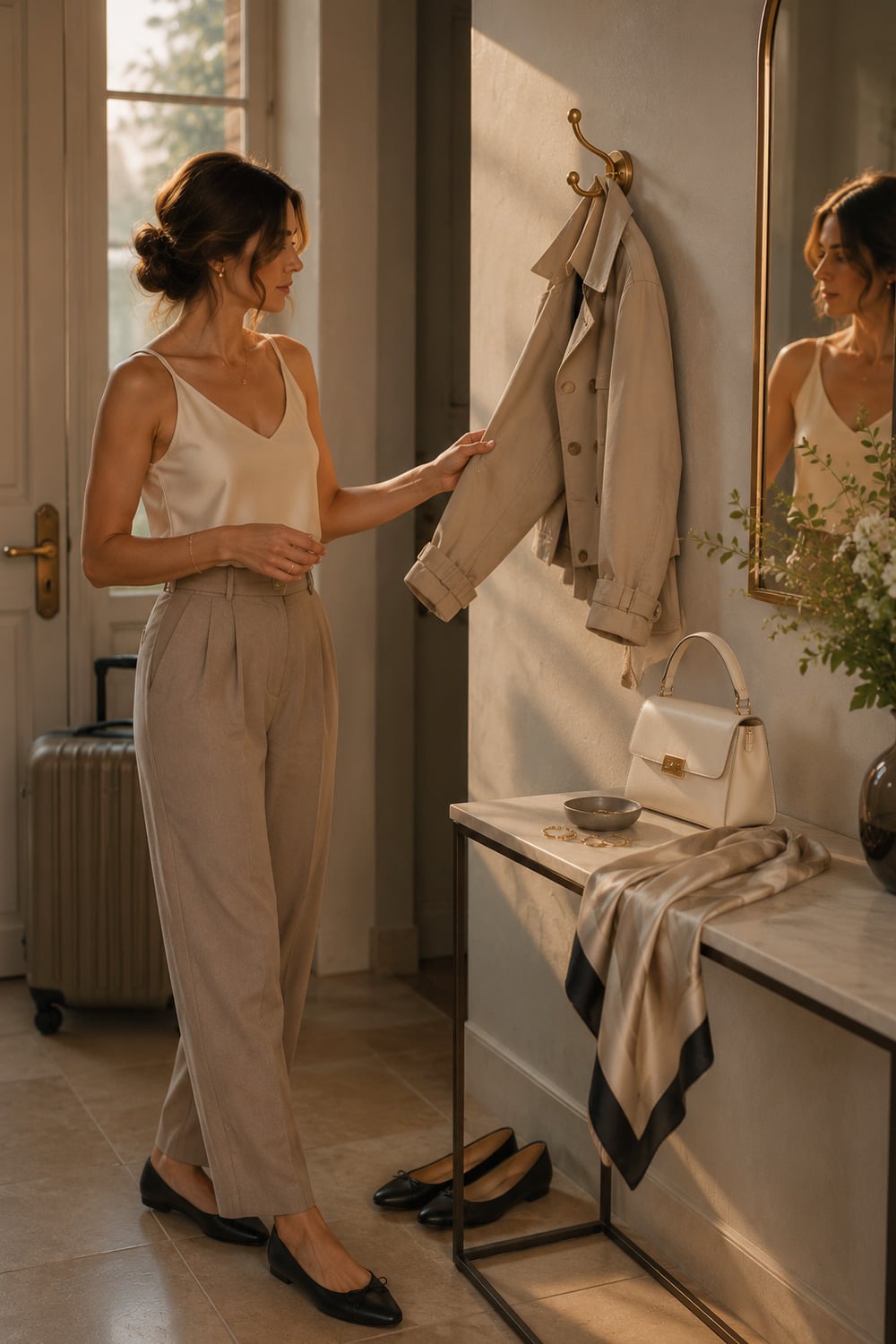
A cropped trench or simple technical shell has a different purpose. It suits evenings when the route matters as much as the destination, especially when there may be wind or a brief change in weather. Keep the fabric flexible and the details restrained so the layer can sit over a dress, denim, or tailored shorts without turning the outfit into outdoor gear.
Denim and utility jackets give light jacket outfits a more casual edge through texture. They are most convincing beside a cleaner or softer base, such as a plain cotton dress, fluid skirt, or fine knit tank. If the jacket has large pockets, contrast stitching, or prominent hardware, reduce competing detail elsewhere instead of trying to match every element.
A tailored vest can cover the visual role of a jacket when warmth is barely needed. Worn open over a ribbed top or sleeveless dress, it adds a vertical line without trapping the arms. Existing ideas around modern vest style become more useful here when the vest is treated as an evening layer instead of formal suiting.
Fabric Weight Matters More Than Season Labels
Jacket fabric weight is best judged through touch and construction. Lift the sleeve, check whether the lining runs through the whole body, and notice how much space the jacket occupies when folded. Linen blends, fine cotton twill, soft denim, and fluid woven fabrics can all work, but the name on the fibre label does not reveal the full wearing experience; weave, lining, cut, and hardware change how substantial a jacket feels.
Colour affects visual weight too. Ivory, stone, faded blue, olive, and pale grey often sit naturally beside late-summer fabrics, yet a dark jacket can be just as suitable when it is lightly made and the base leaves some skin or airy fabric visible. The aim is continuity with August, not a compulsory neutral palette.
Small Repeats Make the Jacket Look Deliberate
A layer feels connected when one detail appears elsewhere in the outfit. The repetition can be quiet: tortoiseshell buttons echoed by a brown sandal, silver hardware picked up by earrings, or the jacket colour returning in a bag strap. One repeat is usually enough to stop the jacket looking borrowed at the last minute.
Accessories should support the layer without competing with its collar, pockets, or fastenings. A clean cuff leaves room for a bracelet; an open neckline can hold a stronger earring; a plain blazer can carry one sculptural piece. The examples in statement ring style are easiest to use when the rest of the hand and wrist remain simple.
Before adding anything new, edit the pieces already waiting near the door. An August wardrobe reset can reveal that the missing link is not another jacket but a bag, shoe, or scarf that helps an existing layer belong to more than one outfit.
A Jacket Should Work After It Comes Off
Build the base of light jacket outfits without the jacket first. Check the neckline, bra coverage, straps, and waistband under ordinary indoor light, because the layer may come off as soon as you sit down. This also answers the common summer concern about overheating: the jacket should be removable without leaving a base look that feels unfinished or unsuitable for the setting.
Then rehearse the practical details. Carry the jacket with the bag you plan to use, make sure sleeves do not trail when it is folded over an arm, and notice whether a belt, hood, or loose fastening becomes bothersome. A five-minute trial at home often identifies the layer that looks right in a mirror but is inconvenient through a real evening.
Final Thought
The strongest light jacket outfits allow an August evening to change course: the base remains complete in warm air, and the jacket adds exactly the coverage or structure the later setting requires.
References and Further Reading
- These Cool Girl-Approved Summer Jackets Won’t Ruin Your Outfit
- 12 Chic Jacket and Summer Dress Pairings That Elevate Your Look
- The Best Lightweight Jackets For Summer 2026
- 8 Simple Summer Outfits That Look So Elegant
Related Reading