Editorial Note: This lifestyle article is for general editorial inspiration only. It is not financial, medical, legal, travel, safety, or professional advice. Adapt every idea to your personal needs, budget, culture, location, and circumstances.
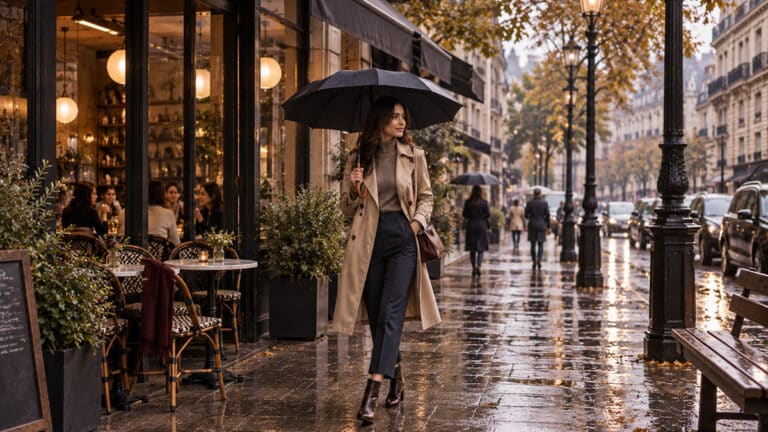
August can ask one outfit to cope with a bright walk at lunchtime, a cold office or shop, and dinner after the light has softened. End of summer style starts with that changing day, not with pretending autumn has already arrived.
The useful pieces are often already in the wardrobe: a dress that works with two shoe choices, trousers that leave room for air, a shirt that can be worn or carried, and accessories with enough presence to sharpen a simple base. End of summer style becomes easier when each addition solves a real condition.
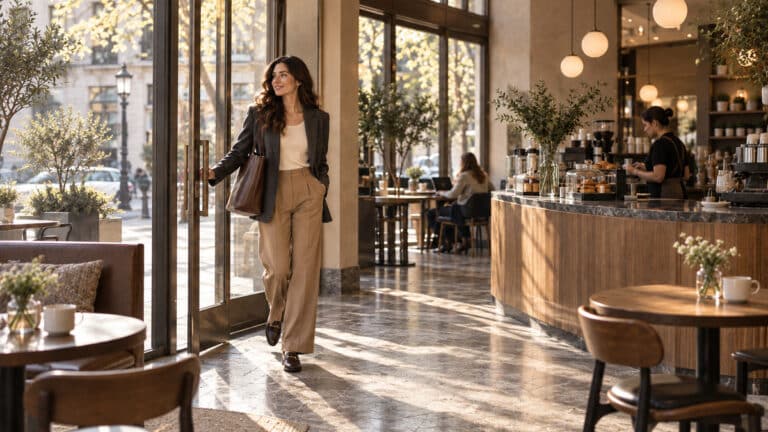
This approach keeps late summer outfits ready for work, errands, travel across town, and cooler evenings without losing the colour and ease of August. It also avoids the common late-season trap of buying heavy pieces that will sit unworn until the weather actually changes.
Key Takeaway: Dress for the warmest part of the August day, then add one portable layer or finishing detail for the hours around it.
End of Summer Style Starts With the Day Ahead
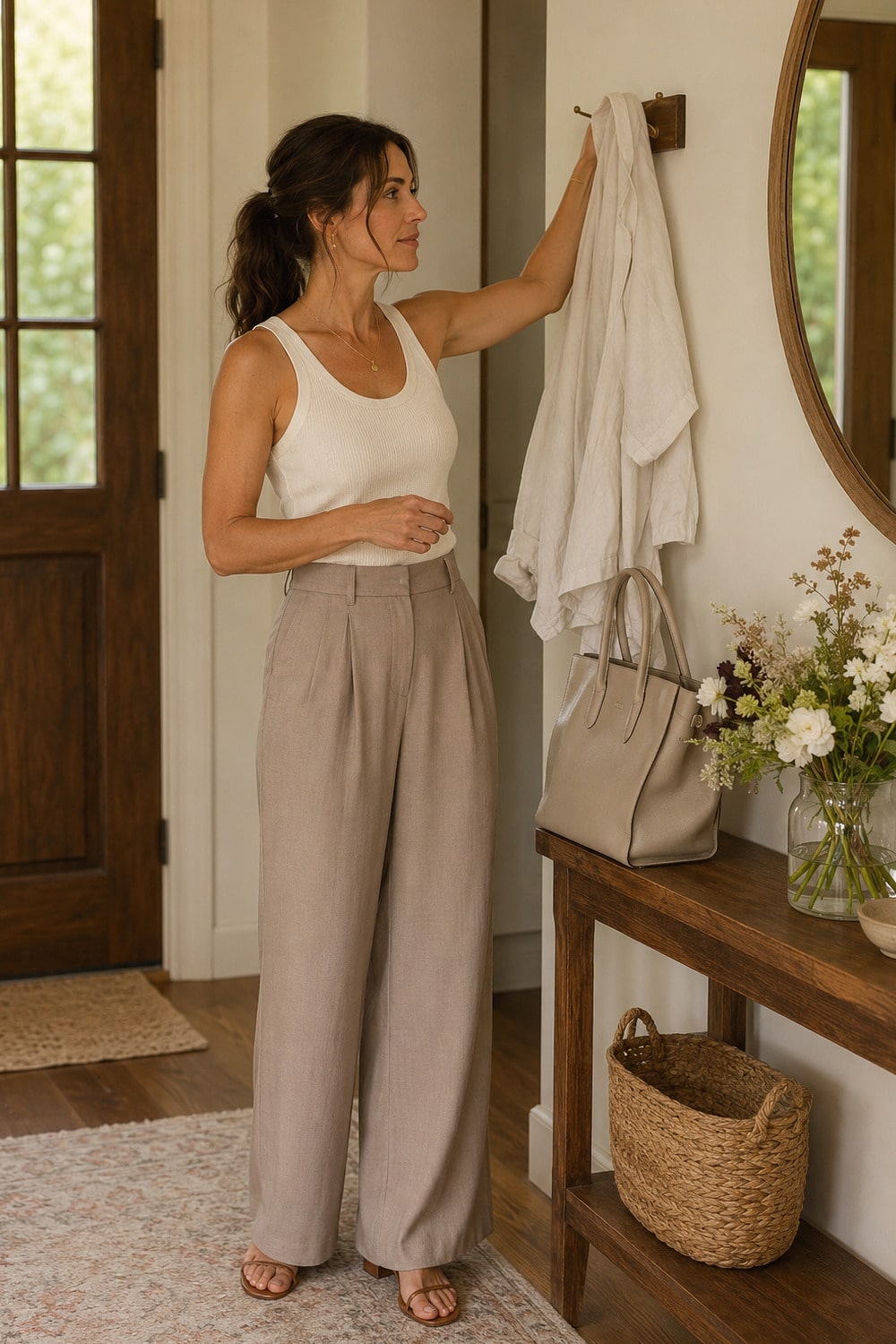
Begin with the least flexible part of the day. A long outdoor walk, a formal meeting, a warm commute, or an evening table outside will influence the outfit more than the date on the calendar. Choose the base for the hottest or most active period, because a layer can be added later but a heavy foundation is difficult to correct once you are out.
A sleeveless dress, a cotton skirt with a close-fitting top, or wide trousers with a light shirt can anchor end of summer style. Light summer layers should have a clear job: coverage in air conditioning, warmth after sunset, or extra structure for work. If one cannot be folded over an arm, tied neatly, or carried in your usual bag, it may be too demanding for the day.
A waistcoat or sleeveless jacket can define the line of a simple top without trapping as much heat as a full jacket. The proportions in modern vest style are especially useful when the base is fluid, such as a slip skirt or wide-leg trouser, and the outfit needs a cleaner edge.
A Summer Base With One Seasonal Shift
The clearest version of end of summer style changes one part of a summer outfit at a time. Keep the sundress and exchange raffia for smooth leather; keep the sandals and add a fine cardigan; keep the white shirt and move from bright shorts to tobacco, navy, or olive trousers. Changing colour, texture, coverage, and footwear all at once can make an August outfit feel heavier than the weather requires.
That single-shift rule also answers the practical question of what to wear in August. It is summer clothing adjusted for a particular day, not a separate wardrobe category. A linen shirt over a tank may be enough for a cool train. A dark flat with a pale dress may be enough for dinner. The point is range, not seasonal costume.
Colour That Belongs to Both Sides of August
Late August colour helps end of summer style feel grounded while the outfit still looks believable in strong sun. Ivory, faded blue, shell pink, pale olive, and sand can remain at the centre, while one deeper shade gives the look more weight. Navy, chocolate, oxblood, forest green, and warm tan can do this without turning the whole outfit dark.
Use the deeper colour where the outfit needs definition. A navy belt can break up an ivory column. Brown loafers can ground a pale skirt. A burgundy bag can give a white dress enough contrast for an evening setting. When the day is very hot, keeping the darker shade to a small area prevents the visual mood from becoming heavier than the clothes feel.
On grey, breezy, or damp days, reverse the proportion. Start with denim, navy trousers, or a muted dress, then keep the top, shoe, or bag lighter. This still reads as August because the fabric weight and amount of skin remain seasonal, even when the palette is quieter.
There is no required list of August colours. The useful test is whether the shade already connects with at least two pieces you wear in summer and one piece you expect to wear later. A caramel bag that works with white linen now and a charcoal knit later earns more use than a colour chosen only because it looks transitional in a photograph.
Accessories Carry the Change When Layers Cannot
On days when even a cardigan feels excessive, accessories can supply the sharper line. Choose one visible point of focus and let the rest support it. A firm belt gives shape to a loose shirt dress; a sculptural frame changes the expression of a plain tank and trousers; a ring can bring interest to a bare-arm outfit without adding warmth.
The strongest choice depends on where the outfit already has detail. A printed dress may need only simple shoes and one ring. A quiet column of cream or black can take a stronger belt or sunglasses. The ideas in statement ring style, statement belt style, and sculptural sunglasses style work best when one of those elements leads rather than all three competing.
Shoes keep end of summer style practical when they match the actual route. Flat leather sandals suit heat and walking; ballet flats or loafers add coverage for a cooler indoor day; a low slingback can move a familiar dress toward dinner. Looking polished in hot weather usually comes from a clean fit, an uncrumpled focal piece, and footwear that belongs to the setting, not from adding more clothes.
The Outfit Test Before You Buy Anything
Try the outfit through four moments before deciding that the wardrobe has a gap: standing outside at midday, sitting in the coldest indoor space, walking for the longest part of the day, and staying out after sunset. A look does not have to be ideal in every moment, but it should have a simple adjustment. That might be opening the shirt, changing the shoe, or carrying a light layer.
If several outfits fail for the same reason, the missing piece becomes clear. Perhaps every dress needs a flat closed shoe, or every work outfit needs a layer that fits in a tote. A brief edit with the August wardrobe reset can reveal that pattern before a general search for “transitional clothes” leads to purchases that solve no specific problem.
Real Life Changes the Formula
An office dress code may make long shorts impractical even when the weather suits them. A school run or long commute may rule out delicate shoes. A restaurant terrace may call for a layer that would be unnecessary indoors. Build the outfit around the condition that cannot be negotiated, then keep the other elements light enough to adjust.
Fabric opacity, movement, and fit matter as much as the fibre name. A pale skirt that becomes transparent in bright light, trousers that cling after sitting, or a vest that pulls across the back will not become more useful because the colour looks right for late summer. Check the garment in daylight and move in it before relying on it for a full August day.
There is also no need to force boots, leather outerwear, or thick knits into warm weather to make an outfit feel current. In a cooler spell, those pieces may be comfortable; in sustained heat, the same seasonal signal can come from a darker bag, a closed flat, or a crisp shirt. The best formula is the one that still feels sensible halfway through the day.
Final Thought
End of summer style feels resolved when the outfit respects the heat and anticipates one real change in the day. Keep the summer base, solve the cold room or evening with a portable answer, and let colour or accessories carry only as much seasonal weight as the weather can support.
References and Further Reading
- 13 Pre-Fall Trends to Transition Your Wardrobe Into Next Season
- 15 Summer-to-Fall Transitional Outfit Ideas to Copy in 2025
- It’s True: Fashion People Will Basically Live in These 7 Outfits This August
- 6 Chic Transitional Outfits To Bookmark For The Office
Related Reading