
Editorial Note: This lifestyle article is for general editorial inspiration only. It is not financial, medical, legal, travel, safety, or professional advice. Adapt every idea to your personal needs, budget, culture, location, and circumstances.
Statement ring style is tested beyond the mirror, where a sculptural ring can become annoying ten minutes later when it presses against a neighbouring finger, catches on a knit cuff or knocks against a mug. The useful question is not simply whether the ring is bold. It is whether the shape belongs in the movements that make up your day.
Good statement ring style starts with that practical fit, then uses scale, colour and the rest of the outfit to make the ring look deliberate. A wide metal dome, a coloured resin shape and a high-set stone do different jobs, even when all three are large enough to draw attention.
The aim is not to make every outfit quieter. It is to decide where the visual energy should sit. Some looks need one ring and almost nothing beside it; others can support a small stack because the clothes, nails and nearby accessories are already restrained.
Key Takeaway: Strong statement ring style comes from matching the ring’s scale to your hand, its profile to your day and nearby jewelry to one clear focal point.
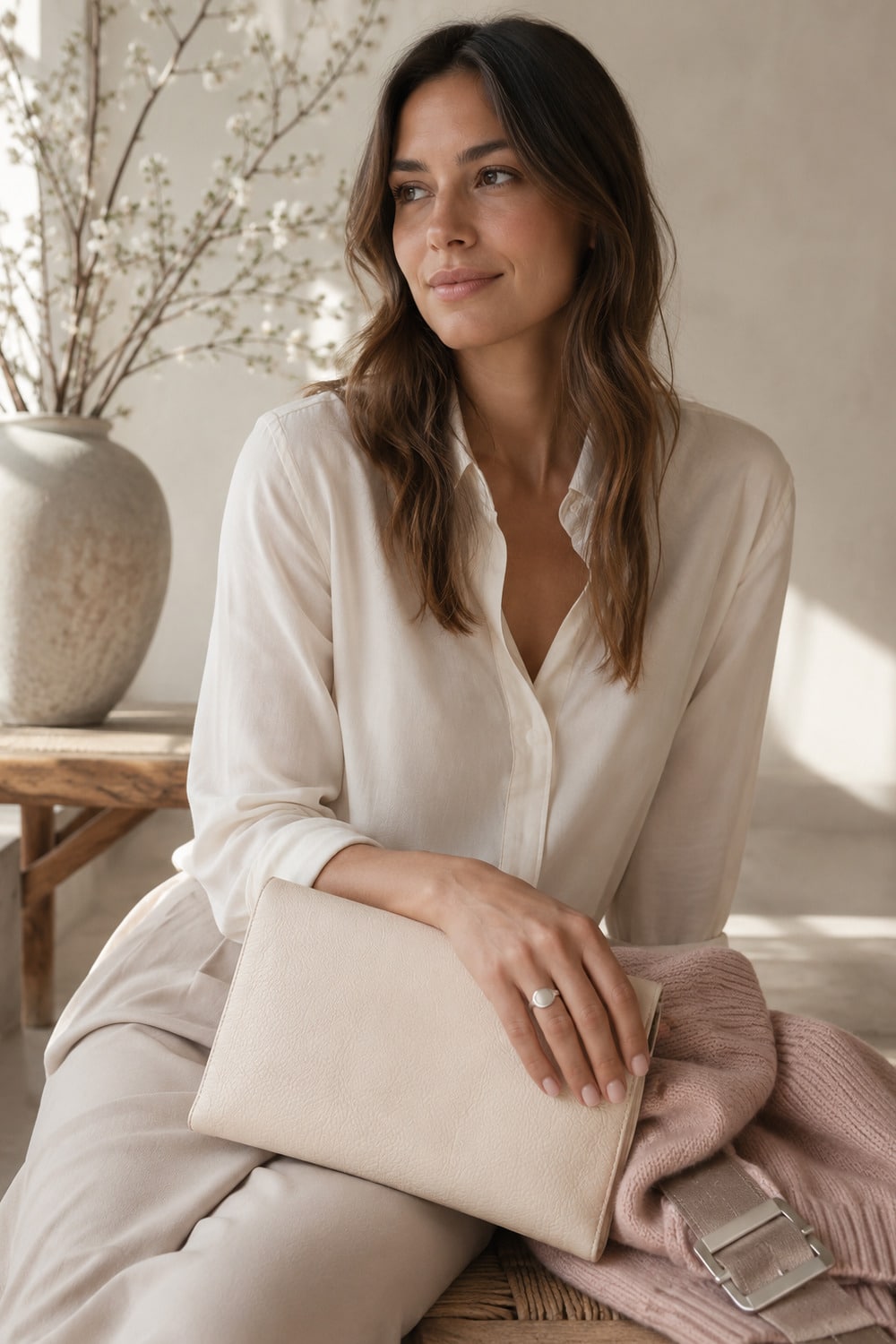
Statement Ring Style Starts With Wearability
Start by looking at the ring from the side. A low, rounded profile usually moves more easily under coat sleeves and beside bag handles than a tall setting or a shape with projecting corners. Width matters too: a broad band can feel secure on one finger yet crowd the fingers beside it on another. The same ring may be comfortable on the index finger and intrusive on the middle finger.
Before buying or committing to a full day, do a movement check. Hold your phone, type a short message, lift a cup, close a zip and curl your fingers around a bag handle. Notice pressure points, spinning and any edge that meets another finger. This quick rehearsal grounds statement ring style in a moving hand, which answers the everyday question more honestly than an open, still pose.
A large ring can work for ordinary outfits when it passes that test. Save taller, sharper or more delicate designs for periods when your hands will be relatively quiet, and choose smoother shapes for commuting, office work, errands or long meals. This rotation follows activity and does not assign bold jewelry to evening.
Your Hand Changes the Scale
Hand proportions change statement ring style from one person to another. A compact signet may read as bold on a narrow finger, while a larger organic band can look calm on a broader hand. Check the ring with your fingers relaxed and slightly apart. If the design appears to swallow the finger, try moving it to the index or middle finger, where there is more visual space around it. A pinky placement makes even a smaller shape feel pointed and intentional.
Nail length changes the picture as well. Short, softly shaped nails give a chunky ring a clean edge; longer nails add another strong line and may suit a simpler metal surface. Elaborate nail art is not required. The useful choice is whether the manicure should repeat the ring’s colour, soften it with a neutral or stay nearly bare so the shape remains dominant.
The Outfit Needs One Clear Echo
A bold ring settles into an outfit when one distant detail repeats its metal, curve or colour. Keep that echo away from the hand: a small hoop, a belt buckle, a bag clasp or the hardware on a shoe is enough. Repeating every feature makes the styling look literal; repeating one feature makes the ring feel connected.
Clean tailoring gives everyday ring styling a clear background. The open lines of modern vest style leave the hands visible, while monochrome summer outfits let a sculptural surface or coloured stone become the main interruption. Neither outfit needs to match the ring exactly.
Texture can guide statement ring style when colour does not. A brushed silver ring beside crisp cotton feels sharper; the same ring with a soft knit looks more relaxed. A glossy resin ring can provide contrast against matte linen. These pairings make the ring part of the clothes’ material story instead of an accessory added after the outfit is finished.
Color Works Best With a Boundary
For a coloured ring, choose the boundary before choosing the match. You might keep the whole outfit neutral, repeat the ring in one small accessory or place it beside a neighbouring shade such as amber with olive, cobalt with denim or burgundy with brown. The boundary prevents the colour from spreading across the look without purpose.
A ring with resin, enamel or a bright stone can share an outfit with colorful bead jewelry, but give the two pieces different roles. Let the ring hold the strongest colour and keep the beads tonal, or reverse that arrangement and choose a metal ring with a quieter stone. When both pieces compete in size and colour, the hand loses its focal point.
A Stack Still Needs a Lead Ring
A single substantial ring and a deliberate signet stack can both work, but they organize the hand differently. British Vogue’s 2026 forecast highlighted the single statement piece, while its spring runway report featured stacked signet rings. In either case, the eye should still identify which ring leads.
For ring stacking, begin with the widest or most distinctive ring and add only pieces that change the rhythm. A narrow band can create breathing room; a second signet can add a different height; a mixed-metal band can connect gold and silver already present elsewhere. Several rings of equal width and equal shine tend to merge into one heavy block.
Spacing often makes statement ring style easier to read than adding another ring. Leave one finger bare between a large index ring and a smaller ring on the opposite side of the hand, or keep the statement ring alone on one hand and place a slim band on the other. That open space preserves movement and makes the arrangement easier to read.
If you prefer one ring, there is no need to create a stack for variety. Change the finger, turn a signet face inward for part of the day or pair the ring with a different sleeve length. The same piece can shift character without buying a second focal point.
The Ring Has to Survive the Day
Plan statement ring style around the moments when the ring is most likely to be inconvenient. A wide dome may be comfortable while typing but awkward under fitted gloves. A high stone may catch on a fine sweater. A ring that spins can become distracting during a meeting or meal. Remove it for any task where impact, snagging or repeated contact makes the design impractical, and store it in a consistent place instead of a loose pocket.
Hands do not need a showroom finish. A sheer manicure or soft chrome nails can reflect a metal ring without copying it, while glazed peach nails soften silver, gold and coloured resin. Keep the nail shape compatible with your routine so the hand looks cared for without adding another source of fuss.
The final check is the full accessory line. If the ring already has colour, height and shine, a simple belt may be enough; if the ring is a smooth metal form, statement belt style can carry the stronger motif at the waist. Let only one of them dominate. The outfit will still feel complete when the other detail stays quiet.
Final Thought
A statement ring earns everyday wear when its shape suits your hand in motion and the rest of the outfit gives that shape a clear place to be seen.
References and Further Reading
- Why I’m Embracing the Power of the Statement Ring
- Addressed: A Guide to Layering Jewelry
- The 11 Best Everyday Rings, According to Jewelry Experts
- After Decades Of Minimalism, Layered Jewellery Is Back—Here’s How To Wear It Now
- The 5 Major Jewellery Trends The Experts Are Backing For 2026
- The 7 Jewellery Styling Tricks To Steal From The Spring Catwalks
Related Reading