
Editorial Note: This beauty article is for general editorial inspiration only. It is not medical advice, dermatology advice, diagnosis, treatment, or professional care. Adapt every idea to your skin, body, budget, preferences, and qualified guidance when needed.
Soft chrome nails can miss their intended mood by a surprisingly small margin. A dense silver powder, an opaque base or a heavy gel overlay can turn a pearly manicure into mirror metal, while too little reflection can leave the finish looking like ordinary shimmer.
The useful decision is not simply which colour to choose. Base transparency, pigment fineness, nail shape and placement determine whether the light reads as a veil, a flash at the tip or a solid metallic surface. A test nail under daylight and indoor lighting is often more informative than a shade name.
Traditional polish, chrome powder and gel systems can produce related looks, but they do not share the same application or removal method. The design should therefore include the finish you want, the system being used and how you plan to maintain it.
Key Takeaway: Soft chrome nails look most controlled when a sheer base, fine pearl reflection and deliberate placement are chosen together.
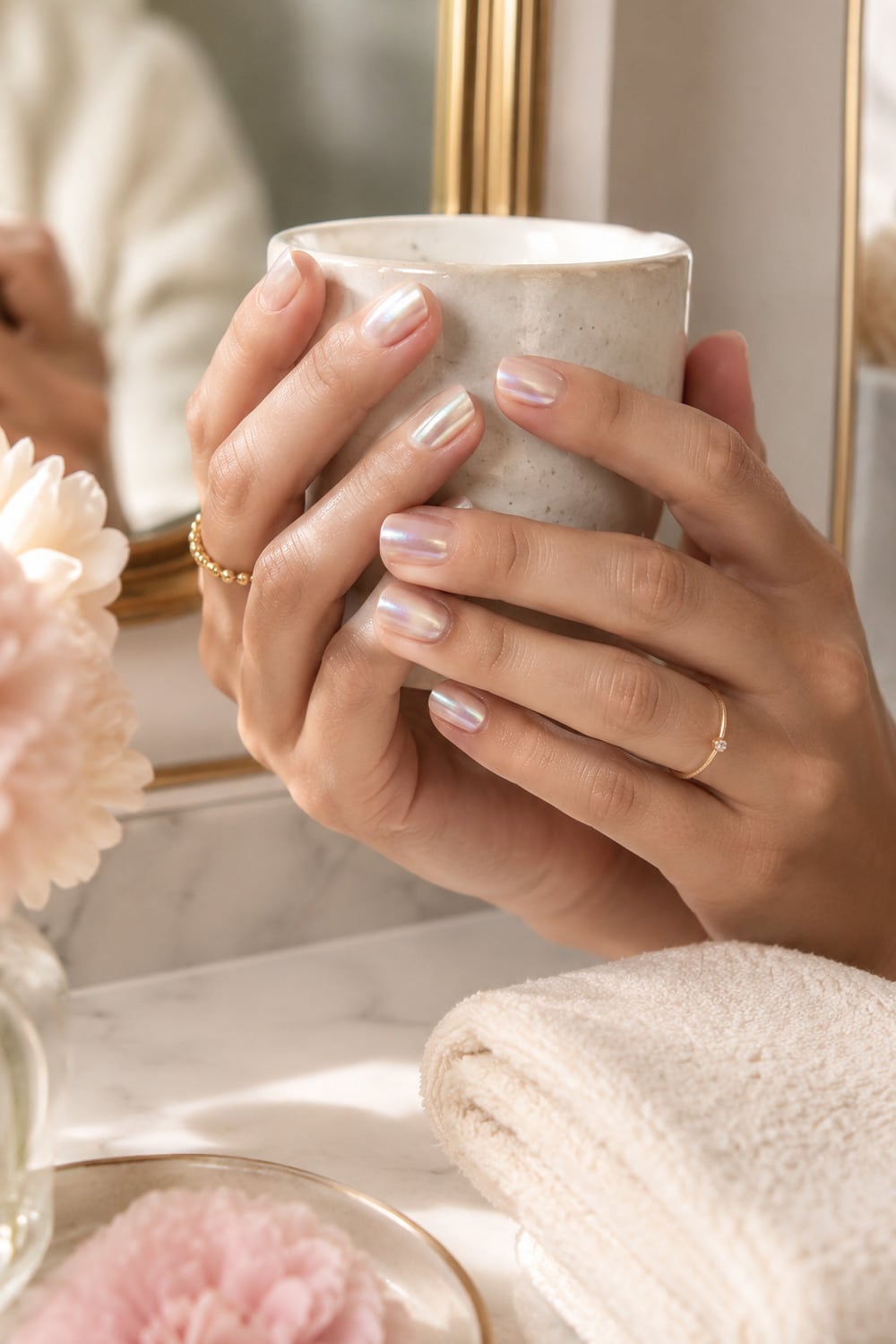
Soft Chrome Nails Begin with Controlled Reflection
Chrome describes the way the surface reflects light, not one fixed colour. Mirror chrome produces a continuous, high-contrast reflection; pearl chrome breaks that reflection into a finer glow. On a translucent base, some natural nail tone remains visible, which reduces the visual weight of the metallic layer.
Powder density matters as much as shade. One light pass can leave a milky white or pink base readable, while repeated buffing builds a brighter, more uniform plate. Ask to see one completed nail before the rest are finished, then check it from the side as well as straight on. Side light reveals whether the surface looks pearly or foil-like.
That restrained reflection sits comfortably beside no-makeup makeup for heat because both rely on selective sheen instead of an all-over glossy effect. The pairing works best when the manicure has one clear temperature—cool pearl, neutral opal or warm champagne—rather than several competing metallic tones.
The Base Shade Sets the Temperature
For soft chrome nails, milky white gives pearl powder a moonlit cast, while sheer pink softens blue or violet flashes in the pigment. Beige and pale peach move the same powder toward champagne. Taupe creates a quieter, slightly smoky result, and a muted grey-blue base makes the reflection cooler without requiring bright colour.
Warm bases can echo golden hour makeup through champagne or rose reflection, but the match does not need to be exact. Compare the base against your rings, watch strap and most-worn neutral clothing. If those details lean silver, a neutral pearl may integrate more easily than yellow gold chrome.
Shape and Placement Change the Scale
Short oval and squoval nails keep the reflective area compact, so a full pearl veil can still feel quiet. Longer almond nails give the light more distance to travel and make even a pale chrome layer more noticeable. Shape is therefore part of the colour decision, not a separate finishing detail.
On soft chrome nails, a full overlay creates the smoothest continuous reflection. A narrow French edge gives a small flash when the hand moves, while a half-moon, diagonal sweep or single accent nail interrupts the shine and lets more of the base show. These placements are useful when rings or a detailed outfit already provide the main visual focus.
Before choosing, decide what should register first at conversational distance: nail shape, base colour or reflected light. If the answer is shape, keep the pigment thin. If it is colour, use a tinted base with a translucent glaze. If it is shine, place chrome at the tips or over one nail instead of increasing thickness across every nail.
A Clear Salon Brief Prevents Mirror Chrome
For soft chrome nails, use observable language at the appointment: a sheer milky or nude base, fine pearl pigment, one light application, visible base colour and a glossy sealed surface. Bring one reference that shows the amount of reflection you want, then ask for a test nail before the full set. For gel services, products and curing lamps should be used according to their system instructions, and uncured product should be kept off the skin; these are application boundaries, separate from the artistic finish.
Wear and Removal Belong in the Design
Soft chrome nails can show edge wear clearly because the top surface and exposed tip catch light differently. A narrow reflective tip may need more precise maintenance than a full pale overlay, while a taupe or champagne base can make small growth gaps less conspicuous than opaque silver. Keep the shape practical for your usual typing, lifting and fastening tasks.
For event preparation, complete clean hair wash day before the manicure so prolonged water, towel friction and hair-product residue do not immediately challenge the fresh surface. When removal time arrives, follow the product or salon method and do not pick or scrape off gel colour. Moisturising the nails and surrounding skin after polish removal can help counter the drying feel of removers.
Keep the Natural Nail in View
A reflective finish can make ridges and uneven thickness easier to notice, yet aggressive buffing is not the only answer. A smoothing base, lighter pigment and shorter shape may give a neater optical result with less surface work. Cuticles should not be cut or forcefully pushed back simply to make the chrome line look cleaner.
A lightweight hand cream may sit beside an Aloe-inspired skincare routine, but cosmetic comfort and product reaction are different matters. Stop using the nail product and seek qualified advice if swelling, blistering, persistent redness, pain or nail lifting develops, especially after gel or artificial-nail services.
Read product directions and warning statements, and ask a salon what system is being applied and how it will be removed. Soft chrome is an appearance choice; it should not be used to cover a persistent nail change or an irritated nail fold that needs professional assessment.
Final Thought
Soft chrome nails look most refined when reflection is controlled before decoration: choose the base temperature, test the pigment density and let shape or placement carry only as much shine as your everyday setting can support.
References and Further Reading
- Pearly Nails Are the New Chrome
- Pearl Nails Are A Perfect Summer Manicure
- Nail Care Products
- Manicure and pedicure safety
- Dermatologists reiterate artificial nails warning and risk of at-home kits
Related Reading