Editorial Note: This lifestyle article is for general editorial inspiration only. It is not financial, medical, legal, travel, safety, or professional advice. Adapt every idea to your personal needs, budget, culture, location, and circumstances.
Deep brown often arrives in shops beside autumn tailoring, yet espresso brown style can work before the weather turns. The practical question is where to place its visual weight when bare arms, light fabrics, and open shoes still make sense.
Espresso brown style becomes easier to wear when the shade has a clear job. It can frame pale denim, replace a black accessory, or form a tonal column broken by skin, cream, or blue. The best choice depends on the garment’s coverage and finish, not on a fixed rule about which color is universally flattering.
Key Takeaway: Place espresso brown where you want visual weight, then use fabric, exposed skin, or a lighter color to keep the outfit seasonally balanced.
Choose Where Espresso Brown Style Carries Weight
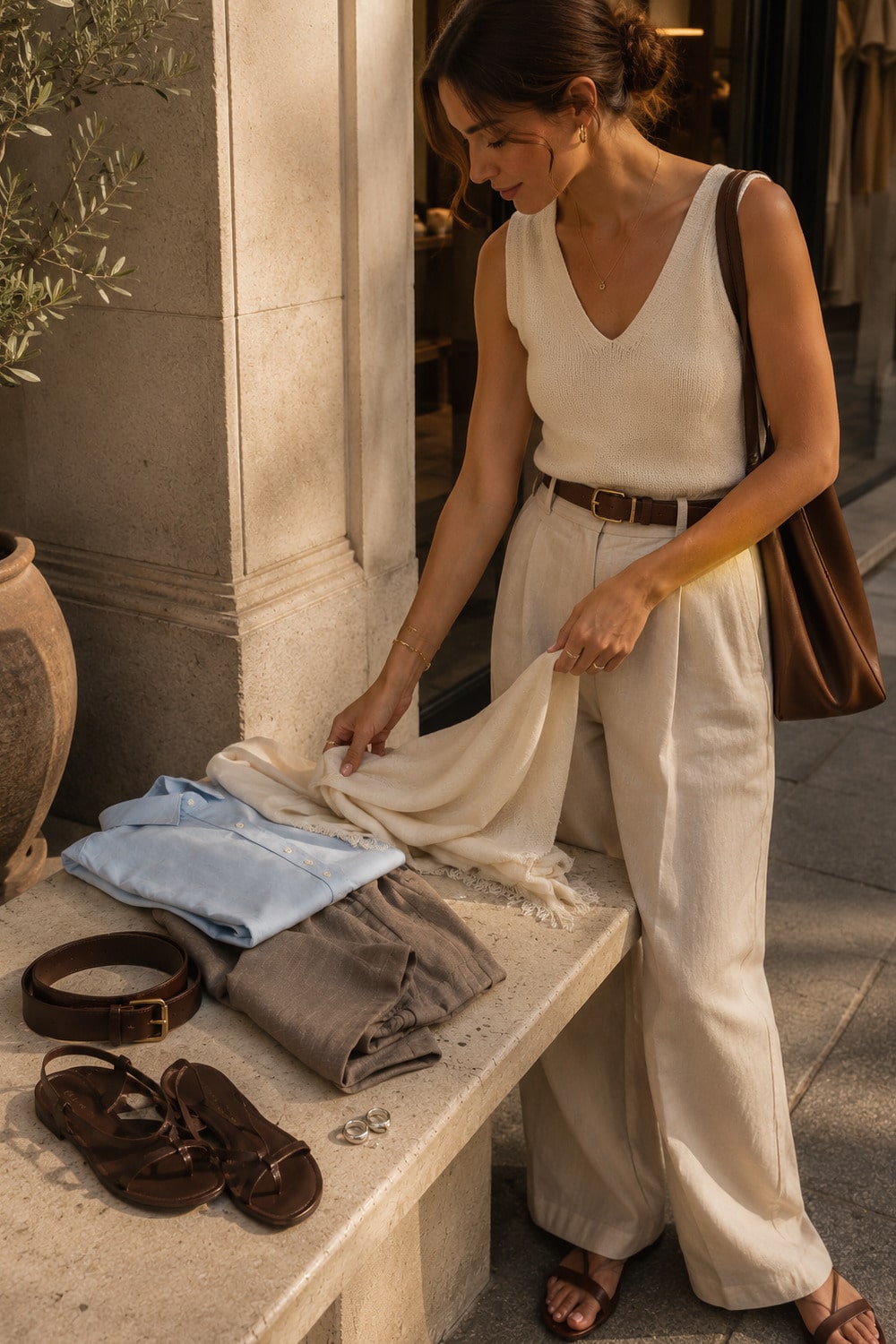
An espresso garment draws the eye because it is usually the deepest value in the outfit. The most useful brown outfit ideas place that visual weight deliberately, and espresso brown style can hold it below the face through trousers, a midi skirt, or a belt while a sleeveless ivory or pale-blue top keeps the upper half open. A brown dress can do the same job when the neckline, sleeve length, and shoe leave enough visual space around it.
Use a simple coverage check before getting dressed. If the brown piece covers most of the body, reduce weight somewhere else with a bare forearm, an open sandal, a lighter bag, or a neckline that shows skin. If espresso appears only in a narrow belt or shoe, it can repeat once in a bag or sunglasses without taking over the palette.
Black is not automatically harsher and brown is not automatically more flattering. Hold each shade near your face in natural light and notice whether your features look clearer or duller. When neither works well close to the face, keep the darker neutral below the waist and choose a top in a color you already know suits you.
Warm and Cool Contrasts Change the Mood
Cream, oat, camel, and muted gold keep espresso within a warm family, while crisp white, silver, pale blue, and cool grey create a cleaner separation. Espresso brown style can move in either direction; the deciding clue is often the undertone already present in the largest garment. A reddish chocolate skirt usually sits comfortably beside ivory, while a cooler brown trouser can look sharper with blue shirting or bright white cotton.
Blue deserves special attention because it can change the season of the outfit without adding another neutral. Faded denim gives dark brown a casual frame, sky blue softens it, and cobalt creates a stronger focal point. For a low-risk test, place the blue in a shirt, scarf, or small bag before committing to two large blocks of color.
Tonal Brown Needs Space Between Textures
A head-to-toe brown outfit can become one dark mass when every surface absorbs light in the same way. In espresso brown style, tonal brown textures solve part of the problem, but they still need separation. A matte cotton tank over satin trousers is easier to read than two shiny pieces touching from shoulder to ankle.
Build the tonal range from one true espresso anchor and one or two lighter relatives such as tobacco, taupe, mushroom, or caramel. Keep the undertones reasonably close; a very orange tan can look detached beside a cool, almost-black brown unless another item repeats that warmth.
Small gaps matter as much as fabric. A cream belt between a brown shirt and skirt, a visible ankle above a dark loafer, or an ivory neckline beneath a cardigan prevents the palette from closing in. These breaks are especially useful in warm weather, when heavy layering would create the same separation at the cost of comfort.
Sheen should be used selectively. Satin, polished leather, and metallic jewellery all catch light, so one glossy surface is often enough for daytime. In the evening, a satin skirt with a fine knit can carry more contrast because the change in light makes the finishes easier to distinguish.
Accessories Can Shift Existing Summer Clothes
Brown accessories are most useful when they alter clothes you already wear. A deep belt can give a loose white dress a defined center; flat brown sandals can settle a pale linen set; a structured bag can make faded jeans and a cotton shirt feel less beach-bound. That practical role keeps espresso brown style connected to the wardrobe rather than to a passing trend.
Match leathers only when the outfit benefits from repetition. Shoes and a belt in the same brown can create a clear frame, but slight variation often looks natural when one piece is worn or textured. Problems arise when several near-matching browns compete at the same scale, such as a belt, large bag, and broad shoe all sitting side by side.
Jewellery works best as a change of temperature or surface. Warm gold continues a cream-and-caramel palette, while silver gives cool brown and blue a crisp edge. Choose one visible metal family near the face, then let buckles and hardware recede instead of trying to make every tiny detail match.
Build Outfits for Heat and Cooler Evenings
Dark color does not make a garment physically heavy, but dense fabric and full coverage can make the outfit feel misplaced in heat. For late summer brown outfits, linen blends, cotton poplin, fine rib knits, fluid viscose, and open footwear keep espresso brown style wearable on warm days. Check opacity and drape in daylight, since very thin dark fabric can reveal seams or cling where a lighter fabric would be less noticeable.
For a cooler or changeable evening, add one layer that preserves the contrast already in the outfit. An ivory overshirt keeps a brown column light, while a denim jacket repeats a blue accent. A breathable option from your light jacket outfits rotation is more useful than introducing a heavy brown coat simply to continue the color story.
A Repeatable Wardrobe Check Before Buying
Start with the brown item you already own and build three complete outfits around it before shopping. An August wardrobe reset can reveal whether the missing part is truly another brown garment or a light top, practical shoe, or evening layer that would unlock several outfits.
Next, test the piece across the seasonal handover. A satin skirt might work now with a cotton tank and later with fine knitwear; brown trousers may shift from sandals to loafers without changing the top. That kind of continuity is the useful core of a summer-to-fall capsule wardrobe, because the fabric and styling change before the palette needs to.
Finish by checking scale. A large brown bag, wide belt, and dark shoe can create too many anchors in one look, while a single small accessory may disappear. Keep the piece that performs a job, remove the duplicate, and use a statement ring style only when its size and metal add a distinct point of interest rather than another competing focal point.
Final Thought
Espresso brown style earns a place in late-summer dressing when its depth is placed deliberately: one anchor, a breathable surface, and enough contrast to let the clothes remain distinct.
References and Further Reading
- How to Wear Chocolate Brown for Spring 2026 Like Halle Berry
- 15 Bold and Stylish Colors to Pair With Any Brown Outfits
- The Colour Pairing That Will Define Summer 2026
- All-Brown Outfits Are A Shortcut To Chic This Autumn
Related Reading