Editorial Note: This lifestyle article is for general editorial inspiration only. It is not financial, medical, legal, travel, safety, or professional advice. Adapt every idea to your personal needs, budget, culture, location, and circumstances.
Ballet sneaker style can look graceful in the mirror and oddly busy once the rest of an outfit is added. The difference usually comes from the shoe itself: some pairs read almost like ballet flats with a sturdier sole, while others keep the shape of a trainer and add straps, satin, or a rounded vamp.
That distinction gives ballet sneaker style a clearer starting point. A delicate pair needs enough structure around it to avoid costume-like sweetness; a sportier pair benefits from softer clothing that lets the ballet detail register.
Late summer makes the hybrid useful because bare ankles, light layers, denim, and fluid trousers can all sit in the same week. The aim is to build an outfit around the pair you own, not around an idealised product photograph.
Key Takeaway: Decide whether your ballet sneaker leans delicate or sporty, then use the rest of the outfit to supply the missing contrast.
Ballet Sneaker Style Starts with Shoe Shape
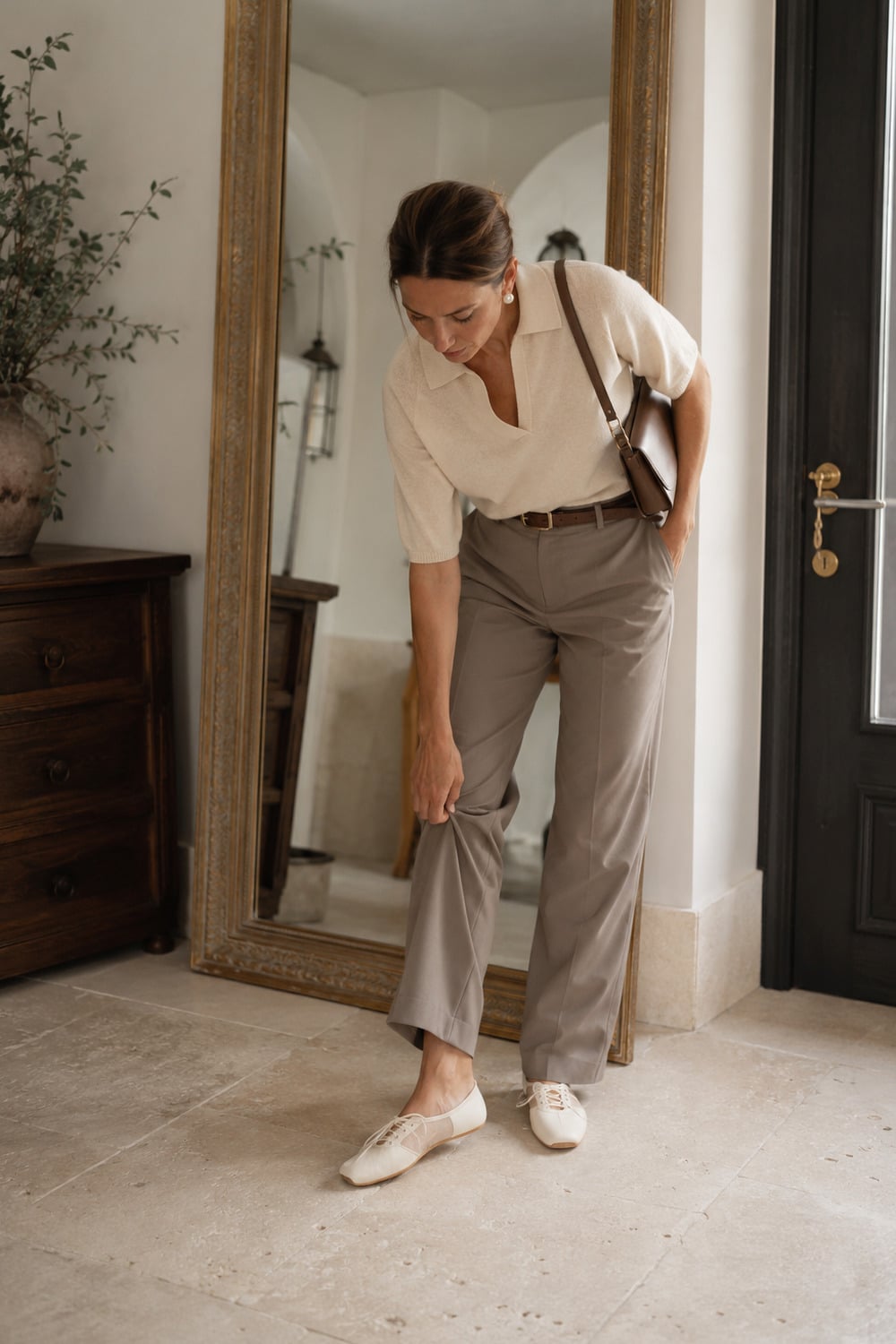
Begin with the upper, not the colour. A low vamp, rounded toe, slim sole, and narrow strap make the shoe read closer to a ballet flat. Mesh panels, broader soles, visible lacing, and technical fabrics pull it towards a trainer. The terms “sneakerina” and “ballet trainer” cover a broad range of shapes, which is why sneakerina outfits rarely follow one formula.
When the shoe is delicate, ground it with straight denim, a compact jacket, a firm leather bag, or a crisp shirt. Satin, ribbons, and a very fine sole already provide softness; repeating that mood in every garment can make the outfit feel themed. A sporty pair can take a fluid skirt, a slip dress, or a fine knit because its sole and construction provide the visual weight.
Try the shoe with one simple base outfit before buying anything around it: plain trousers and a fitted or softly skimming top. If the shoe disappears, it may need a shorter hem or a colour contrast. If it dominates, reduce competing straps, bows, logos, and decorative seams elsewhere.
Hem Length Changes the Whole Outfit
A visible upper is central to ballet sneaker style, so the hem should reveal enough of the shoe to show what makes the pair distinctive. With relaxed trousers, a soft break at the front works better than fabric pooling over the toe. Cropped trouser hems can end above the ankle bone, while a longer wide leg can skim the shoe without covering the strap or vamp.
Jeans need the same attention. Straight and barrel shapes usually feel cleaner when the hem leaves a little air around the shoe; a wide cuff can overwhelm a fine sole. That proportion can be carried into transitional denim outfits by pairing the exposed shoe with a light shirt, sleeveless knit, or cropped outer layer instead of adding bulk at both the ankle and the shoulder.
Denim and Dresses Need Different Counterweights
Denim gives the hybrid an everyday base, but the wash and leg shape decide how feminine the result feels. Mid-blue straight jeans with an ivory or silver pair look relaxed and direct. Cream denim softens the whole outfit, so a dark belt or angular bag helps separate the pieces. Very distressed denim can compete with ribbons or satin; a cleaner wash allows those details to remain visible.
Ballet sneakers with dresses reverse the problem. A loose cotton midi or column dress already has a long uninterrupted line, and the low shoe keeps it grounded. Add a cropped jacket or a bag with a defined shape when the dress has gathers, lace, or a soft print. With a minimal dress, ballet sneaker style can be the only decorative note.
Skirts sit between those two approaches. A fuller skirt suits a pair with a firmer sole because the shoe can hold its place beneath the volume. A narrow midi works with a finer upper, especially when the hem ends well above the ankle and does not visually merge with the shoe.
For a cooler evening, place the extra structure above the waist. A short trench, neat cardigan, or jacket from your light jacket outfits rotation keeps the shoe visible and gives the outfit a deliberate finish without turning the lower half heavy.
Socks and Bare Ankles Alter the Mood
Bare ankles give ballet sneaker style its closest resemblance to a ballet flat, which suits dresses and light trousers in warm weather. Check the inside finish first, because a seam, strap, or stiff edge that feels harmless for a few minutes may become distracting during a longer day. A discreet liner can be useful only when it stays hidden and secure inside the shoe.
A fine ankle sock makes the hybrid look more like a trainer and can help it work with pleated skirts, cropped trousers, or a bomber jacket. Keep the sock close in colour to either the shoe or the lower garment. A strong contrast creates a clear horizontal break, so it is better used when that interruption is part of the outfit instead of looking accidental.
Cooler late-summer days may call for a ribbed or slightly opaque sock. That added texture suits suede, leather, mesh, and gum soles more easily than very glossy satin. The decision is practical as well as visual: test the shoe again with the sock thickness you plan to wear, since it changes the available space.
Colour Works Better When Texture Does the Talking
Neutral pairs make ballet sneaker style easiest to repeat, but matching every item to the same pale tone can flatten the outfit. Use texture to separate close colours: canvas with denim, satin with dry cotton, suede with a smooth trouser, or leather beside a soft knit. One darker accessory is often enough to give ivory, blush, stone, or pale grey shoes a clear frame.
Brown is useful when black feels severe against a delicate upper. A mocha bag, tortoiseshell sunglasses, or belt can bring the depth of espresso brown style into an otherwise light outfit. Metallic pairs already catch the eye, so matte clothing and restrained jewellery prevent several reflective surfaces from competing.
A Walk Test Comes Before the Outfit
The hybrid shape does not guarantee the cushioning, grip, or fit of a conventional trainer. Look at the sole, fastening, heel hold, toe space, and flexibility as separate features, then judge them against the day ahead. A thin, flexible pair may be pleasant for a short dinner outing and unsuitable for hours of pavement; a sturdier sole may feel visually heavier but more useful for errands.
Test the shoes at home with the exact socks or liners you expect to wear, and spend time standing as well as walking. Notice whether the heel lifts, the strap rubs, or the toes press forward on stairs. Personal comfort is more important than preserving a delicate appearance, and returning an uncomfortable pair is a better choice than trying to style around pain.
Once the fit is settled, plan the outfit by sequence: shoe shape, hem exposure, one counterweight, then colour. That order keeps ballet sneaker style connected to the pair and the day and avoids turning it into a fixed uniform.
Final Thought
A ballet sneaker earns its place when the outfit shows its shape and the shoe suits the walking involved. Let proportion do most of the work, then add only the structure, softness, or colour the pair is missing.
References and Further Reading
- How to Style the Runway-Approved Sneakerina for Spring
- 5 2026 Sneaker Trends to Shop This Spring
- How To Wear Ballet Sneakers This Summer, According To The A-List
- 5 Ways To Wear Ballet Trainers In 2025
Related Reading