Editorial Note: This article explores cultural lifestyle inspiration in an editorial way. It does not claim to represent every woman, country, region, or personal experience. WorldsLadies avoids stereotypes and presents these ideas as gentle, adaptable lifestyle reflections.
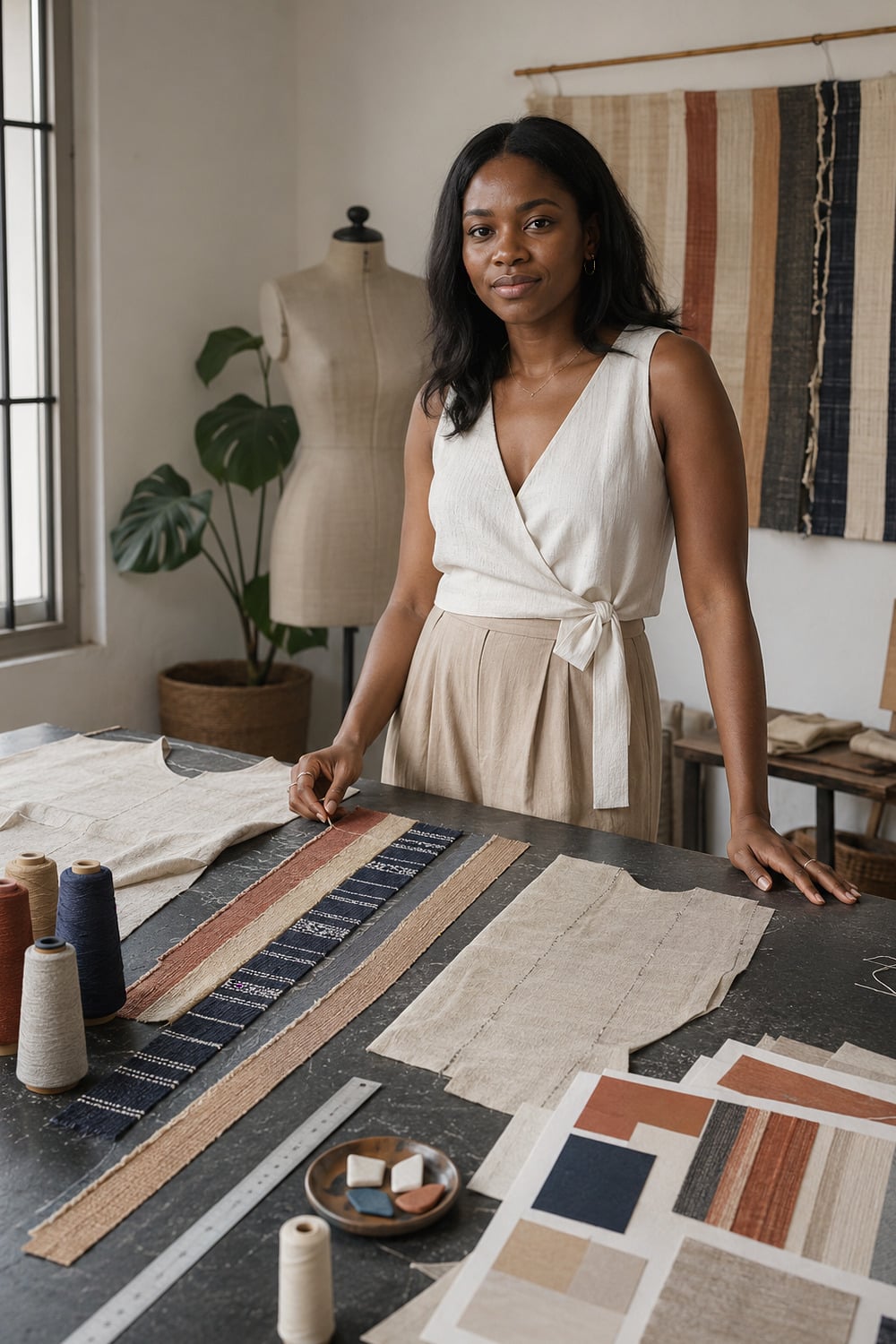
In an Accra clothing studio, color confidence begins with decisions about cloth width, seam placement, drape and the purpose of the finished garment. That practical sequence offers a better starting point than a catalogue of bright prints. It asks how a woven band becomes a panel, how a panel changes a silhouette, and how a deliberate color relationship can hold its own in a contemporary wardrobe. Within that frame, Ghanaian textile color is a question of construction as much as appearance.
The cloth itself leads beyond Accra. Museum collections document nineteenth-century Kente associated with Kumasi and the Asante peoples, while Ghana’s national register names several present-day weaving locations, including Bonwire, Adanwomase, Ntonso, Agotime, Tafi and Agbozume. Kpetoe, in the Volta Region near the Togo border, provides another specific setting where Ewe Kente is woven in an open-air centre. These places are connected by a textile form, but they are not interchangeable.
The scope is a narrow contemporary question: what can a reader learn from the way strip-woven cloth, current Accra design and careful sourcing organize color? It does not treat a capital, a craft village, one designer or a museum object as a portrait of Ghanaian women. The useful adaptation is smaller and more concrete—notice proportion, ask where a material comes from, and let the function of a garment decide how much visual intensity it needs.
Key Takeaway: Accra design and named Kente weaving communities show that color becomes specific through cloth structure, maker context and garment function.
Color Confidence Begins in the Woven Strip
Kente strip construction joins narrow handwoven strips into a larger cloth. That method matters because color confidence develops across edges, repeated bands, shifts in scale and the seams between units rather than on one uninterrupted surface. A color can dominate a single strip yet become a measured accent once several strips are assembled. The method turns palette into rhythm without requiring every part of the cloth to carry equal visual weight.
A nineteenth-century prestige cloth in the Metropolitan Museum of Art’s collection is linked to Kumasi and the Asante peoples and is made from cotton and silk strips sewn together. Its museum setting cannot describe current everyday dress, but it makes the physical logic legible: the finished expanse depends on many narrow decisions. The Victoria and Albert Museum similarly describes Kente associated with Asante and Ewe weaving through handwoven strips stitched together, while its examples belong to specific collection periods rather than an undated national present.
For an ordinary wardrobe, color confidence is a matter of proportion. A scarf, cuff, bag panel or narrow trim can carry a concentrated color relationship without turning the whole outfit into a quotation of Kente. The same discipline can guide colorful bead jewelry: place one saturated detail against a quieter fabric, then check how it reads while walking, sitting and moving through daylight. The aim is not imitation; it is attention to scale.
Bonwire and Kpetoe Keep the Map Visible
Ghana’s national intangible cultural heritage register prevents Kente from collapsing into a single origin point by listing weaving locations across different regions. Bonwire, Adanwomase and Ntonso appear alongside Agotime, Tafi and Agbozume. That distribution is an editorial safeguard as well as a geographic fact. A cloth purchased in Accra may arrive there through a longer chain of weaving, trading, tailoring and retail, so the city where it is styled should not erase the community where it was made.
Kpetoe offers a particularly concrete view of that chain. The Ghana Tourism Authority’s profile places the weaving village in the Volta Region near the Togo border and describes an open-air centre with working weavers, with additional activity in nearby Abenyinase. The page is written for visitors, so its claims should not stand in for the whole region. Still, the named location restores labor and setting to the textile: looms occupy space, strips take time, and a finished cloth begins long before it reaches a fashion photograph.
Accra Studios Change the Silhouette
A 2020 British Vogue feature made Accra textile design visible through five designers working with different materials and methods. Larry Jay used streamlined shapes and tie-dye; Steve French combined clothing with abstract painted surfaces; Hazza worked with repurposed fabrics, dye and screen printing; Atto Tetteh used handmade Ghanaian cloth in contemporary menswear; and Chloe Asaam reworked cottons and linens into adaptable womenswear. The article’s value lies in those distinct studio choices, which ground color confidence in material and silhouette rather than making five labels representative of a city.
The variety also corrects the idea that cultural cloth must appear only in a ceremonial silhouette. In the Accra collections described, color moved through camp-collar shirts, skirts, suits, utilitarian shirts, trousers and loose dresses. Some garments concentrated pattern in one plane; others used monochrome, muted tones or painted surfaces. Contemporary form therefore changes how the textile is read. A strip-woven panel on a clean jacket performs a different visual job from a full cloth arranged for a formal occasion.
Accra’s studio methods make a useful counterpoint to the clothing and hosting settings discussed under Lebanese women lifestyle and Romanian women lifestyle. The comparison works at the level of fabric, room, climate and occasion, never as a ranking of populations. In each place, a strong editorial reading begins by naming the exact setting and asking what the material is required to do there.
Garment Function Sets the Color Volume
Color confidence in an Accra collection becomes clearer when the garment’s job is named. A unisex shirt needs enough structure to hold a collar and move through repeated wear. Relaxed suiting depends on line and ease. A ruffled top or high-waisted trouser uses volume at selected points, so an additional dense pattern may compete with the cut. Looking at function first prevents “bright” from becoming a default instruction and keeps the clothing connected to proportion.
That principle can guide color confidence without requiring the purchase of a culturally specific textile. Begin with one garment category already used often: an overshirt, straight skirt, soft jacket or long dress. Mark where the eye naturally pauses—the collar, hem, pocket or front panel—and confine the strongest color relationship to that area. A narrow vertical placement lengthens the line; a horizontal band interrupts it. These are design effects, not cultural meanings, and they can be tested with removable fabric before any permanent alteration.
Material weight changes the result. The cotton, linen and repurposed fabrics mentioned by Accra designers respond differently from a dense woven panel, and a painted neoprene surface behaves differently again. A useful choice therefore starts with touch: will the section fold, stand away from the body, catch on a bag strap or need frequent washing? When the material and garment disagree, color cannot rescue the construction. When they cooperate, even a small accent remains visible without dominating movement.
The same restraint keeps color confidence specific in rooms and table settings. A folded cloth placed beside plain ceramics can show its banded construction, but it should not be presented as a generic “African” decoration or given an invented symbolic story. In an Accra-focused feature, the responsible visual cue is the textile’s actual structure and credited source. Outside that setting, a reader can borrow the spacing between strong and quiet surfaces while leaving named motifs and cultural claims with the makers who know them.
Sourcing Is Part of the Finished Look
The route from loom to wardrobe changes what a garment can honestly communicate. A seller should be able to identify whether a piece is handwoven, where it was made, what fibre it uses and whether the pattern name has been verified. Absence of that information does not automatically make a cloth unusable, but it does limit the claims attached to it. “Kente-inspired” machine print, handwoven strip cloth and a designer garment assembled in Accra are different products and should be described as such.
Care follows the same specificity. A museum object made from cotton and silk cannot supply laundering instructions for every contemporary cloth, and a tourism profile cannot establish the fibre content of a market purchase. The practical response is to ask the maker or retailer, retain written care guidance and test any uncertain cloth on a hidden edge. Respect for craft appears in these quiet decisions: accurate naming, appropriate cleaning, repair before disposal and payment that acknowledges skilled work.
Social Warmth Needs an Actual Setting
The original lifestyle frame connected Ghana with hospitality and community, but those words become vague unless a place and action are named. In this narrower Accra story, clothing enters social life through fittings, studio collaboration, fashion presentations and the exchange between a client and a tailor. Those encounters differ from a family meal, a neighbourhood gathering or a ceremony, none of which should be assumed from fashion reporting. Social warmth is therefore best described through what the documented setting actually shows.
A practical home adaptation can remain modest. Invite a friend to look at fabric samples in daylight, compare how two widths behave, or help pin a temporary panel before sewing. The activity resembles a design consultation, not a reenactment of Ghanaian social life. It gives conversation a task and makes the final choice less abstract. For readers developing nourishing friendship habits, a shared repair or alteration session can create regular time together without assigning cultural meaning to the routine.
That boundary also keeps color confidence from becoming a national trait. In an Accra studio photograph, presence may come from a precise shoulder line, a well-fitted trouser, controlled volume or a clear color block. Those are visible design decisions. They do not prove that Ghanaian women possess one kind of confidence. A reader can use the same method by checking fit, movement and context before adding another decorative element, allowing the garment to carry its own visual argument.
Final Thought
The strongest reading of Ghanaian textile color connects color confidence to a map and a seam: named weaving communities establish where cloth is made, and Accra designers show how material changes when it enters a contemporary silhouette. For a reader, the useful response is precise rather than theatrical—choose one color relationship, match its scale to the garment, verify the source where possible, and leave cultural meaning attached to the place and people who can substantiate it.
References and Further Reading
- Kente Prestige Cloth
- David Adjaye Selects
- Cloth of a continent: Africa Fashion
- In Accra, Five Designers Are Reinventing Ghanaian Traditions
- National Register – Intangible Cultural Heritage of Ghana
- Kpetoe Kente Weaving Village
- Mass Production Killed Made in Ghana. Now What?
Related Reading