Editorial Note: This article explores cultural lifestyle inspiration in an editorial way. It does not claim to represent every woman, country, region, or personal experience. WorldsLadies avoids stereotypes and presents these ideas as gentle, adaptable lifestyle reflections.
Thai women beauty rituals should be read as cultural lifestyle inspiration, not a rulebook or a universal portrait. Thailand includes many regions, climates, family rhythms, work realities, budgets, beauty preferences, and personal relationships with tradition and modern life.
The useful WorldsLadies lesson is not to copy someone else’s routine. It is to notice a softer approach to daily care: skin that feels comfortable in the climate, makeup that stays light, hair that looks polished but touchable, scent used with restraint, and beauty habits that bring a little more calm into the day.
Handled respectfully, Thai-inspired beauty can become a reminder that grace is often built through small choices rather than dramatic transformation.
Key Takeaway: Thai women beauty rituals are best approached through respect, lightness, and atmosphere: gentle skin comfort, soft makeup, polished hair, subtle scent, and slower care, without turning culture into a costume or making beauty promises.
Thai Women Beauty Rituals Begin With Respect
The first lesson is cultural care. A woman in Bangkok, Chiang Mai, Phuket, Isan, the south, the north, or a smaller coastal town may have a completely different relationship with beauty, weather, work, family life, faith, tradition, and trend culture.
That is why Thai women beauty rituals are most useful when they are treated as adaptable principles rather than instructions. Keep beauty light where the climate asks for comfort. Let self-care feel sensory without becoming theatrical. Respect local detail. Allow grace to show through small habits instead of turning another culture into a beauty mood board.
Skin Comfort Before Coverage
A useful Thai-inspired lesson is to let skin feel comfortable first. In warm or humid weather, heavy layers often feel less elegant than a breathable routine built around gentle cleansing, light hydration, and thoughtful sun protection.
This is not a promise of perfect skin. It is a calmer way to think about beauty: support the skin barrier, avoid harsh over-exfoliation, and choose finishes that can move through a real day. The American Academy of Dermatology reminds readers that sun protection works best as a combination of sunscreen, shade, and protective clothing, so a graceful routine can be both soft and practical.
Makeup That Feels Soft and Lived-In
Modern Thai beauty inspiration often reads as polished without being heavy: softly defined eyes, natural brows, warm blush, delicate lip color, and skin that still looks alive. The beauty is not in erasing the face; it is in letting the face remain present.
To adapt the idea, choose one refined accent instead of building a full dramatic look. A blurred rose lip, soft brown liner, cream blush, or the velvety finish explored in velvet matte lips can feel graceful without becoming overworked.
Scent as Quiet Atmosphere
Scent can be one of the most intimate beauty rituals. A Thai-inspired mood may bring to mind jasmine, coconut, lemongrass, mint, clean soap, fresh linen, or a soft floral note, but the important lesson is restraint. Scent should create memory, not overwhelm the room.
At home, that might mean body lotion after a shower, a subtle hair mist, a fresh towel, or a single flower near the vanity. Keep the ritual personal, light, and comfortable for the people around you.
Hair That Looks Polished but Still Moves
Polished hair does not have to mean stiff hair. A smooth low bun, glossy loose waves, a neat claw clip, a soft side part, or a tidy braid can help a woman feel prepared without making her beauty look frozen.
This connects naturally with the WorldsLadies approach to a glossy hair routine: reduce friction, protect moisture, and finish with intention. The Thai-inspired lesson is to make hair look cared for while still allowing heat, movement, and real life to exist.
Body Care as a Pause, Not a Promise
Thailand is widely associated with spa culture and traditional bodywork, but that connection should be handled carefully. UNESCO describes Nuad Thai as part of the art, science, and culture of traditional Thai healthcare. In an editorial beauty article, the safe lesson is not to promise results; it is to respect care as a pause.
At home, that pause might be gentle stretching, moisturizing slowly after a shower, taking five quiet minutes before bed, or booking qualified professional bodywork when appropriate. The ritual matters because it softens the rushed energy that often surrounds beauty.
Flowers, Fabric, and Detail With Cultural Care
Thai visual culture can include flowers, silk, carved wood, temple architecture, markets, textiles, and water rituals, but these details should not become props for a fantasy. Respectful inspiration means noticing craft and atmosphere without copying sacred, ceremonial, or identity-specific elements for decoration.
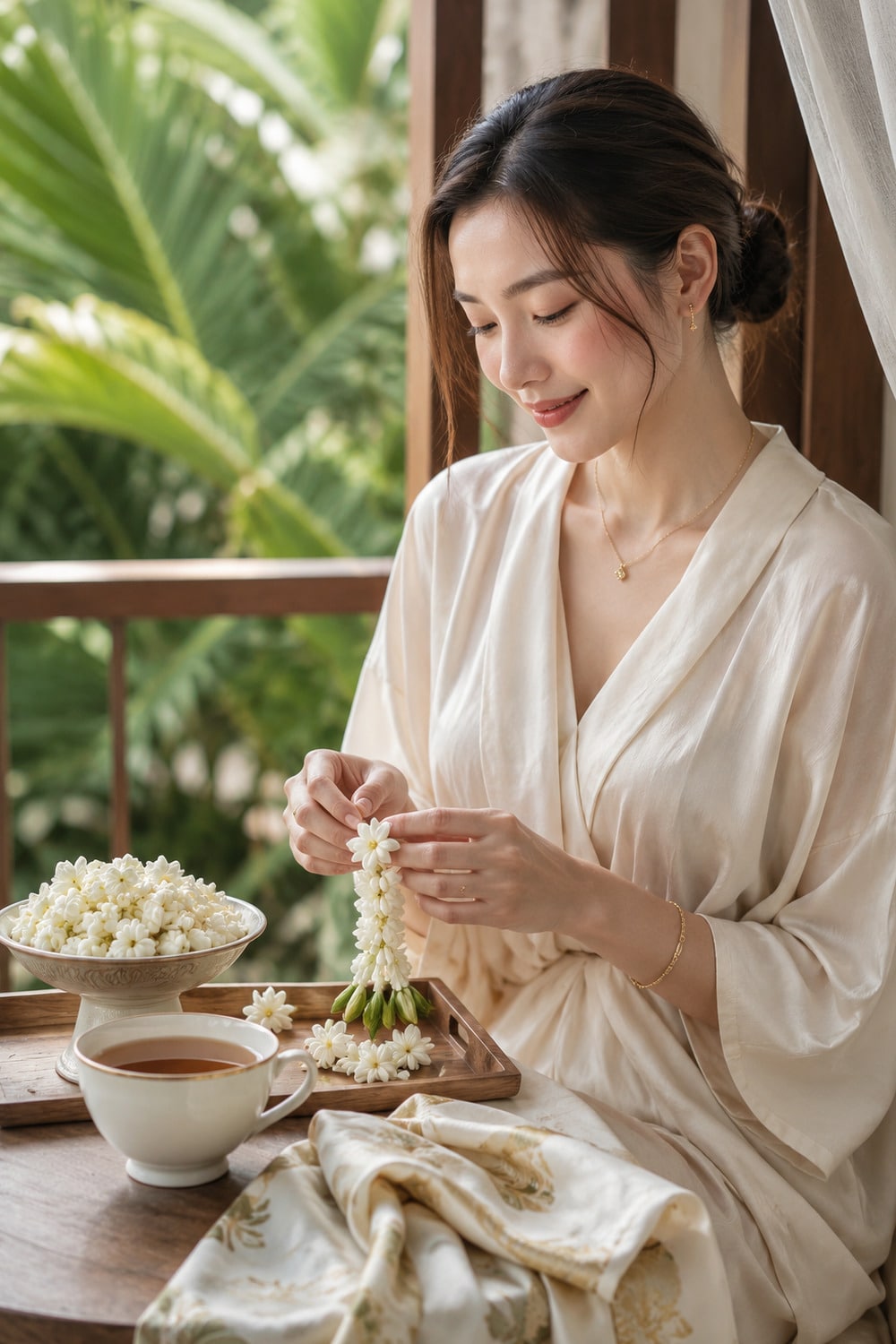
A reader can translate the mood more gently through everyday details: a clean vanity, warm lighting, a silk-like texture, a flower on a tray, or towels folded with care. Tourism Authority of Thailand materials and UNESCO writing on Thai silk both point toward the importance of place, craft, and cultural context, which is exactly why the inspiration should stay modest and informed.
Grace in the Smallest Habits
The final lesson is grace. In this context, grace is not passivity, silence, or performance. It is the way a woman prepares slowly when she can, chooses comfort, keeps her things beautiful, and refuses to rush every part of her day.
That may look like softer skincare, a lighter lip, polished hair, a subtle scent cue, or five quiet minutes before sleep. The strongest version of Thai women beauty rituals is personal and respectful: one small habit that makes beauty feel less tense and more human.
This is why the topic sits naturally beside other cultural lifestyle reflections, from Japanese beauty rituals to Vietnamese women lifestyle and South African women lifestyle. Each article should be read as a respectful lens, not a single definition of women from a place.
FAQ
What do Thai women beauty rituals mean in this article?
In this article, Thai women beauty rituals means a respectful editorial look at gentle skincare, soft makeup, scent, body care, polished hair, and graceful daily beauty habits inspired by Thailand. It is not a universal claim about all Thai women.
Can I use this inspiration if I am not Thai?
Yes, if you focus on adaptable principles such as lightness, comfort, care, scent, and grace. Avoid copying sacred clothing, ceremonial symbols, or cultural details as a costume.
Is this skincare advice?
No. This is editorial beauty inspiration, not dermatological advice. If you have acne, irritation, allergies, melasma, sun sensitivity, or any skin concern, speak with a qualified professional.
Final Thought
Thai women beauty rituals are not about copying a culture or chasing a perfect face. The most elegant lesson is softer: care can be light, beauty can be sensory, and a daily routine can feel more graceful when it is built with respect.
References and Further Reading
- American Academy of Dermatology: Sun Protection
- UNESCO: Nuad Thai Traditional Thai Massage
- Tourism Authority of Thailand
- Tourism Authority of Thailand: Sala Mai Thai
- UNESCO: Thai Silk: Cultural Heritage
- Vogue: Is Thailand the World’s Next Big Beauty Capital?
Related Reading