Editorial Note: This article explores cultural lifestyle inspiration in an editorial way. It does not claim to represent every woman, country, region, or personal experience. WorldsLadies avoids stereotypes and presents these ideas as gentle, adaptable lifestyle reflections.
South African women lifestyle inspiration is best approached with humility. South Africa holds many languages, histories, cities, communities, creative scenes, family rhythms, and personal realities, so no single article can turn that richness into one fixed image.
What an editorial lifestyle lens can do is notice adaptable themes with care: expressive dressing, warmth, community, resilience, color, texture, and everyday joy. The result is not a style formula, but a respectful invitation to live with more presence.
The most graceful lesson is not to copy a culture. It is to translate atmosphere thoughtfully: one confident color, one meaningful object, one shared meal, one warmer ritual, or one small choice that makes daily life feel more human.
Key Takeaway: South African women lifestyle inspiration is most elegant when it respects complexity, avoids costume-like imitation, and translates confidence, community, color, warmth, and joy into everyday choices that feel personal.
South African Women Lifestyle Begins With Many Stories
The first lesson is respect for complexity. South Africa cannot be explained through one city, one tradition, one outfit, or one social mood. Statistics South Africa’s cultural dynamics report frames culture through language, population group, religion, and social patterns, while Britannica describes South African cultural life through blended traditions, contrast, and a rich arts landscape.
That is why this article avoids the idea of “the South African woman” as a single identity. A woman in Cape Town, Johannesburg, Durban, Pretoria, Gqeberha, a rural village, or a smaller town may live with completely different routines, budgets, languages, family structures, and style references.
The WorldsLadies approach is simple: begin with nuance before taking inspiration. Respect comes before aesthetics.
Dressing With Personality, Not Performance
One beautiful style lesson is personal presence. South African fashion culture, especially in urban creative spaces, often shows how polished dressing can still feel alive: a tailored blazer with a bright scarf, a simple dress with sculptural earrings, or clean denim with a structured bag.
This does not mean dressing loudly every day. It means choosing one element that feels intentional. A color accent, warm lipstick shade, distinctive earring, confident shoe, or textured bag can make even a quiet outfit feel more finished.
The useful idea is not excess. It is the willingness to let style say something human.
Color and Texture With Quiet Joy
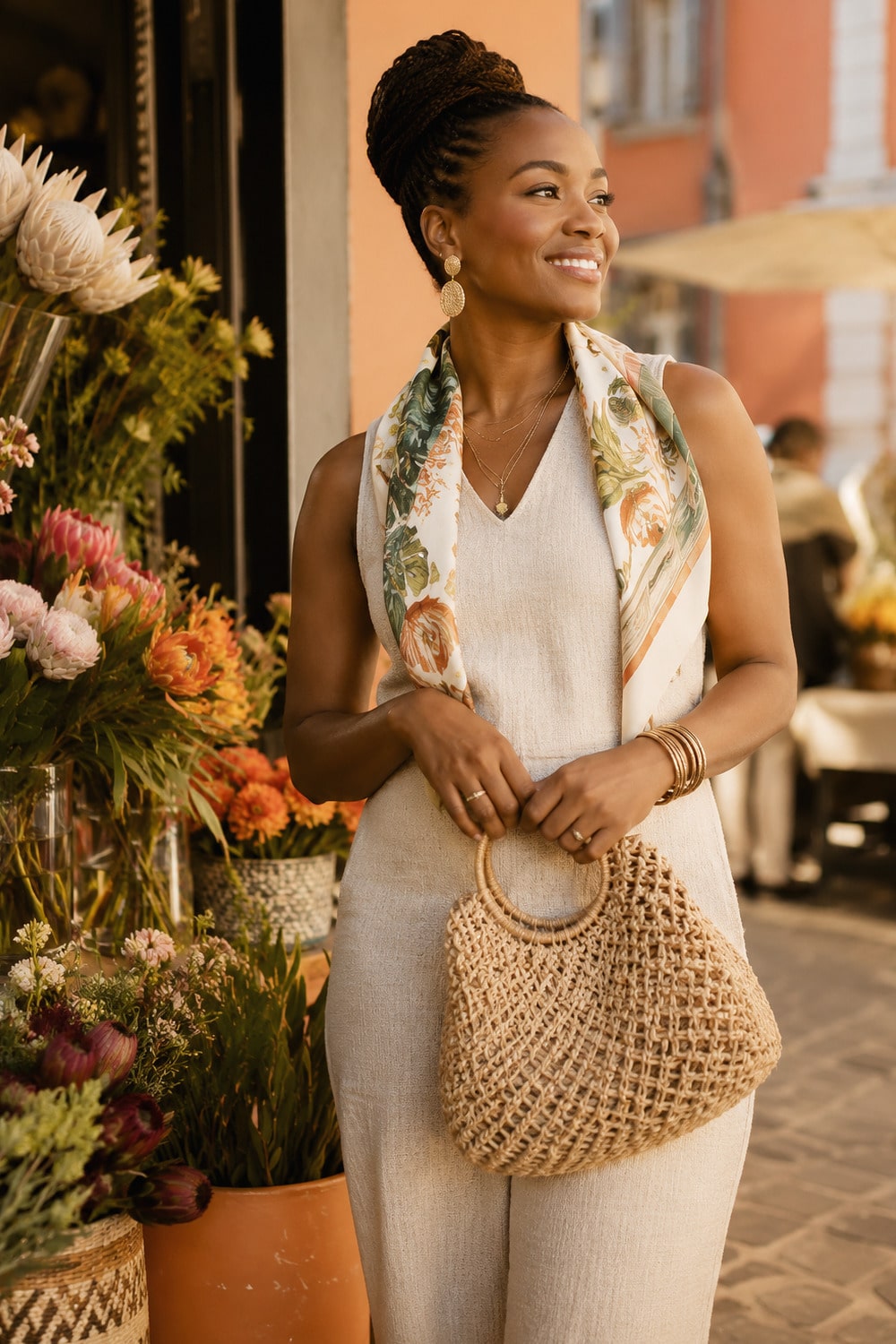
Joy can be carried through woven texture, sun-warmed tones, crisp cotton, polished linen, beaded detail, gold jewelry, or one strong print used with restraint. The point is not to imitate cultural dress. It is to learn from the courage to let beauty feel visible.
If your wardrobe is mostly neutral, begin gently. Try a patterned scarf, a coral lip, a textured handbag, a warm ochre blouse, or a bracelet that adds movement. One expressive detail is often enough.
This keeps the inspiration wearable and respectful, without turning culture into a costume.
City Polish With Real-Life Ease
South Africa’s major cities carry strong creative energy, from design-led Cape Town interiors to Johannesburg’s fashion and art scenes. One recent example is Thebe Magugu’s collaboration with Belmond’s Mount Nelson in Cape Town, described by LVMH as a project celebrating South African culture, art, and African creativity.
For daily dressing, the lesson is balance: polished but not stiff, expressive but not overworked. A midi skirt with flat sandals, a crisp shirt with relaxed trousers, or a blazer over a soft dress can feel refined without losing movement.
This is where global elegance standards become more interesting. Elegance changes when it meets climate, culture, rhythm, and real life.
Community as a Form of Strength
The strength inside South African women lifestyle inspiration is not only visual. It can also be relational. Family ties, friendships, shared meals, music, faith communities, neighborhood support, and creative collaboration can all shape how women move through pressure.
This should never romanticize hardship. Strength is not beautiful because life is difficult. It becomes meaningful when women keep dignity, humor, care, and connection alive in ordinary ways.
The lesson pairs softly with the family-centered rhythm explored in Vietnamese women lifestyle, while keeping the cultural contexts completely distinct.
Joy That Belongs to Ordinary Days
Joy does not need a perfect setting. It can be music while getting ready, a bright nail color, a shared table, fresh fruit in a bowl, a walk in late sunlight, or a dress that makes an ordinary afternoon feel more alive.
For a reader, the practical version is small: choose one joyful cue you can actually keep. Flowers from the market, a fragrance you already love, a playlist, a warm color, a short call with someone safe, or one home detail that changes the atmosphere.
The point is not performative happiness. It is the quiet refusal to let everyday life become visually and emotionally flat.
Respecting Heritage Without Turning It Into Costume
This is the most important style boundary. Cultural references should be handled carefully, especially when they come from outside your own lived experience. Inspiration should not mean copying ceremonial clothing, reducing communities to “tribal” visuals, or using heritage patterns as aesthetic props without context.
A safer editorial approach is to admire principles: craftsmanship, color confidence, storytelling, family memory, ceremony, movement, and dignity. The same caution applies across WorldsLadies cultural posts, from Mexican women lifestyle to Dutch women lifestyle.
We learn from values and atmosphere, not from flattening people into mood boards.
Warmth, Presence, and Personal Grace
Beauty is not only skin, hair, clothing, or makeup. It is also the way a woman enters a room, speaks with warmth, enjoys her own expression, and carries both softness and backbone.
In that sense, South African women lifestyle inspiration can feel especially resonant for a global reader because it holds contrast: elegance and ease, color and restraint, resilience and joy, individuality and community.
A few small practices can make the idea tangible without becoming formulaic. Add one intentional accessory instead of rebuilding a wardrobe. Let texture bring depth to simple clothing. Balance city polish with shoes and fabrics that move. Create warmth through a shared meal, a conversation, music, or a supportive ritual. Choose one everyday joy cue that makes your own surroundings feel more alive.
The invitation is not to become someone else. It is to notice what might make your own life feel more textured, expressive, and human.
FAQ
What does South African women lifestyle mean in this article?
In this article, South African women lifestyle means a respectful editorial reflection on style, community, joy, presence, and creative everyday living. It is not a universal claim about all South African women.
How can I take inspiration respectfully?
Focus on adaptable principles such as confidence, warmth, color, craft, community, and presence. Avoid copying sacred, ceremonial, or identity-specific clothing as a casual trend.
Is this article only about fashion?
No. Fashion is one part of the story, but the deeper focus is how style, relationships, resilience, beauty, and everyday joy can support a more expressive daily life.
Final Thought
South African women lifestyle inspiration is not a formula to copy. It is a reminder that style can be joyful, strength can be graceful, and cultural inspiration should always begin with respect.
The most elegant lesson is to carry more color, more warmth, and more presence into the life you already have, without borrowing what is not yours to wear.
References and Further Reading
- Statistics South Africa: Cultural Dynamics in South Africa
- Britannica: South Africa Cultural Life Overview
- LVMH: Belmond Collaborates With Thebe Magugu for Cape Town Hotel
Related Reading