Editorial Note: This article explores cultural lifestyle inspiration in an editorial way. It does not claim to represent every woman, country, region, or personal experience. WorldsLadies avoids stereotypes and presents these ideas as gentle, adaptable lifestyle reflections.
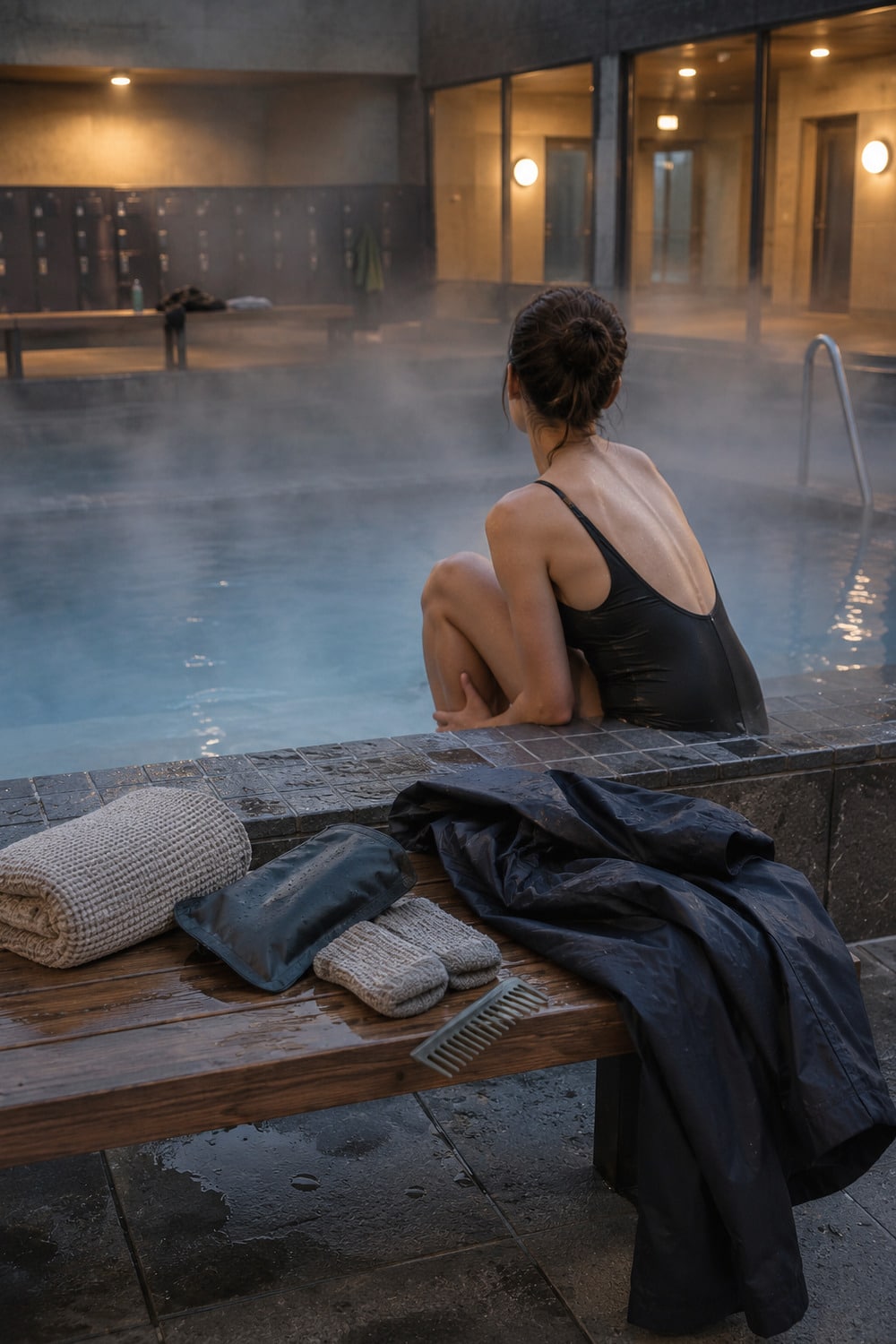
On a wet Reykjavík morning, the city-specific scope behind the phrase Icelandic women lifestyle begins not with a dramatic view but with a small swim bag that can move from pavement to changing room without soaking everything inside it. A towel, swimsuit, comb and dry base layer sit beside the coat needed for the walk home. Steam rising beyond a municipal pool fence turns geothermal water into part of an ordinary city route instead of a distant landscape fantasy.
This feature follows that route through contemporary Reykjavik pool culture: the entrance, shoe line, locker, shower, warm water, neighbourhood setting and return to the street. The subject is narrower than “Icelandic women lifestyle.” It asks what practical simplicity looks like when a public facility, cold air and repeated local use shape the routine. The focus stays with Reykjavík’s municipal system and does not treat its residents, its capital or any individual swimmer as a stand-in for Iceland.
UNESCO inscribed Icelandic swimming pool culture on its Representative List in 2025, recognising a living practice carried by participating communities. That national context matters, yet the details below remain city-specific. Reykjavík pool culture becomes most legible through the things a visitor or resident must actually do: arrive prepared, follow the changing-room sequence, choose a facility suited to the day and notice where access differs.
Key Takeaway: In Reykjavík’s municipal pools, simplicity comes from a clear sequence of weather-ready packing, shared hygiene rules, accessible facilities and an easy return to ordinary city time.
How a Reykjavik Pool Setting Narrows Icelandic Women Lifestyle
The routine begins outside, where this city-specific Icelandic women lifestyle lens is defined by Reykjavík’s wind, which can turn a short walk into a test of closures, cuffs and bag straps. The swim kit works best when wet and dry items have separate places. A waterproof pouch for the swimsuit, a towel that packs down, a dry pair of socks and a hat for damp hair matter more than an elaborate wellness set. The arrangement is modest, but every object answers a local transition between heated water and exposed streets.
At the entrance, the city’s guidelines for swimmers keep the preparation concrete. They advise bringing a towel and swimwear, note that both can be rented, and suggest an extra towel for the sauna. Swim caps are not required. These details show why the routine feels repeatable: the bag can stay small, while the facility supplies the structure around it.
Outside Iceland, the useful adaptation is the packing logic, not the climate costume. In humid weather, the dry layer may become a loose cotton shirt; where a pool is reached by bicycle, a roll-top bag may replace a shoulder tote. The Reykjavík lesson stays functional: separate wet from dry, plan for the temperature after the swim and keep the kit ready enough that using a public facility does not become a special occasion.
The Changing Room Creates the Sequence
Inside the pool building, the phrase Icelandic women lifestyle stays tied to one specific city sequence: shoes come off before the changing area. Clothes and valuables go into a locker, the towel remains near the showers, and the required wash happens before the swimsuit goes on. Reykjavík’s public instructions specify a thorough naked shower with soap. The order can feel unfamiliar to a first-time user, but it is presented as a shared cleanliness practice that helps maintain the water with less chlorine.
This ordered threshold keeps the routine practical and free of mystique. Each step has a place: street dirt stops at the shoe line, dry clothing stays behind the locker door, soap belongs before the pool and the towel waits for the return. The sequence also explains why a pool visit needs fewer decorative products than a private spa ritual. The building already provides benches, water, soap and a defined direction of movement, so the swimmer’s responsibility is preparation and consideration. A reader borrowing the idea at home could create a similarly clear sequence around an evening shower or bath, but the municipal rule itself belongs to the Reykjavík pool, where many unrelated users share the same water.
Geothermal Warmth Inside a Municipal Service
Once outdoors, the city setting keeps Icelandic women lifestyle attached to a physical contrast: cool air reaches the face while the body remains in heated water. In Reykjavík this experience sits inside a civic facility with lane swimming, hot tubs and other features that vary by location. The pool is not staged as a private retreat. Timetables, changing rooms, children’s areas, staff and maintenance place geothermal warmth within the practical machinery of a city service.
A recent profile of Reykjavík pool architecture describes the facilities as municipal services and follows work at Sundhöll, Vesturbæjarlaug and Dalslaug. Its most useful point is spatial. A pool can operate as a neighbourhood anchor because people can return without arranging a full day around the visit. The architecture supports repetition: a recognisable entrance, a known locker route, water temperatures with different uses and edges where conversation can happen without becoming compulsory.
That repeatability also changes the meaning of a quiet evening. After a late swim, the walk home may require only dry layers, a warm drink and fewer decisions. A low-stimulation evening routine can use the same principle of an unmistakable transition, although the Reykjavík version depends on a public pool, geothermal heat and the cold interval between water and home.
Readers should resist turning this sequence into a claim that heated water produces one emotional result for everyone. Some guests swim laps, some sit with companions, some use a hot tub briefly and others need a quieter time of day. The adaptable element is the protected interval in a known place. Its value comes from access, timing and personal use, not from a promised cure or a fixed Icelandic personality.
Neighbourhood Design Changes the Visit
Reykjavík does not offer one interchangeable pool experience, which is why Icelandic women lifestyle remains a narrow city subject here. Sundhöll stands in the central city and carries the presence of an older civic building; Vesturbæjarlaug is described through its neighbourhood scale and outdoor facilities; Dalslaug was planned for the newer suburban setting of Úlfarsárdalur. The route to each pool, the surrounding streets and the mix of nearby uses affect whether a visit fits before work, after errands or beside family time.
The distinction matters because “simplicity” can hide geography. A central pool reached on foot asks for a different bag and timetable from a suburban facility reached after a commute. A small neighbourhood pool may support familiar repeated encounters, while a larger complex can distribute swimmers among lanes, tubs and family areas. None of those patterns represents the whole city; they show how public design changes the scale of contact.
For a reader elsewhere, the closest equivalent may be a community pool, bathhouse or recreation centre with no geothermal water at all. Compare distance, opening hours, changing arrangements, seating and the route home before copying surface details such as pale tiles or wool accessories. The strongest Reykjavík reference is the fit between facility and neighbourhood, not a decorative Nordic mood.
Access Belongs to the Architecture
A simple routine is only simple when the route works for the person using it, and this city-specific Icelandic women lifestyle approach depends on that access. The city’s pool accessibility information lists private changing rooms, walking frames and facility-specific details about lifts, thresholds, doors and access to tubs. It does not flatten the network into one promise: entries for individual pools identify where stairs, heavy doors or limited tub access still matter.
That level of detail is a material part of cultural accuracy. A photograph of steam over blue water cannot show whether the changing bench locks, whether a lift reaches the outdoor pool or whether the sauna entrance has steps. The Reykjavík listings separate these details pool by pool, because a route that works at Árbæjarlaug may not match the route through Sundhöll or Vesturbæjarlaug. Before treating a public bathing routine as effortless inspiration, check the actual facility. Practical adaptation may mean choosing another pool, bringing an assistant, asking staff about equipment or replacing the swim with a different warm-water routine where access is uncertain.
The Swim Ends in Dry Layers and Ordinary Time
The return to the locker completes the sequence. Soap, towel, dry socks and an outer layer prepare the body for Reykjavík air; a separate pouch contains the wet swimsuit. Hair may need to be dried before a walk in colder conditions, while skin care can remain plain and protective. Someone who prefers light coverage after the pool might use ideas from skin tint makeup, but that choice belongs to individual preference and says nothing about the pool’s cultural meaning.
Recurring visits can also give this city-specific Icelandic women lifestyle feature a low-pressure social structure. Meeting one friend at the same pool gives the plan a clear location and a natural ending, with conversation fitting around laps or a short soak. That kind of appointment can sit beside other nourishing friendship habits, without assuming that every hot tub is social or that every swimmer wants company.
The most portable idea is therefore procedural. Keep a small kit, learn the rules of the shared space, choose a time and facility that match your needs, and plan the transition home. The least portable parts are equally important: Reykjavík’s geothermal infrastructure, municipal network, climate and neighbourhood history cannot be recreated by buying neutral towels or styling a room in grey. Respecting those limits keeps the inspiration attached to its place.
Final Thought
Reykjavík’s municipal pool routine keeps Icelandic women lifestyle within a narrow city setting, answering the question of simplicity through sequence, not personality: a weather-ready bag, a defined changing-room order, warm shared water, a facility chosen for its location and an accessible route back to dry clothes. Read at that scale, the practice offers a precise editorial idea without turning Icelandic women, Reykjavík residents or a capital city into a cultural type.
References and Further Reading
- The Ultimate Guide to Icelandic Swim Culture
- Inside Sky Lagoon, Iceland’s New Geothermal Spa
- A local’s guide to Reykjavík, Iceland: the best bars, cafes, beaches and geothermal pools
- In hot water: an Iceland swimming holiday
- How do I go swimming?
- Reykjavík swimming pool accessibility
- “Soul of the nation”: UNESCO recognises Iceland’s swimming pool culture
- The Rise And Rise Of Swim Culture In Iceland
Related Reading