
Editorial Note: This beauty article is for general editorial inspiration only. It is not medical advice, dermatology advice, diagnosis, treatment, or professional care. Adapt every idea to your skin, body, budget, preferences, and qualified guidance when needed.
Skin tint makeup can look effortless in warm weather, yet the finish often turns uneven when sunscreen, humidity and repeated touch-ups meet on the same surface. The useful question is not how to make a tint cover like foundation. It is how to keep the base sheer while giving redness, discoloration or shine enough attention to look intentional.
A tint usually carries less pigment than a conventional foundation, so shade, undertone and placement remain visible even when coverage is light. A dewy formula may become glossy by midday; a matte one may catch around dry areas. The best choice is the finish that still looks balanced after your usual skincare and sunscreen have settled.
This approach builds the base as a map rather than a blanket. Product goes where tone needs softening, concealer handles small areas that need more opacity, and powder is reserved for places where makeup actually moves. The method also leaves room for reapplication of sun protection without pretending a cosmetic tint can replace a properly used sunscreen.
Key Takeaway: A light summer base stays convincing when tint, concealer and powder are placed by need instead of spread evenly across the face.
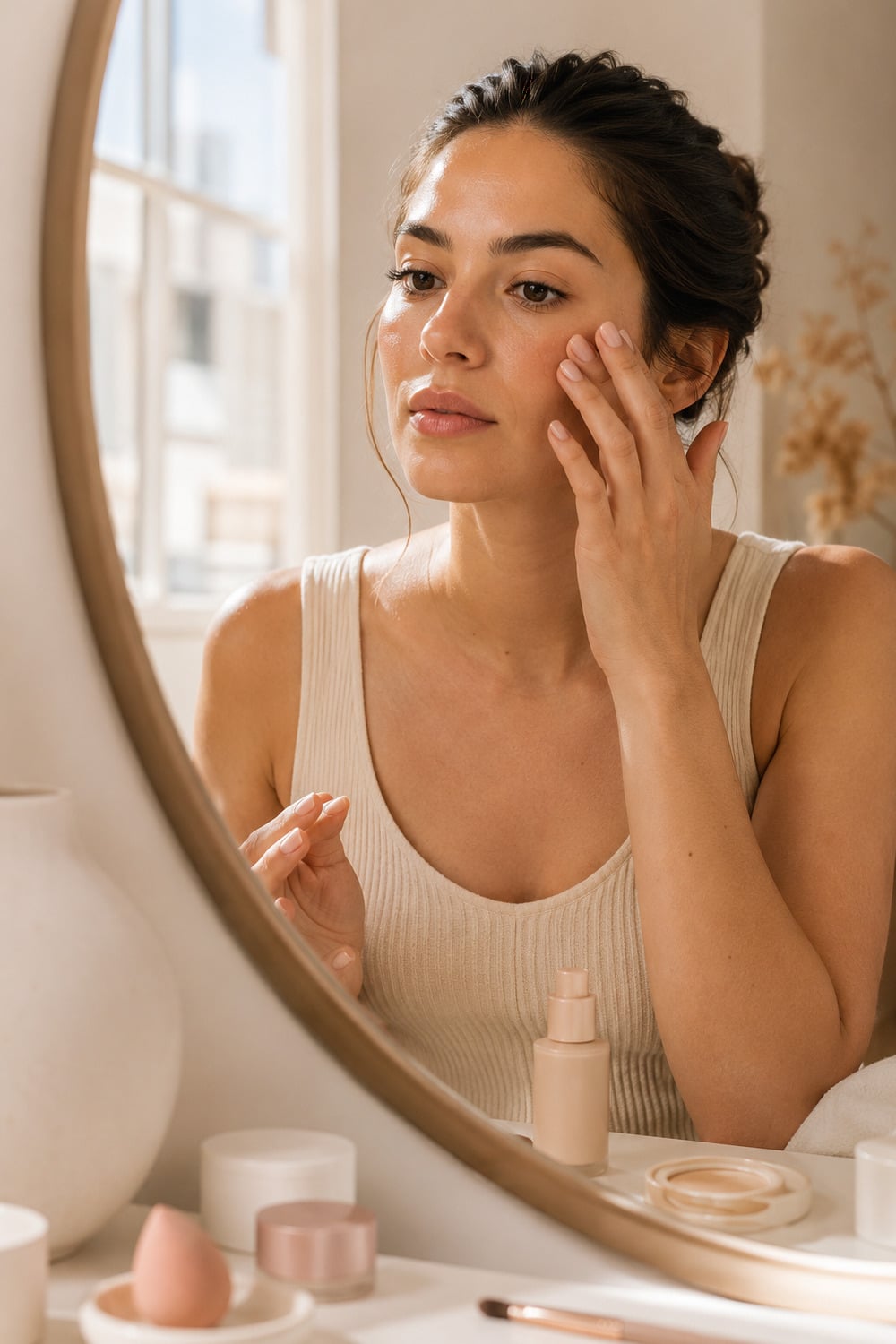
What Skin Tint Makeup Can Realistically Change
The sheer coverage in skin tint makeup can soften the contrast between the centre of the face and the outer edges, but it will not give the opacity of a medium or full coverage foundation. Freckles, texture and deeper areas of discoloration may remain visible. That limitation is useful in summer because it keeps the routine from becoming a full foundation application in smaller packaging.
Think of the finish beside no makeup makeup for heat: both keep the complexion recognisable, but the tint should have a clear job. Apply it first where the face looks most uneven in daylight, then stop before the product reaches every edge by habit. The temples and jaw often need less than the nose, inner cheeks and chin.
Coverage should also be judged after the tint has dried for a few minutes. A wet formula can look more luminous and more transparent than it will later. Checking the face once near a window and once in ordinary indoor light reveals whether the base is genuinely even or simply reflective.
Sunscreen Sets the Order of the Base
When skin tint makeup is worn by day, sun protection belongs underneath and should be applied in the amount and manner stated on its label. Allow it to settle before adding makeup, then press a small amount of tint over one cheek as a compatibility check. If the layers roll into small flakes or shift under light pressure, adding more product will usually make the separation easier to see.
Sun protection also needs reapplication according to the product directions, especially after swimming or sweating. That may disturb makeup, so a summer base is easier to maintain when it starts with fewer corrective layers. A hat, sunglasses, clothing and shade remain part of the plan; the SPF printed on a tint is not permission to use less of a dedicated sunscreen.
Finish and Shade Need Separate Decisions
Choose finish by looking at what happens after skincare, not by relying only on a skin type label. A dewy tint over a rich moisturiser may create more sheen than expected, while a natural matte tint can sit neatly over a sunscreen that already leaves a luminous film. Satin finishes often give the widest margin because they can be powdered selectively without losing all surface light.
Shade needs its own test. Place a narrow stripe from the lower cheek towards the jaw, blend one edge and leave the other slightly denser. The blended side shows the undertone in a realistic layer; the denser side reveals whether the pigment turns noticeably grey, orange or pink. Wait for the formula to dry before deciding, since some tints deepen as volatile ingredients evaporate.
Sheerness does not make a poor match disappear. It can make the mismatch look like a faint cast across a larger area. When two shades are close, the one that remains calm against the neck is usually more useful than the one that seems brightest on the centre of the face.
Application Tools Alter Coverage More Than Expected
Clean fingers give quick, controlled placement and keep most of the product on the skin; use them when skin tint makeup blends easily and you want the lightest routine. A damp sponge lifts and diffuses excess, which helps around the nose and hairline but can reduce coverage. A compact brush deposits more pigment and is useful for stippling over small uneven areas, provided the edges are softened before the formula sets. The tool is therefore a skin tint application decision, not merely a preference.
Concealer and Powder Should Follow a Coverage Map
After the tint settles, look for the few places that still draw attention rather than adding a second full layer. Selective concealer can be placed with a small brush or fingertip around the nostrils, beneath the inner corners of the eyes or on an isolated mark. Keep each correction narrow and blend its edge into the tint; bright concealer spread too widely can make the sheer base appear patchy.
Powder belongs on movement zones, not automatically across the whole face. Press a small amount around the sides of the nose, between the brows or on the chin, then leave the cheek perimeter alone unless it becomes shiny. This borrows the restraint of soft focus foundation while preserving the lighter pigment level that defines a tint.
Warm Weather Touch Ups Need Less Product
When shine appears over skin tint makeup, blot first with a clean tissue or blotting sheet. Powder applied directly over moisture can form a darker, thicker patch, particularly beside the nose or under the lower lip. Once the surface feels dry, use a small brush to replace only the powder that has worn away.
Colour products should follow the same restraint. Cream blush can merge neatly with a sheer base, but repeated layers may lift tint that has not set. Tap colour onto the outer cheek with minimal pressure, and keep any evening warmth from golden hour makeup above the area where the base tends to separate.
At the end of the day, remove the base with the cleanser or makeup remover that suits the products you used, then follow with your usual gentle routine. Persistent stinging, swelling or a severe reaction is outside a makeup adjustment; stop using the new cosmetic and seek qualified advice. Ordinary fading, shine and visible texture are wear issues, not signs that the tint has failed.
Final Thought
Skin tint makeup earns its place in a light summer base when it is allowed to stay sheer: match the finish to the layers underneath, map coverage carefully and touch up only where heat has changed the surface.
References and Further Reading
- 12 Best Skin Tints for a Natural, Your-Skin-But-Better Finish
- How to Apply Foundation With a Sponge, Brush, or Your Fingers
- How to apply tinted moisturiser, according to a pro makeup artist
- How To Heatproof Your Make-Up This Summer
- How to apply sunscreen
- Sunscreen and sun safety
Related Reading