Editorial Note: This lifestyle article is for general editorial inspiration only. It is not financial, medical, legal, travel, safety, or professional advice. Adapt every idea to your personal needs, budget, culture, location, and circumstances.
Cafe work outfits have a peculiar job to do. They need to feel comfortable through a long stretch at a small table, look composed from the shoulders up on a call, and still make sense when you walk in from the street carrying a laptop and a coat.
That makes a café day different from both office dressing and working at home. The useful question is not whether an outfit looks “smart casual” in a mirror, but whether the clothes still sit well after an hour in a chair, the bag stays manageable beside the table, and the outer layer can come off without dismantling the whole look.
Key Takeaway: Build cafe work outfits around seated comfort, a tidy upper half, walkable shoes and a compact carry setup that still works once the laptop is open.
Cafe Work Outfits Start with Seated Comfort
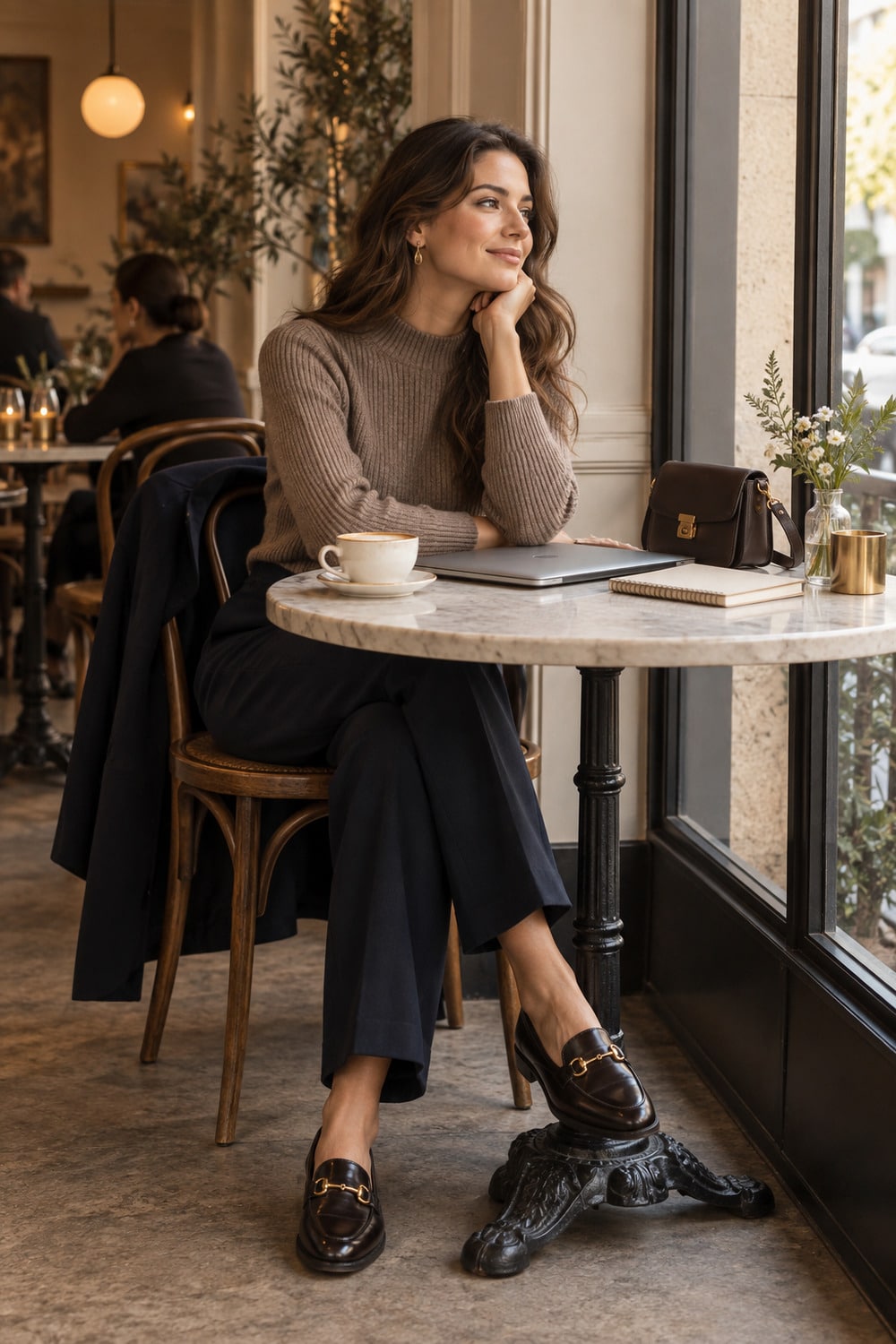
The best way to judge cafe work outfits is sitting down, because that is where most of the day happens. High, rigid waistbands can feel fine while standing and become distracting at a narrow table; very long jackets may bunch behind the hips; deep armholes can pull when you reach for a charger. A useful test is to sit for a few minutes at home, lean forward as if typing, and check the waist, shoulders and hem before deciding the outfit is ready.
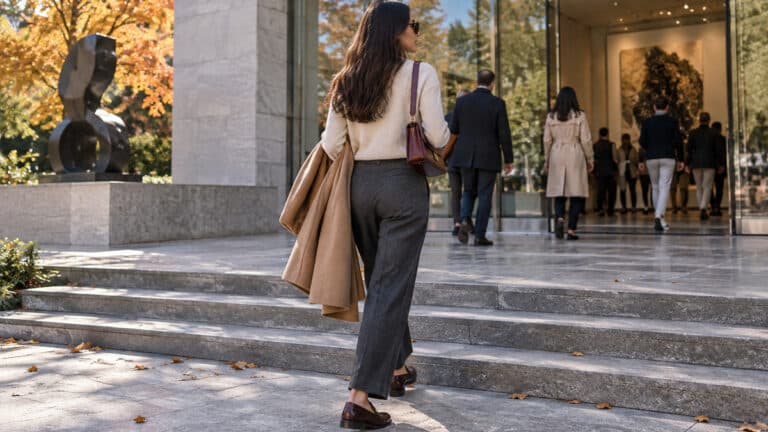
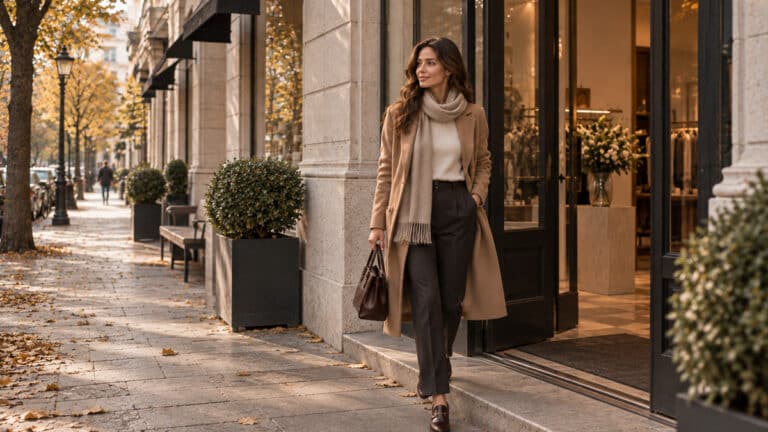
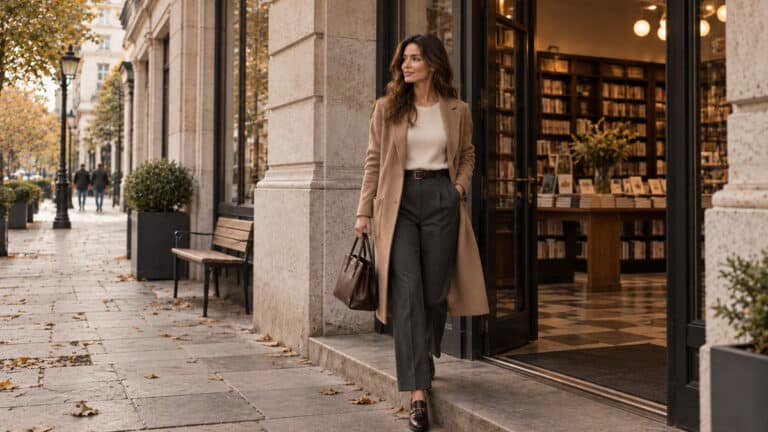
Soft tailoring usually gives more room for that movement than a sharply built jacket. Relaxed trousers, dark straight-leg denim or a skirt with enough ease to sit without constant adjustment can all work. If the weather calls for a more defined outer layer, structured coat style can stay on the commute side of the outfit while the layer underneath remains softer for the table.
This seated test also answers a common question about whether café work can be casual. Yes, provided the casual pieces keep their shape in use. A clean knit with dark denim and loafers may serve the setting better than formal trousers that pinch or a blazer you remove five minutes after arriving.
The Upper Half Has to Work Harder
The neckline, shoulders and top layer do more visual work in outfits for video calls than the lower half. Fine knits, tidy crew necks, soft collared shirts and simple cardigans tend to frame the face without demanding adjustment. Vogue’s editor workwear coverage repeatedly returns to shirts, knitwear, trousers and flats as practical foundations, which is useful here because those pieces can move between screen time and the rest of the day without looking like a costume.
Choose the layer by what happens after the call. A cropped cardigan keeps a trouser waistband visible, while a longer knit gives more coverage when you stand and move through the café. If you prefer that second option, longline cardigan outfits offer useful proportion ideas; for a small table, keep sleeves and cuffs simple enough that they stay clear of cups, keyboards and notebooks.
Your Bag Controls the Table Footprint
The bag is part of the working setup, not just the outfit. Before leaving, decide what actually needs to come out on the table: laptop, phone, perhaps a slim notebook. Cables, wallet, cosmetics and other small items can stay grouped inside one pouch so the surface does not slowly disappear under loose objects.
Shape matters as much as appearance. A tote that stands upright beside your chair or a slim backpack that closes fully is easier to manage than an overfilled open bag that collapses into the aisle. If a large coat, umbrella and laptop bag all need separate space, the outfit may be visually neat but practically cumbersome.
This is also where a refined remote-work look can stay personal without becoming shopping-led. Use the bag you already own if it carries the laptop securely and closes easily; the improvement may be editing the contents, not buying a new tote. A compact setup keeps cafe work outfits calmer once work begins.
Footwear Has to Work Beyond the Chair
Remote work outfits still have a route attached to them. The shoe needs to handle the walk from home, the café floor and any errand or meeting that follows. Loafers, ballet flats, clean low-profile sneakers and stable ankle boots are useful categories because they can sit comfortably under tailored trousers or denim without turning the outfit into formal officewear.
Choose by the actual distance and weather, not by the fact that most of the day is seated. The same logic appears in museum day outfits: an attractive shoe has to keep working once the day involves real movement. If rain is likely, use the weather-ready pair and let the knit, bag or earrings carry the dressier detail.
Colour and Texture Keep Layers Coherent
A small palette makes it easier to add and remove layers without creating a mismatched outfit halfway through the morning. Charcoal with camel, navy with stone, chocolate with cream, or grey with burgundy all allow a coat, knit and trouser to trade places while the look still reads as one outfit. You do not need every piece to match; one repeated tone in the shoe, belt or bag is often enough to connect them.
Texture does more work than extra accessories at close range. Ribbed knitwear, brushed wool, smooth leather or suede can give simple separates enough depth for a café setting. A scarf is useful when you want warmth that can be folded away quickly, and Cashmere scarf style shows how a soft layer can sit with coats and knitwear without adding bulk around the laptop.
The Outfit Should Fit the Actual Cafe
The room itself changes how cafe work outfits need to behave. A spacious hotel lounge and a busy neighbourhood coffee shop ask for different levels of bulk. In a room with small tables and close-set chairs, a slim bag, shorter coat or easy-to-fold layer makes more sense than an outfit that needs an empty chair for storage. If you know the café runs warm, wear the finished look underneath the coat instead of relying on outerwear to provide all the structure.
Calls change the equation as well. A soft blazer over a knit can be useful on a meeting-heavy morning, while a writing day may need nothing more formal than a clean cardigan and dark trousers. The point is to build for the tasks you will actually do, including standing in line, carrying a drink, charging the laptop and packing up quickly when you leave.
That practical filter also prevents over-dressing. A café is a shared public space, so an outfit that stays compact and easy to manage is often more successful than one designed mainly for a photograph. Comfort here is specific: the clothes should let you sit, reach, layer and leave without repeated adjustments.
Final Thought
The strongest cafe work outfits are the ones that still feel composed after the coat comes off, the laptop opens and an hour passes in the chair. Dress for that sequence, and the style follows the way the day is actually lived.
References and Further Reading
- What Do Vogue Editors Actually Wear to Work? Here’s a Look at Our Office Mood Boards
- 10 Office-Ready Looks to Make Your Fall Work Uniform
- 13 Casual Work Outfits That Make Office Dressing Effortless
- What to Wear When You Work From Home
Related Reading