
Elegant errand outfits have a harder job than most casual looks. A grocery stop, a return, a coffee meeting and a long walk can all land in the same afternoon, so the clothes need enough ease for movement and enough definition to still feel considered when the setting changes.
The most reliable way to get there is to dress for the route before you dress for the mirror. Start with the part of the day most likely to create friction, then build outward from a base you can sit, carry and walk in without constant adjustment.
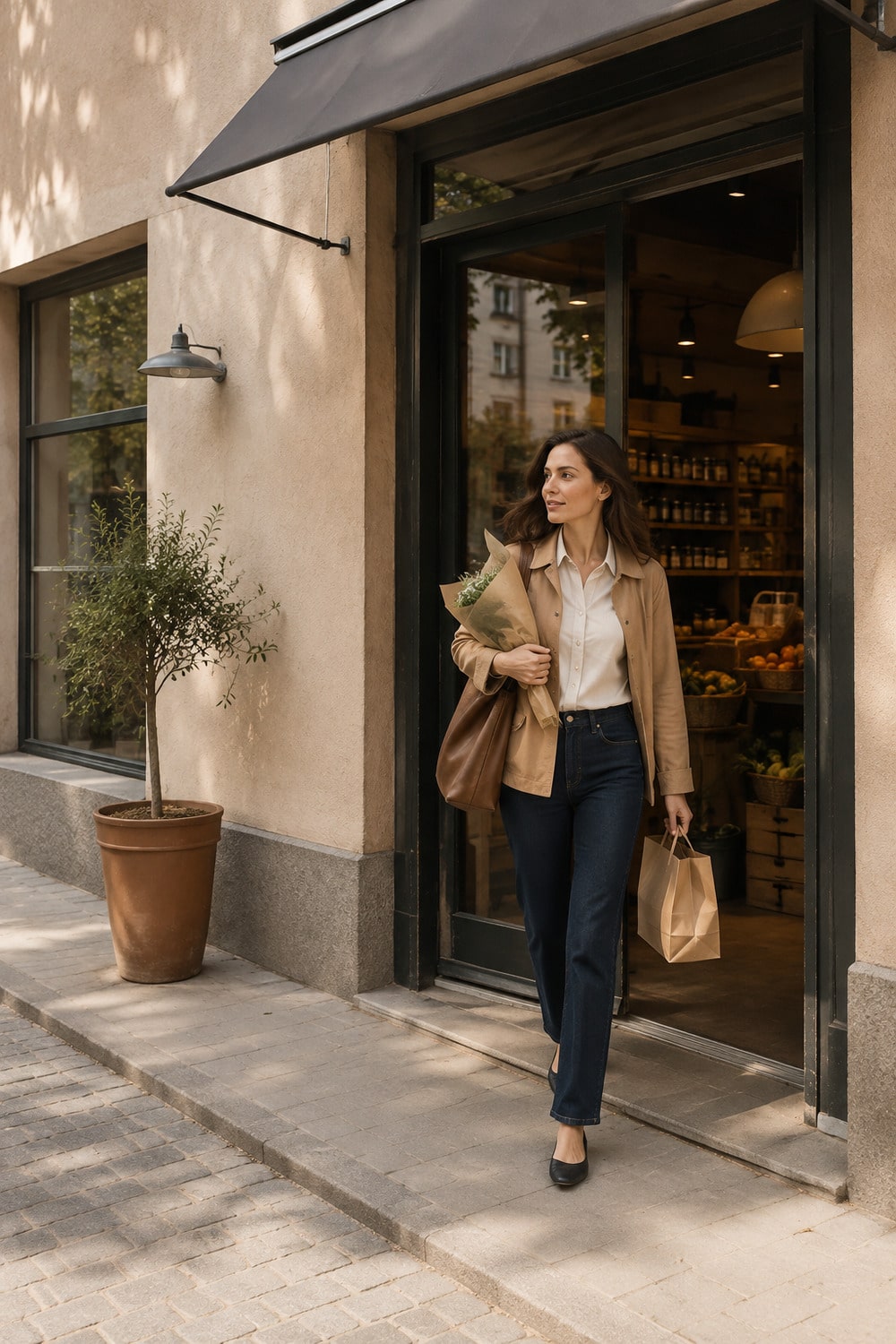
Elegant Errand Outfits Start With the Hardest Stop
Look at the schedule and find the least forgiving part. It might be a ten-minute walk from the car park, a supermarket basket that turns into two heavy bags, an appointment with a waiting room, or a school pickup that leaves you standing outside. That stop sets the practical baseline for the outfit. Everything else has to work around it.
Recent fashion coverage still puts collared shirts, denim, loafers, trenches and blazers among everyday essentials, while casual-outfit editors continue to build looks from familiar wardrobe staples. For errands, that makes more sense than buying a dedicated uniform: choose the pieces you already trust, then decide which one can carry the visible polish.
Choose a Base That Can Survive Stop Three
The base should be the part of the outfit you stop thinking about once you leave home. Straight or relaxed trousers, jeans with a waistband that stays comfortable when seated, a jersey dress that holds its line, or a skirt you can walk in at a normal pace all give the rest of the look somewhere calm to sit.
Colour can make familiar basics read as one outfit without demanding an exact match. A narrow palette of cream, camel, chocolate, navy, grey or black is easy to repeat through a belt, shoe or bag. If you prefer a warmer tonal approach, brown monochrome outfits show how texture can separate similar shades without adding visual clutter.
Then account for temperature changes. An open shirt, light cardigan, relaxed blazer or overshirt can add a defined shoulder or collar while remaining easy to remove. The best layer for a busy route is one you can carry without resentment and put back on without rebuilding the outfit.
Add Polish Where It Shows First
One clear structural cue is usually enough. A crisp collar, a clean shoulder line, a belt at the natural waist or a short jacket can make a simple base look deliberate while leaving the knees, hips and arms free for the practical work of the day. Test that structure with the actual bag: a jacket that bunches under a shoulder strap or a long layer that catches against a car seat will feel less polished after the first few stops.
Treat Shoes and the Bag as One Decision
Choose footwear for the longest stretch on foot. Clean trainers, loafers, ballet flats, low boots and secure slingbacks can all work in polished casual outfits when the pair suits the surface, pace and weather you expect. The point is not to choose the dressiest shoe; it is to avoid making the most practical part of the route the weakest part of the outfit.
If you want more personality at ground level, quiet statement shoes offer a separate way to think about toe shape, texture and colour. Keep that detail secondary here. On an errand day, the shoe still needs to cooperate with the bag, the walking distance and the hem above it.
The bag has its own movement test. A crossbody or secure shoulder strap helps when both hands will be occupied, while a structured tote makes sense for shorter routes with documents, returns or a water bottle. Load it before you leave. A bag that looks right empty can pull an outfit off balance once it is carrying the day.
Run the Doorway Test Before You Leave
Give the finished outfit two minutes of real movement. Sit as you would in the car, bend toward a low shelf, reach overhead, walk with the loaded bag and put the outer layer on and off once. You are looking for the small failures that a mirror can hide: a sliding strap, a hem that catches, a waistband that folds, or a layer that never settles back into place.
Fix one weak point and leave the rest alone. Swap the unstable bag, change the shoe or simplify the layer instead of restarting the outfit. For routes built around more walking, city walk outfits extends the same logic into longer outdoor plans. The result is an errand look that stays composed because the practical decisions were made before the door closed.
Related Reading


