Editorial Note: This lifestyle article is for general editorial inspiration only. It is not financial, medical, legal, travel, safety, or professional advice. Adapt every idea to your personal needs, budget, culture, location, and circumstances.
On a cool fall morning, cashmere scarf style can change how the whole upper half of an outfit reads even when the scarf is the last thing added. A wide cashmere wrap over a small collar creates a different silhouette from a narrow scarf inside an open coat, even when the colors are almost identical.
Good cashmere scarf style starts with the clothes already in place. The coat neckline, scarf width, color relationship and the way you will move through the day matter more than collecting complicated knots.
Key Takeaway: Choose the scarf width, color and drape in response to the coat neckline and the way you will actually move through the day.
Color Can Echo the Outfit or Break It
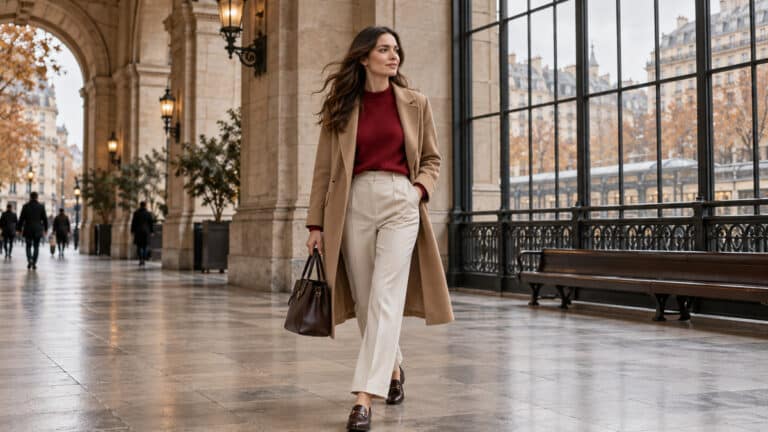
A neutral scarf is useful because it can repeat colors already present in a coat, knit or trousers. Oatmeal beside camel feels continuous, while charcoal against black gives a small shift in depth without introducing another strong focal point.
Contrast gives fall scarf outfits a different emphasis. A burgundy, forest green or clear red scarf can interrupt an otherwise quiet outfit, so it helps to let that scarf carry the stronger color instead of adding several competing accents near the face. The choice is simple: either echo a color that is already present or introduce one deliberate break.
If you want the color itself to lead, red sweater style offers a useful comparison because it shows how a stronger seasonal shade can sit against calmer surrounding pieces. With a scarf, the same idea is concentrated in a much smaller area, which makes restraint elsewhere especially useful.
The Coat Decides How Much Scarf Fits
Open lapels give cashmere scarf style more vertical space, letting a longer scarf fall without hiding the coat shape. A high funnel neck, broad hood or already-bulky collar has less visual space, so folding the scarf narrower or keeping the ends shorter can stop the neckline from becoming crowded.
This is why the coat deserves to be chosen before the final drape. A clean example in structured coat style makes the relationship easy to see: when the outer layer has a clear line, the scarf can soften it without covering the very structure that gives the outfit its shape.
Long Lines Need a Different Drape
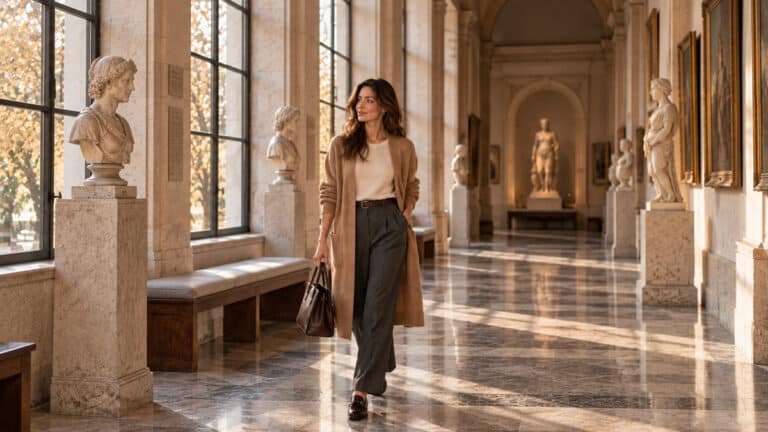
With a long coat or cardigan worn open, two loose scarf ends can follow the opening and keep the eye moving vertically. The effect is especially calm when the scarf is only slightly lighter or darker than the layer beneath it.
A looped scarf changes that line because it gathers the fabric around the neck. That can be useful with cropped jackets or shorter knits, where a long hanging scarf may look disconnected from the hemline, but it can add too much weight to an outfit that already has a high collar or thick lapels.
For softer outer layers, longline cardigan outfits shows why length matters. A scarf that follows the cardigan opening can keep the silhouette relaxed; a bulkier wrap is better reserved for days when the scarf itself is meant to supply more of the visible layer.
Cashmere Scarf Style Depends on Scarf Width
A narrow scarf behaves like a neck accent. It can be looped once, tucked inside a coat or left with slim ends at the front without taking over the shoulders. An oversized scarf behaves more like a wrap, creating a broad field of texture across the chest and upper back.
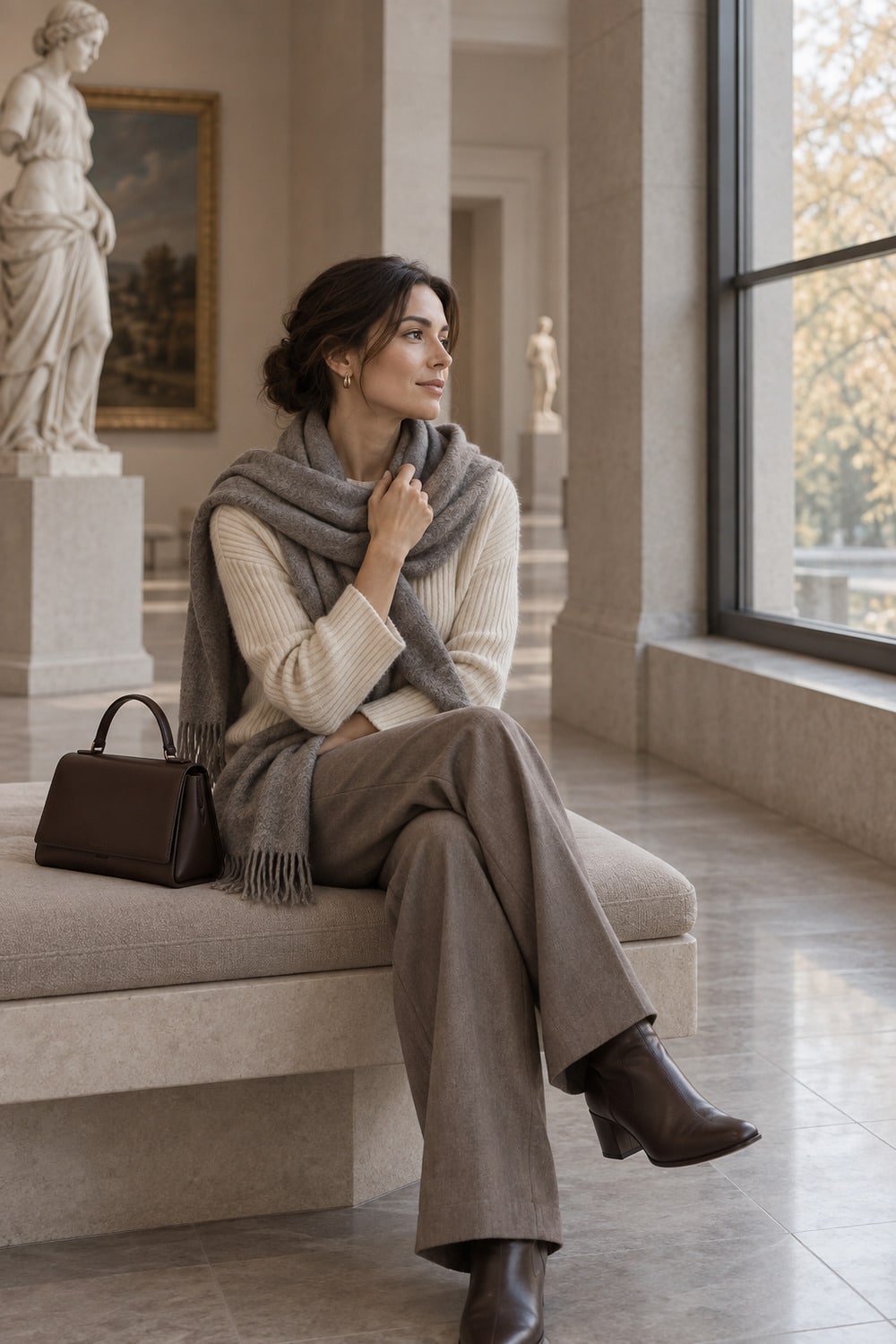
That difference matters indoors as well. A large wrap can feel elegant over a simple knit when you are sitting in a café, gallery or office lounge, yet the same amount of fabric may be cumbersome at a small table or under a fitted coat. Folding it lengthwise before wrapping gives you a middle option without changing scarves.
The easiest way to wear a cashmere scarf is therefore not one universal knot. It is the arrangement that suits the scarf’s width and the neckline underneath: a loose drape for open tailoring, a single loop for a compact coat, or a shoulder wrap when the scarf is wide enough to sit flat.
If pure cashmere does not suit your budget, wardrobe habits or preferred care routine, the same proportion decisions can be used with wool or soft blended scarves. The styling logic comes from width, drape and color placement rather than a label alone.
Bag Straps and Movement Change the Drape
A scarf can look balanced in the mirror, yet a crossbody strap or shoulder bag can change the cashmere scarf style as soon as you start moving. Put the bag on before the final adjustment. If a strap pins one side of the scarf, shorten that side slightly or tuck an end inside the coat so the fabric does not keep pulling unevenly while you walk.
For commuting, errands or a breezy walk, a single loop or one tucked end usually stays closer to the body than two long loose tails. For a seated lunch or gallery afternoon, a wider shoulder drape can make sense because it can be reset when you sit down. The useful question is not which knot looks most impressive, but which one stays comfortable in the setting you are actually entering.
Jewelry Should Not Fight the Scarf
A plush scarf already fills the space around the jaw, collarbone and coat opening. Large earrings, layered necklaces and prominent bag hardware can all be attractive on their own, but combining every detail at once makes it harder to see the scarf’s texture and the coat line.
Small hoops, a simple watch or a clean bag shape are often enough when the scarf is broad or brightly colored. If the scarf is narrow and the coat is open, there is more room for a necklace to remain visible without competing for the same area.
On milder days, silk scarf style gives a lighter alternative with less bulk at the neckline. The contrast is useful because it makes clear that a cashmere scarf does not need extra ornament to look complete; its scale, color and drape can do the work.
Final Thought
The strongest cashmere scarf style starts with the coat collar, scarf width, color and the way the outfit will move through the day. Once those decisions are clear, a simple drape can look considered without feeling staged.
References and Further Reading
- How to Style the Silk Scarf, Inspired by the Fall 2026 Runways
- A Wrap Scarf Elevates Every Outfit—And Makes a Great Gift
- How to Wear and Style Scarves
- How to Wear Cashmere: Your Cashmere Styling Guide
Related Reading