
Editorial Note: This wellness article is for general editorial inspiration only. It is not medical advice, mental health treatment, diagnosis, fitness prescription, nutrition plan, or professional care. Adapt every idea to your body, health, circumstances, and qualified guidance when needed.
When a blank page follows a day spent answering messages, solving practical problems and making choices for other people, searching harder for ideas can add another demand. Creative rest for women is more useful here as a pause from producing: time to notice, receive or leave an unfinished thought alone without immediately turning it into content.
The phrase is commonly used for the kind of rest that comes from appreciating what has already been made, whether that is a garden, a film, a piece of music, a building or a quiet detail in an ordinary street. It works best as an editorial lens, not a diagnosis or a promise that inspiration will appear on schedule.
Access matters too. A ticketed gallery, a free library book, a view from a window and a familiar song can all offer creative input at very different costs. If ongoing exhaustion, low mood or difficulty functioning is the real concern, a lifestyle idea about creative rest should not be used to explain it away.
Key Takeaway: Creative rest can make room for beauty, curiosity and unfinished ideas without requiring an immediate creative result.
Creative Rest for Women Begins With Receiving
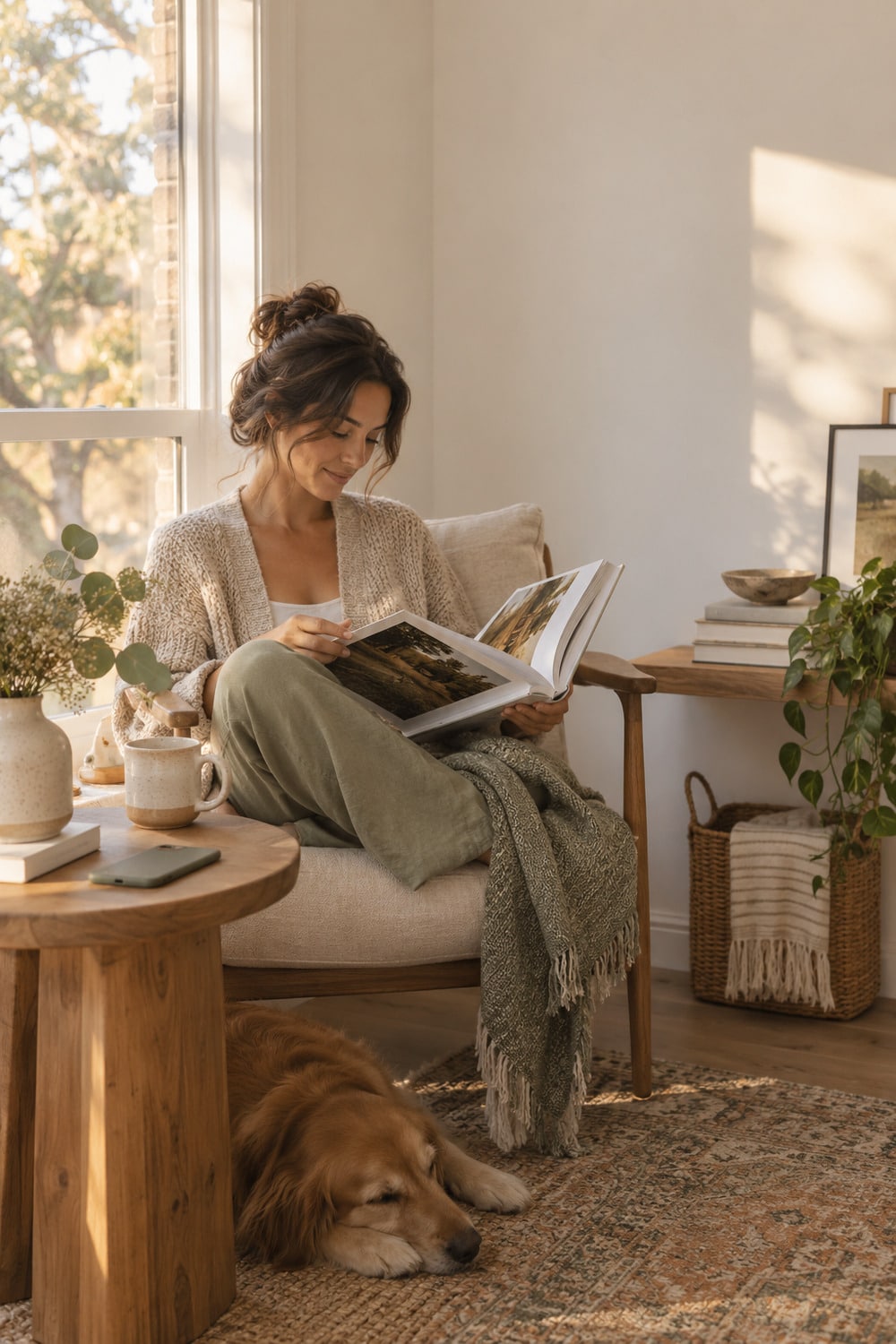
Creative rest for women is easiest to understand as input without an assignment attached. Looking at photographs, listening to an album, noticing autumn light on a wall or reading a few pages can be enough when there is no requirement to save, summarise, post or improve the experience. The point is not to collect references faster; it is to spend a little time with material that does not ask you to perform.
Stillness is one version, but creative pauses do not have to mean doing nothing. A slow museum visit, people-watching from a café, a short walk through a familiar neighbourhood or sitting with an art book can all fit. What matters is the relationship to the activity: if it becomes another task with a target, checklist or expected result, it has moved away from rest and back toward production.
When Less Input Matters More Than New Input
A useful distinction is whether the day has felt saturated or stale. After hours of notifications, meetings, tabs and background noise, adding a podcast, exhibition or inspiration board may simply increase the volume. In that situation, lower-input choices such as a quiet room, an unhurried walk or a few minutes without a screen may fit better than seeking novelty.
A stale day has different friction. Repetitive surroundings, the same route and the same visual feed can leave little fresh material to notice. A new street, a different library shelf, public architecture, a local market or one unfamiliar piece of music can introduce variety without requiring a whole outing or purchase.
Transitions are often practical places to test the difference because they already exist in the day. If a journey feels mentally crowded, mindful commute rituals can help make the trip quieter; if it feels monotonous, the same journey can become a chance to notice one detail you usually pass.
Digital friction deserves its own check. When saving references turns into sorting, comparing or opening more tabs, the activity has changed shape. A digital fall reset can reduce that clutter, but creative rest for women does not require a total digital break; a single film, playlist or virtual collection can still be a deliberate source of input.
Beauty Works Best When It Is Not Homework
Nature appears often in conversations about creativity, and a recent scoping review found broadly positive links across varied settings and measures while also noting that the evidence base is still developing. That makes a park, garden or waterside path a reasonable option for inspiration, not a guaranteed creativity switch. Weather, mobility, safety and access may make indoor choices more realistic on many days.
Everyday beauty does not have to be expensive or rare. A library art book, a public mural, textiles already at home, a radio concert, changing late-afternoon light or a well-designed everyday object can provide enough visual or auditory difference to interrupt sameness. The quality to notice is attention, not prestige.
Leave some of that input undocumented. Photographing, bookmarking and rating can be enjoyable, but they also create a record to manage. Occasionally letting a colour combination, song or garden remain uncollected leaves room for inspiration without pressure, keeps the experience from becoming an archive project and gives the pause a clear ending.
Private Play Can Stay Unfinished
Creative rest for women and creative play sit close together, but they are not identical. Receiving can lead to doodling, arranging flowers, moving furniture, trying a recipe by colour or writing a few lines, yet none of those activities needs to become proof that the rest “worked.” A private experiment can stop halfway, be discarded or stay imperfect. That freedom is especially useful when creative work, social media or paid projects have made every idea feel as though it should become something shareable.
Connection Can Be Part of the Pause
Solitude is often associated with creative rest, but company can fit when it lowers rather than raises the social demand. A friend who is comfortable sharing a quiet gallery, listening to music or walking without filling every silence may make beauty easier to notice. A class can also work for some people, although cost, travel, timing and the pressure to perform can make it less restful for others.
When companionship is the useful ingredient, friendship rest rituals offers a related way to think about low-pressure time together. The important distinction is whether the plan leaves room to receive and notice, or creates another event to organise, host and manage.
Access can be adjusted without diluting the idea. A seated view, an accessible garden route, an audio performance, a borrowed book, a phone call while each person does something quiet at home or a short visit to a nearby public space may fit better than a long outing. Creative rest for women should flex around mobility, caregiving, budget, climate and privacy rather than assuming unlimited free time.
Make Room Without Making a New Routine
A fixed weekly ritual is not necessary. Creative rest for women can be placed at the points where output has started to dominate: after finishing a demanding project, at the end of a screen-heavy day, before asking for the next idea or during a weekend that has filled with errands. If evenings are the easiest opening, cozy evening rituals can provide atmosphere without turning the whole night into a programme.
It can also end without a productivity test. You do not need to return with a concept, a sketch or a better mood. If an idea appears, jotting down one line may be useful; if nothing appears, the pause still remains a period in which you were not required to generate. Persistent fatigue, distress or loss of day-to-day function belongs outside this kind of lifestyle framing and may warrant qualified professional support.
Final Thought
When the page feels blank after a day full of demands, the next useful move may be to stop feeding it. A quieter or more interesting piece of input, chosen for the day you actually had, can leave the idea unfinished until it is ready to become work again.
References and Further Reading
- How to slow down and find some meaningful rest
- If You’re Constantly Tired Despite “Good” Sleep—You Might Be Getting The Wrong Type of Rest
- Does incubation enhance problem solving? A meta-analytic review
- Exploring the Nature-Creativity Connection Across Different Settings: A Scoping Review
Related Reading