
Editorial Note: This wellness article is for general editorial inspiration only. It is not medical advice, mental health treatment, diagnosis, fitness prescription, nutrition plan, or professional care. Adapt every idea to your body, health, circumstances, and qualified guidance when needed.
Autumn meal prep rituals are most useful when they solve the part of the week that actually causes friction: an empty lunch slot, a late journey home, a crowded fridge, or ingredients that need using before they soften. A row of identical containers is optional; knowing what can become dinner quickly is the practical part.
Cooler weather also changes what is pleasant to cook and reheat. Roasted squash, mushrooms, grains, beans, soups and tray-baked vegetables can work across several meals, but they do not all keep or reheat in the same way. The prep plan therefore needs two clocks: when you expect to eat something and how long that food can be stored safely.
Flexible meal planning leaves room for appetite, invitations, cultural preferences, budget changes and nights when cooking plans simply move. The aim is a kitchen with useful options, not a week that has to follow a script.
Key Takeaway: Prepare a few adaptable autumn components, decide their storage window before cooking, and leave open space for the week to change.
Autumn Meal Prep Rituals Start With What Is Already There
Before choosing recipes, look at the food that already has a deadline. A half bag of spinach, cooked lentils, open yogurt, mushrooms and a squash do not need the same response. The first two may belong in the next meal; the squash can wait. That simple order keeps the prep session tied to the actual fridge instead of an idealised shopping list.
A practical autumn plan can be built around three destinations: use soon, prepare for later, or freeze while quality is still good. The labels are less important than the decision. If tonight’s soup will use the spinach and tomorrow’s grain bowl will use the mushrooms, there is no reason to chop every vegetable in the kitchen.
This is where low-effort meal rituals fit naturally: the useful question is which small preparation removes a predictable obstacle from the next day or two, not how much food can be processed in a single session.
Flexible Components Beat a Fully Boxed Menu
Ingredient-level prep keeps autumn meal prep rituals flexible as meals change. One tray of roasted squash and onions might sit beside cooked farro, a pot of beans, washed leaves and a sauce; later they can become a warm bowl, a side dish, soup additions or a filling for toast. Harvard’s meal-prep guidance similarly recognises that there is no single correct method and that schedules, preferences and cooking ability change what preparation looks like.
Keep flavour decisions partly open. A neutral grain or roasted vegetable can move toward lemon and herbs one night or a warmer spice profile another. If a household has allergies, prescribed dietary requirements, pregnancy-specific food rules or an eating-disorder history, general meal-prep ideas should be adapted around the guidance already appropriate to that person rather than used as a replacement for it.
Autumn Ingredients Move on Different Timelines
Seasonal cooking often mixes sturdy ingredients with delicate ones. Whole squash, apples and unopened pantry staples can wait longer than washed leaves, cut fruit or cooked dishes. Preparing everything at once can therefore create more urgency later. A better sequence is to do the long cooking first and leave quick-to-prepare foods whole until they are closer to use.
This creates a useful two-speed kitchen. Slow work such as roasting a tray of vegetables or simmering a soup can happen during the main prep window, while fast work such as slicing an apple, dressing leaves or warming bread stays close to the meal itself. The distinction protects variety without demanding a fresh start every evening.
It also helps with budget decisions. Tesco’s meal-planning guide emphasises checking cupboards and the freezer before shopping and flexing the same ingredients across different dishes. That idea matters in autumn, when one larger vegetable, bunch of herbs or bag of grains can easily appear in more than one meal without making those meals identical.
A Short Prep Window Can Still Be Useful
A prep session for autumn meal prep rituals does not need to occupy an afternoon. Choose the task with the longest future payoff for the least current friction: start a pot of grains while the oven is already on, roast vegetables beside dinner, mix a dressing while something simmers, or portion a soup once it has cooled appropriately. Stop when the next couple of meals have a clear path.
A Calm planning ritual can sit beside weeknight dinner planning without turning food into a productivity project. Check the week’s late nights, meals away from home and likely cooking windows, then leave unplanned space where the schedule is uncertain. A blank dinner slot is sometimes more realistic than preparing food that may not be eaten.
Storage Decisions Belong in the Meal Plan
Leftover storage safety guidance is not identical everywhere, so a universal leftover deadline is too simple. Food Standards Agency guidance for England, Northern Ireland and Wales says cooked leftovers should be cooled, refrigerated within two hours and eaten within 48 hours or frozen; U.S. FoodSafety.gov lists three to four refrigerated days for many cooked leftovers such as soups, stews, cooked meat and poultry when held at 40°F or 4°C or below. Follow the official guidance that applies where you live, along with any food-specific package instructions.
That difference changes autumn meal prep rituals in a useful way: decide at packing time what is genuinely likely to be eaten within the applicable window. Freeze the portion that is not, label containers with the preparation date, and keep the nearest-use food visible. Safety should be part of the plan before a container disappears behind the milk, not a question reconstructed several days later.
The Fridge Needs a Use First Zone
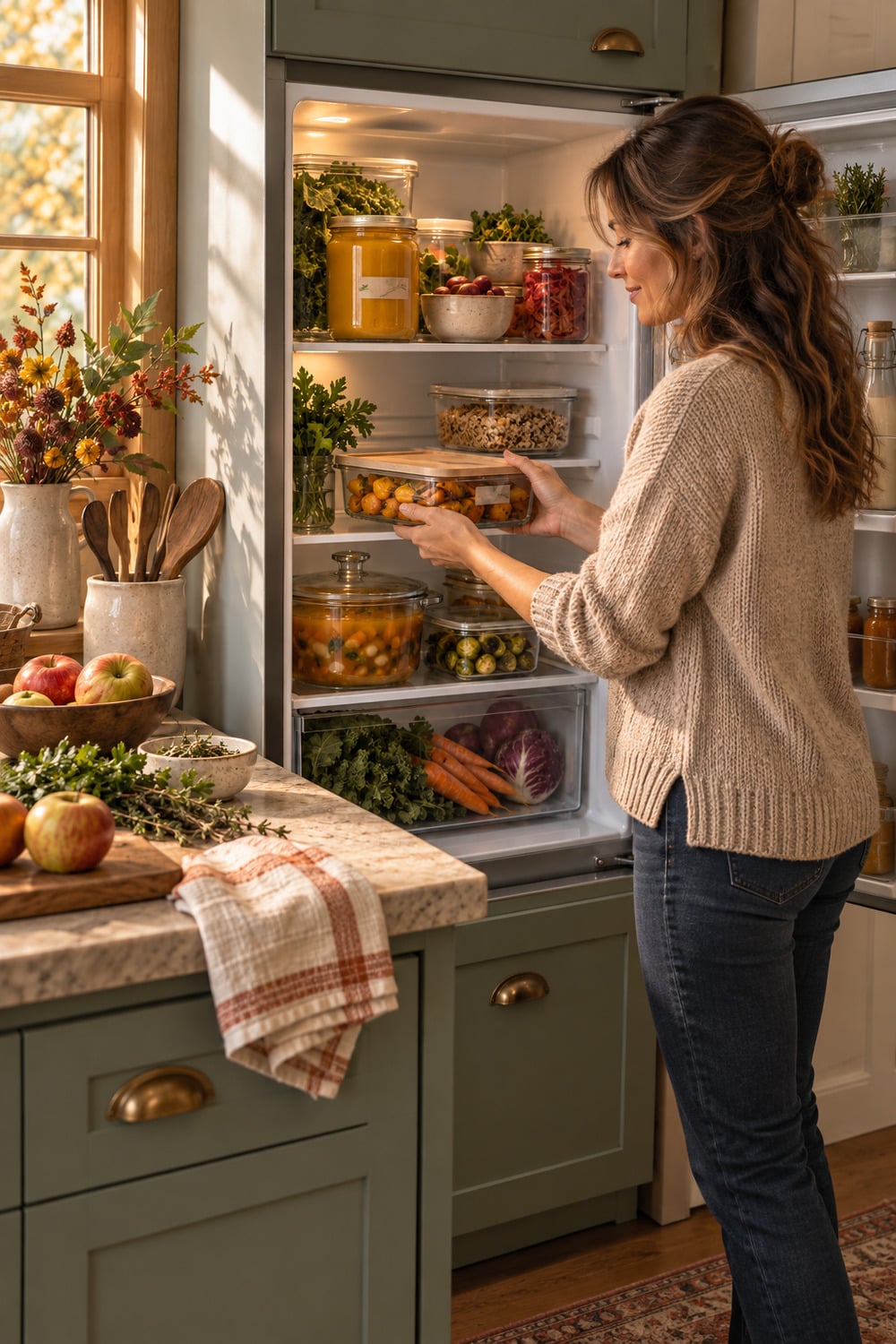
Visibility gives autumn meal prep rituals a practical finishing step. Reserve an easy-to-see part of the refrigerator for food that should be used next: a container of soup, washed leaves, cooked grains, cut fruit or a sauce already opened. This is not a decorative organisation project; it is a way to make the next meal decision depend on what is actually available and time-sensitive.
Keep less urgent items elsewhere and move food forward as its use date approaches. Opaque containers can still work if they are labelled clearly. If refrigerator space is shared, a small tray or defined shelf can be easier than expecting everyone to remember which container was prepared first.
On evenings when the kitchen is already winding down, cozy evening rituals can coexist with a very small reset: return perishable food promptly, put tomorrow’s use-first item where it can be seen, and leave the rest for another time. The meal-prep habit remains useful because it closes the storage loop rather than because every surface is cleared.
Final Thought
The most workable autumn meal prep rituals begin with the food, time and storage space already available. A few adaptable components, a realistic prep ceiling and a clear use-first plan can make weeknight meals easier to assemble without forcing the rest of the week into fixed boxes.
References and Further Reading
- Meal Prep Guide
- 3 Strategies for Successful Meal Planning
- Cold Food Storage Chart
- How to create a meal prep plan
- Cooking your food
Related Reading