Editorial Note: This lifestyle article is for general editorial inspiration only. It is not financial, medical, legal, travel, safety, or professional advice. Adapt every idea to your personal needs, budget, culture, location, and circumstances.
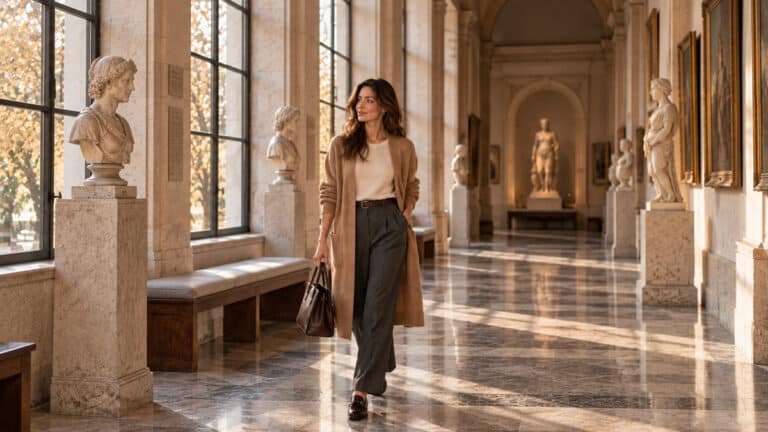
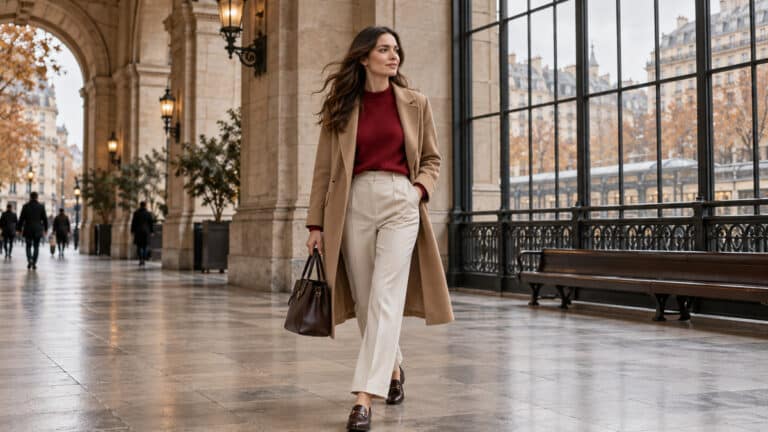
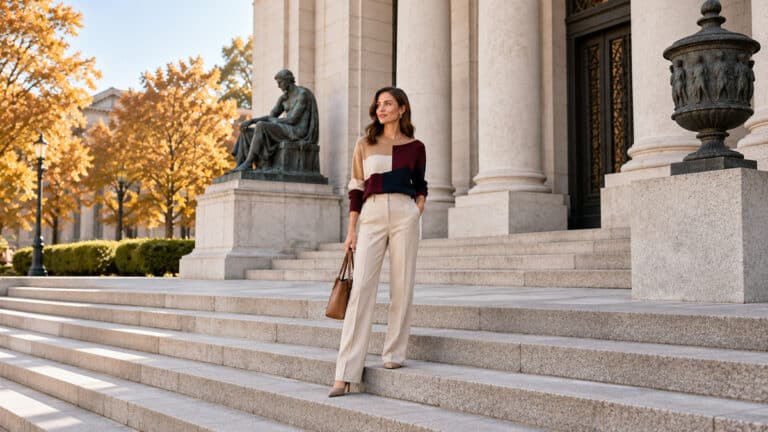
Early autumn creates an awkward outerwear question: the day may still suit a tee or fine shirt, but the outfit can look unfinished once a heavier summer layer is no longer enough. Structured coat style works well here because the coat can provide the outline while the clothes underneath stay relatively light.
The useful version is less about formal tailoring than about a coat that holds a clear shoulder, front edge and hem. That definition leaves room for denim, soft knitwear and flat shoes, so the coat can move between ordinary days instead of waiting for a dressed-up occasion.
Before choosing colour or accessories, look at coat proportion and how the coat changes the lines you already wear. A good early-autumn coat should make sense open as well as closed, because transitional weather often means the outer layer comes on and off through the day.
Key Takeaway: Let the coat define the silhouette, then keep the layers underneath light enough to suit the changing pace of early autumn.
Structured Coat Style Starts with Proportion
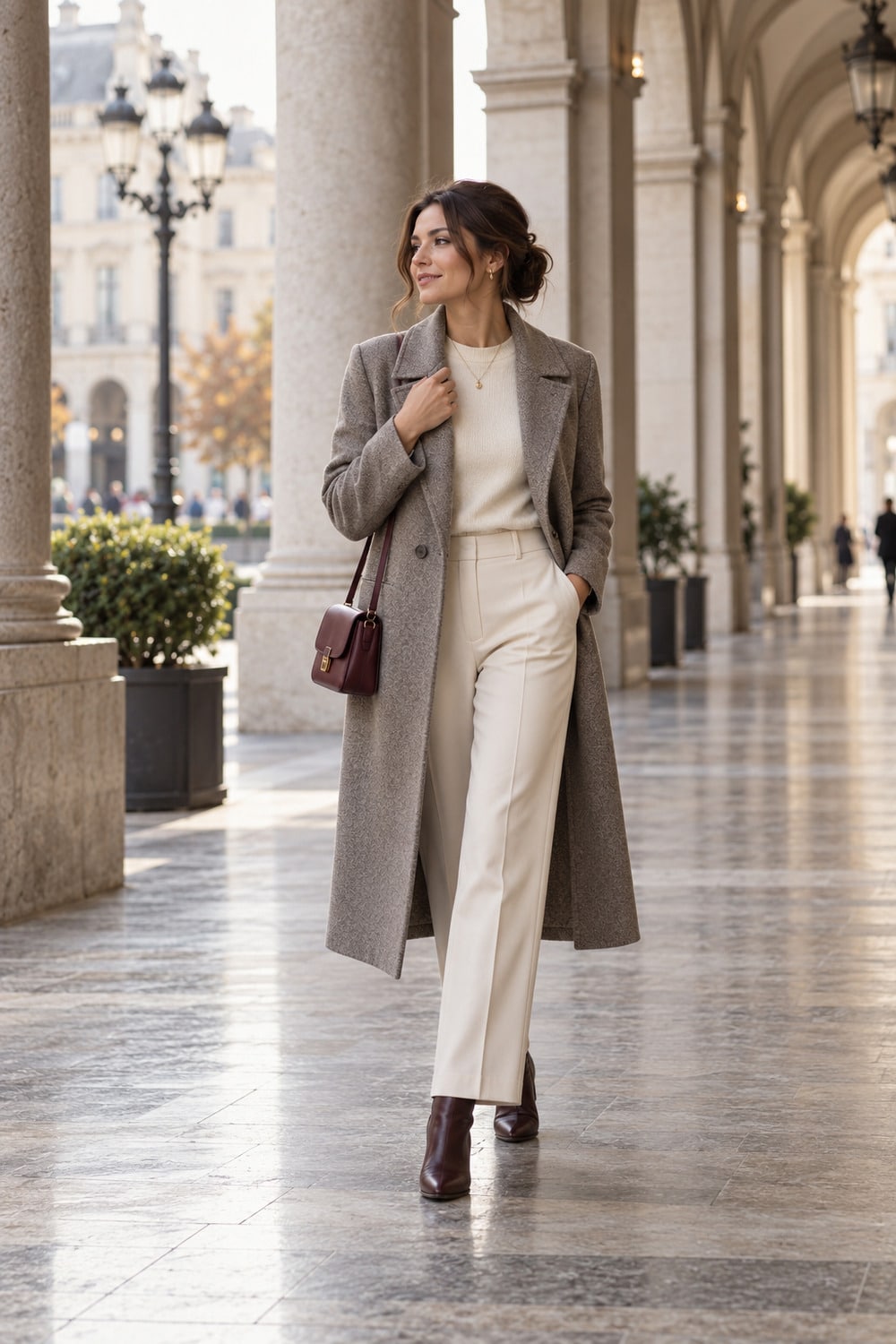
Structured coat style reads clearly when the shoulder line is defined, the front opening sits cleanly and the fabric keeps some shape around the body. It does not need sharp padding or a rigid hourglass cut. A boxier coat can still look precise if the seams, collar and hem create a legible outline.
Try the coat with the layer you are most likely to wear underneath, then sit down, lift your arms and leave it open for a minute. If the shoulder pulls, the lapels buckle or the sleeve becomes tight over a fine knit, the problem is practical before it is visual. The size on the label matters less than whether the coat can keep its intended line while you move.
Soft pieces are useful once that line is established. A simple knit, straight trousers or a relaxed tee can keep tailored coat outfits from feeling office-bound; on warmer days, grey blazer outfits offer a lighter way to use the same contrast between a defined outer layer and an easy base.
Early Autumn Calls for Lighter Layers
Early autumn coat outfits often reward restraint underneath the coat. A cotton tee, poplin shirt, sleeveless knit or fine merino layer leaves room to remove the coat without revealing an outfit built only for warmth. Wearing the coat open also lets its vertical edges frame the outfit without trapping as much heat.
When mornings are cooler, add warmth in a layer that does not fight the coat for space. Fine-gauge longline cardigan outfits can be useful reference points when the cardigan stays smooth under the armhole and does not bunch at the coat hem. If the cardigan is bulky, wear it as the outer layer instead of forcing two substantial silhouettes together.
Denim Makes Tailoring More Everyday
Denim is one of the easiest ways to make structured coat style feel less formal because the fabric already belongs to daytime dressing. Straight and relaxed jeans both work; the decision is really about how much width the coat and trousers create together.
With a long or oversized coat, a very wide jean can produce a continuous block of volume. If that is not the effect you want, show a little more shape somewhere else: use a cleaner waistband, a narrower shoe or a shorter visible knit. With a shorter coat, wider denim has more room because the leg line remains visible.
Wash matters less than finish. A dark indigo pair can look sharper, while faded blue makes the coat feel more casual, but either can work when the hem is intentional and the shoe suits the setting. Frayed hems and heavy hardware simply add more visual information, so they are easiest with a quieter coat.
This is also where current autumn tailoring feels most wearable: defined jackets and coats are frequently shown beside looser denim and relaxed separates rather than only with matching trousers. The useful takeaway is the contrast itself, not a requirement to copy a runway proportion.
Hem Length Changes the Shoe Choice
Coat length changes the balance of structured coat style by altering how much of the trouser, skirt or dress remains visible, so shoes should be judged with the whole vertical line in view. A mid-thigh coat leaves enough leg showing for loafers, ballet flats or a slim ankle boot to register clearly. A knee or calf-length coat can handle a slightly stronger shoe, especially when the hem of the clothing underneath is close to the coat length.
If a long coat sits over wide trousers, check the outfit from the side as well as the front; too much fabric meeting at the ankle can make the lower half feel crowded. A lower-profile shoe can clean up that junction, but comfort, weather and ground conditions should override appearance whenever they require something more substantial.
Texture Works Best in Controlled Layers
Texture gives structured coat style more depth in a neutral outfit without relying on extra colour. A smooth wool coat over denim, brushed cotton or a fine ribbed knit creates contrast that is easy to read. When the coat itself is fuzzy, heavily woven or patterned, the layers closest to it usually need less surface detail.
Accessories can provide that change in texture without competing with the coat shape. A narrow leather bag, suede shoe or plaid scarf style can introduce a different surface or pattern; if the scarf is large, keep the coat front relatively uncluttered so the collar and lapels still read clearly.
This approach also makes it easier to adjust the outfit through the season. The same coat can move from a tee and loafers to a fine knit and ankle boots without changing its role, while the smaller textures around it do the seasonal work.
A Useful Coat Has to Fit Your Real Week
Before treating camel, charcoal, navy, brown or black as the automatic answer, test the colour against the clothes you already repeat. Put together a workday base, a weekend denim look and an evening outfit, then see which coat colour works across most of them without requiring a new bag or shoe every time. That is a more useful first-coat test than choosing a shade because it is described as universally versatile.
The same test applies to shape. A belted coat may suit dresses but feel fussy over a thick waistband; a straight single-breasted coat may layer easily over trousers but give less definition when worn closed. Structured coat style becomes more practical when those trade-offs are decided against your own routine instead of an idealised capsule wardrobe.
Final Thought
A useful early-autumn coat should solve the season’s in-between feeling: it can stay open over a light base, close over a fine knit and still work with the denim, trousers and shoes already in regular rotation.
References and Further Reading
- 13 Pre-Fall Trends to Transition Your Wardrobe Into Next Season
- 6 Key Fall 2026 Fashion Trends to Know This Season
- The Key Autumn/Winter 2026 Trends To Know Now
- 7 Winter Coat Trends That Will Stand The Test Of Time
Related Reading