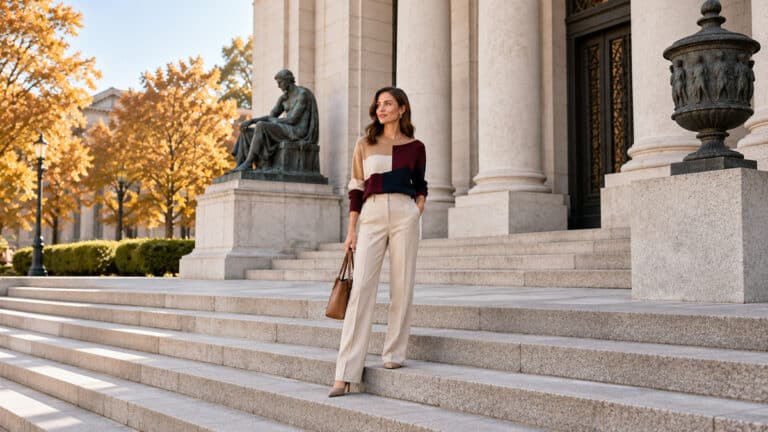
Editorial Note: This lifestyle article is for general editorial inspiration only. It is not financial, medical, legal, travel, safety, or professional advice. Adapt every idea to your personal needs, budget, culture, location, and circumstances.
Red sweater style starts with a knit that can be the easiest piece in an autumn outfit and still be the first thing anyone notices. The useful question is not whether red is too bold, but how much visual space you want the knit to occupy once coats, trousers, shoes and accessories are added.
Start with a sweater shape you already trust. A neat crew neck, relaxed cardigan or fine turtleneck will behave differently from a thick oversized knit, so the colour decision and the proportion decision belong together. That is what makes red sweater style feel personal instead of staged.
Key Takeaway: Treat the red sweater as a fixed colour block, then adjust silhouette and texture around it before adding another strong accent.
A Familiar Shape Keeps Red Sweater Style Grounded
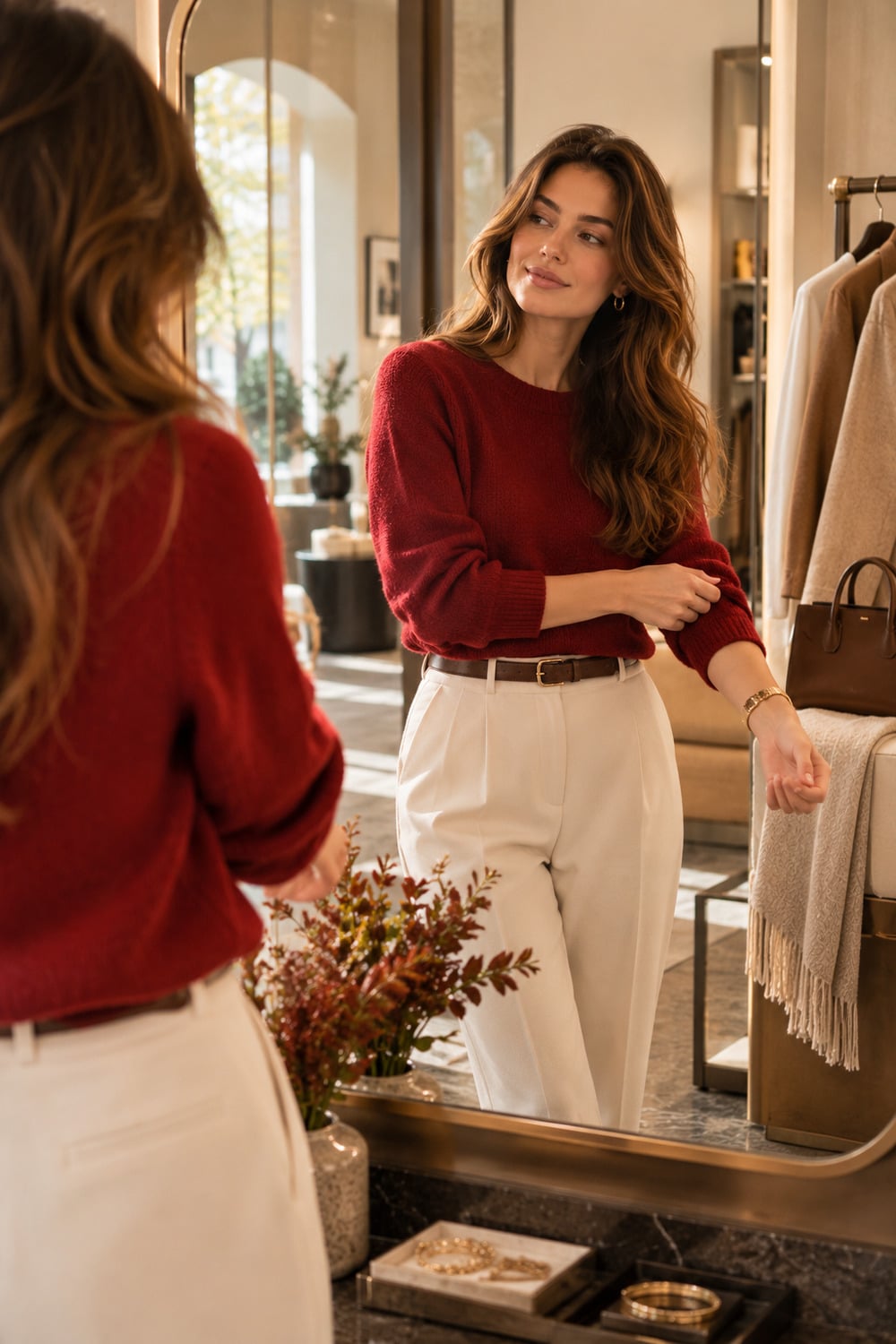
Bright colour draws attention to the outline of a garment, so begin with the fit you would choose if the sweater were navy or cream. A close crew neck reads cleanly with fuller trousers, while a slouchier knit needs a clearer line somewhere else, such as straight denim or a skirt that does not add more bulk at the waist. That proportion check keeps red sweater style tied to a fit you already trust.
Gauge matters when the sweater will sit under outerwear. Fine knits slip beneath a blazer or fitted coat with less bunching; chunky ribs usually need more room through the sleeve and shoulder. If a coat feels tight only after the red sweater goes on, changing the layer is often more useful than trying to style around the squeeze.
The same restraint that gives soft power dressing its composure can help here: keep the silhouette familiar, then let the colour provide the change. This also answers the everyday-wear question. Red feels less demanding when the garment itself already belongs to your normal rotation.
Grey Cream Navy and Brown Pull Red in Different Directions
Neutrals are not interchangeable beside red, and the neutral beside the knit changes the overall contrast in red sweater style. Charcoal and navy cool the outfit and make a clear city-work contrast; chocolate and camel warm it; cream creates the brightest separation. Black can make a saturated red look sharper, while faded blue denim softens the whole combination through its familiar, casual texture.
Use that difference as a simple decision tool. For a meeting or dinner where you want the knit to look deliberate, pair it with one deep neutral and repeat that neutral in shoes or a belt. For a quieter daytime outfit, let denim or cream take up more space and keep the accessories close in tone. There is no need to match the exact shade of red elsewhere.
Texture Adds Depth Without Another Loud Colour
Once the palette is settled, texture can give red sweater style the variation that a second accent colour often tries to provide. Smooth red knitwear with brushed wool trousers feels different from the same sweater with worn denim, suede or a satin skirt because each surface catches light and holds shape differently. The outfit gains variation without becoming a colour contest.
This is where the idea behind colorblocked knitwear can be useful even when the sweater itself is solid: think in blocks of visual weight. One strong red area, one broad neutral area and a smaller textured finish are usually easier to read than several equally assertive details.
Shine deserves particular attention. If the skirt, bag and jewellery are all reflective, a vivid knit can start to feel dressier than intended. For ordinary workdays or weekends, choose one surface with noticeable sheen and let the rest stay matte. For evening, you can reverse that balance and allow satin or metal to answer the red more clearly.
Layering Changes Where the Red Sits
The knit changes position in red sweater style when it does not remain the central top layer. Under a charcoal coat, only the neckline and front panel may show; over a white tee, the collar becomes a small light break; tied over the shoulders, the knit turns into an accent that sits higher in the outfit. These placements change the dose of red without requiring a different sweater.
Layer thickness sets the practical limit for autumn layering. A fine cardigan can sit under a trench and still button comfortably, while a heavy cable knit may work better as the outer knit on a mild day. When temperatures shift between a cool morning and a warmer afternoon, a sweater that can be removed without collapsing the rest of the outfit gives you more useful options than an elaborate stack of layers.
Denim Makes the Colour More Casual
A red sweater with denim is useful when you want the colour to feel ordinary enough for errands, lunch or a weekend walk. Dark indigo gives the sweater a cleaner frame; washed blue reduces the contrast; ecru keeps the outfit lighter. The cut of the jeans then decides how red sweater style handles proportion: straight legs steady an oversized knit, while wider denim often looks better with a shorter or more defined sweater hem.
Shoes can shift the same red-and-denim base without changing its ease. Loafers or ankle boots make the line firmer, ballet flats keep it lighter, and simple low-profile sneakers leave the outfit fully casual. If the sweater is already chunky and the jeans are wide, a very heavy shoe can make the lower half feel crowded, so scale matters more than formality.
Red Needs Only a Small Echo
A repeated accent can connect the outfit, but it should have a reason to be there. The controlled detail in ribbon detail style offers the right scale: a narrow scarf stripe, tiny earring, bag stitch or lip colour can echo the sweater without turning every accessory red.
If the sweater is tomato or scarlet, a burgundy accessory is not an exact match and does not need to be. Echoing the warmth or depth is often softer than hunting for identical colour. On the other hand, if the outfit already includes leopard, checks or a shiny skirt, leave the red isolated and let the pattern provide the second point of interest.
This gives you a useful final check before leaving the house: decide whether the red is the single accent or part of a small repeat. Trying to do both while also adding a strong pattern usually creates more competition than the sweater needs. Remove one element and the outfit often becomes easier to read.
Final Thought
Red sweater style is easiest to live with when you decide the knit’s role before adding the rest: familiar shape for comfort, a neutral that sets the mood, and either texture or one small colour echo for finish. The result still feels like your autumn wardrobe, just with a clearer focal point.
References and Further Reading
- How to Wear Red in 2026: The Subtle Styling Trick
- 9 Ways Women in Europe and America Are Wearing Red Sweaters
- How To Wear Style Red For Winter—5 Outfit Ideas
- Louise Redknapp’s red jumper and matching tailored coat cements monochrome dressing as autumn’s hottest trend
Related Reading