Editorial Note: This beauty article is for general editorial inspiration only. It is not medical advice, dermatology advice, diagnosis, treatment, or professional care. Adapt every idea to your skin, body, budget, preferences, and qualified guidance when needed.
An apricot makeup look can lose its softness when every product is the same bright orange or every surface is made glossy. The more useful approach is to treat apricot as a colour family, then adjust its depth and finish across cheeks, eyes, and lips.
Late summer makeup changes under direct light. Sheer colour can read clearly outdoors, while heavy base makeup and broad shimmer may look more obvious in heat or direct daylight. The aim is a connected face with enough variation to keep the features distinct.
The look is adaptable because pale peach, muted coral, warm papaya, and terracotta-apricot do not create the same contrast on every complexion. Shade depth, placement, and texture matter more than matching a single trend image.
Key Takeaway: Build an apricot makeup look with graduated colour strength, a light base, and selective shine rather than one identical shade everywhere.
An Apricot Makeup Look Uses a Range of Depths
Start by separating apricot from pale peach. Pale peach has more white or pink in it, while deeper apricot moves toward coral, papaya, or muted orange. A shade that disappears on one complexion may look chalky on another, so the useful question is not whether apricot suits you, but how much depth the colour needs to remain visible without turning fluorescent.
For lighter complexions, a soft peach-apricot can provide enough contrast; medium complexions may need a clearer coral or warm melon; deeper complexions often hold richer orange, rust, or terracotta-apricot with more definition. These are starting points, not fixed rules. Surface redness, undertone, and the rest of the makeup can change how the same pan or stick appears.
When testing peach makeup, swatch the colour where you can see it in natural light, then compare it with the lip and eye tones you plan to wear. A successful shade should still look intentional after blending. If it vanishes, move deeper; if it reads as a bright orange patch, reduce saturation or soften it with a neutral brown nearby.
A Sheer Base Keeps the Colour Clear
An apricot makeup look usually reads cleaner over a base that evens selected areas without covering the whole face at the same density. Use concealer where you need it, keep foundation thin around the cheeks, and allow some natural variation to remain. This gives the blush somewhere to blend instead of sitting on a uniform mask of coverage.
If a lighter complexion layer is already part of your routine, the coverage logic in skin tint makeup leaves enough visual space for apricot colour to register. Let cream or liquid base settle before adding blush; otherwise repeated tapping can move the layer underneath and create a patchy edge.
Cheeks Eyes and Lips Need Different Strengths
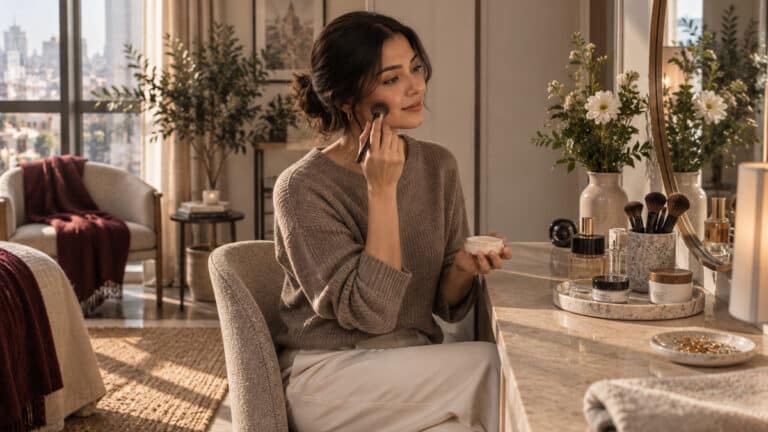
Let one feature carry the strongest colour in an apricot makeup look. For a cheek-led version, tap colour onto the fullest part of the cheek and diffuse it outward, keeping the outer edge thinner than the centre. Higher placement can make the result feel more graphic; a lower, rounder placement reads softer. Neither is universally better, and face shape alone does not dictate the choice.
Eyes usually need a quieter version of the same family. A thin wash of peach-beige or copper-apricot can connect with the cheeks, while a blurred espresso or chestnut line prevents the lids from looking flat. The softer definition in cinnamon brown makeup is useful when black liner feels too abrupt beside warm, translucent colour.
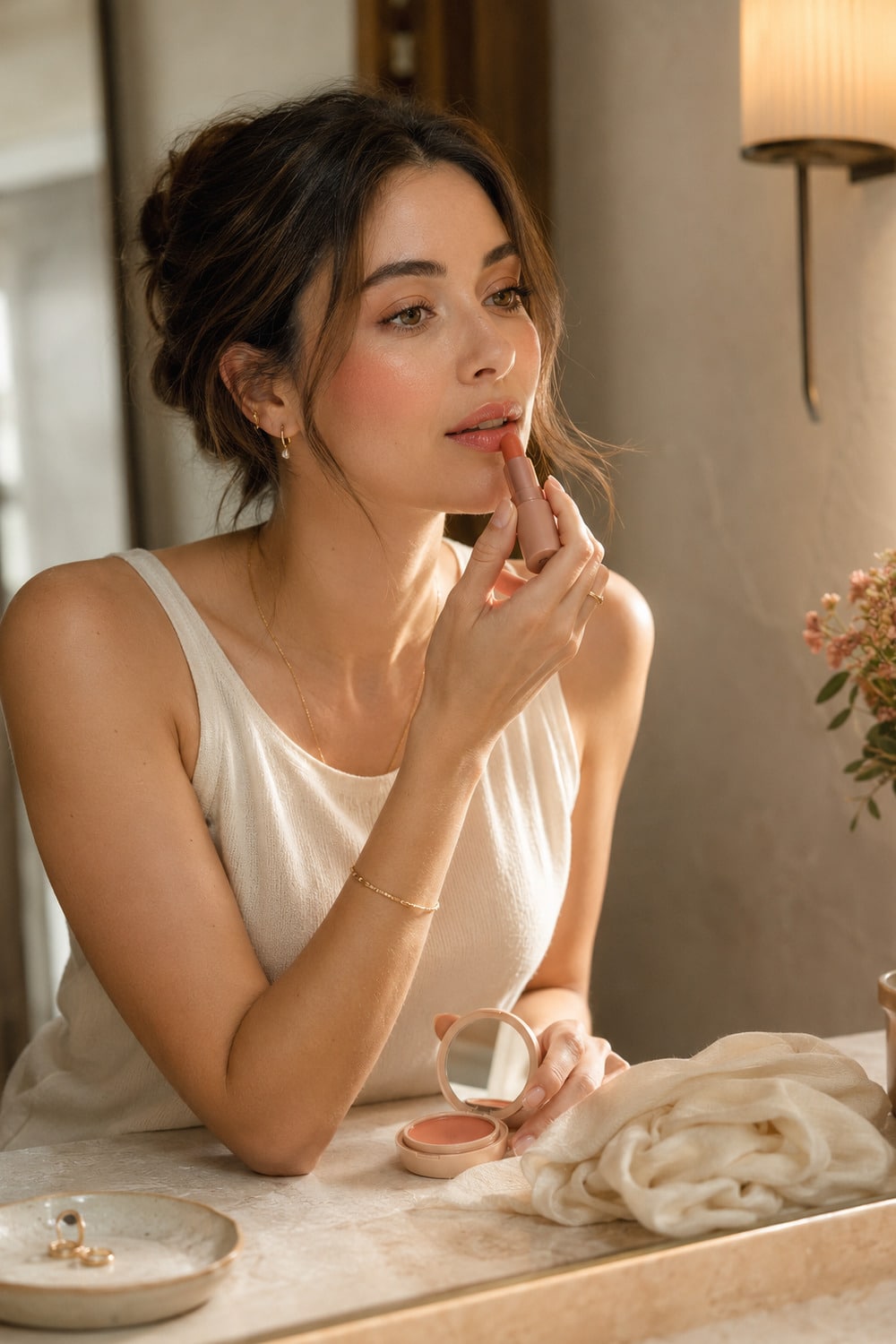
Lips can either repeat the cheek tone or provide the neutral pause. A sheer coral-apricot balm keeps the face monochromatic; a muted beige-rose lip makes a stronger blush easier to wear. When using liner, soften it inward before adding colour so the edge does not become the most rigid element in an otherwise diffused look.
Finish Control Matters in Late Summer
In an apricot makeup look, map shine instead of adding it everywhere. A satin cheek, softly reflective lid, and balmy lip already create several light-catching surfaces. If the base is also glossy across the forehead, nose, and chin, the apricot colour may lose definition in bright daylight. Powder only where movement or unwanted shine appears, leaving the cheek colour itself visible.
Cream blush can merge easily with a light base, but it may shift in heat or under frequent touching. Powder blush gives a drier edge and can hold its shape longer, though a heavy layer may emphasise texture. A practical compromise is a thin cream layer followed by a small amount of powder in a related shade, pressed only where wear tends to fade.
For a touch-up, remove surface moisture first with tissue or blotting paper, then reassess the colour before adding more. Applying pigment directly over perspiration or oil can deepen one spot and leave another bare. A small brush or clean fingertip gives better control than sweeping a full layer across both cheeks.
Comfort Comes After the Last Touch Up
Cosmetic safety does not need to dominate a low-risk colour story, but ordinary product care still matters. Read directions, use products only on the areas named on the label, keep containers closed, and avoid sharing eye or lip products. If a cosmetic causes unexpected burning, swelling, or a persistent reaction, stop using it and seek qualified advice rather than trying to cover the area with more makeup.
Removal should be gentle enough that you are not scrubbing away long-wear pigment at the end of a hot day. After cleansing, the comfort-led approach in Soft glow body care and the slower pacing of a cooling evening routine reinforce a useful limit: once the finish feels tight, gritty, or uncomfortable, preserving the look is no longer the priority.
Hair and Fragrance Should Stay Quiet
Simple hair keeps the warm colour from becoming costume-like: a low knot, loose bend, clean clip, or tucked-back front section is enough structure. Fragrance is optional, and a restrained summer perfume mist fits the same late-summer scale better than dense layering. The point is not to make every detail apricot, but to leave the makeup as the clearest warm note.
Final Thought
The strongest apricot makeup look is not the brightest one. Choose a depth that remains visible on your complexion, let one feature lead, vary the finish across the face, and keep touch-ups precise. That combination preserves warmth without turning a soft late-summer palette into a single block of orange.
References and Further Reading
- Peach Makeup Is Ripe for Spring 2024
- Peach Blush Makeup Tips for Your Skin Tone
- ‘Peach girl makeup’ is summer’s biggest beauty trend, according to Hailey Bieber
- Peaches And Cream Is The Wearable Red Carpet Make-Up Trend To Try Now
- Using Cosmetics Safely
- Consumer products: cosmetics
Related Reading