Editorial Note: This lifestyle article is for general editorial inspiration only. It is not financial, medical, legal, travel, safety, or professional advice. Adapt every idea to your personal needs, budget, culture, location, and circumstances.
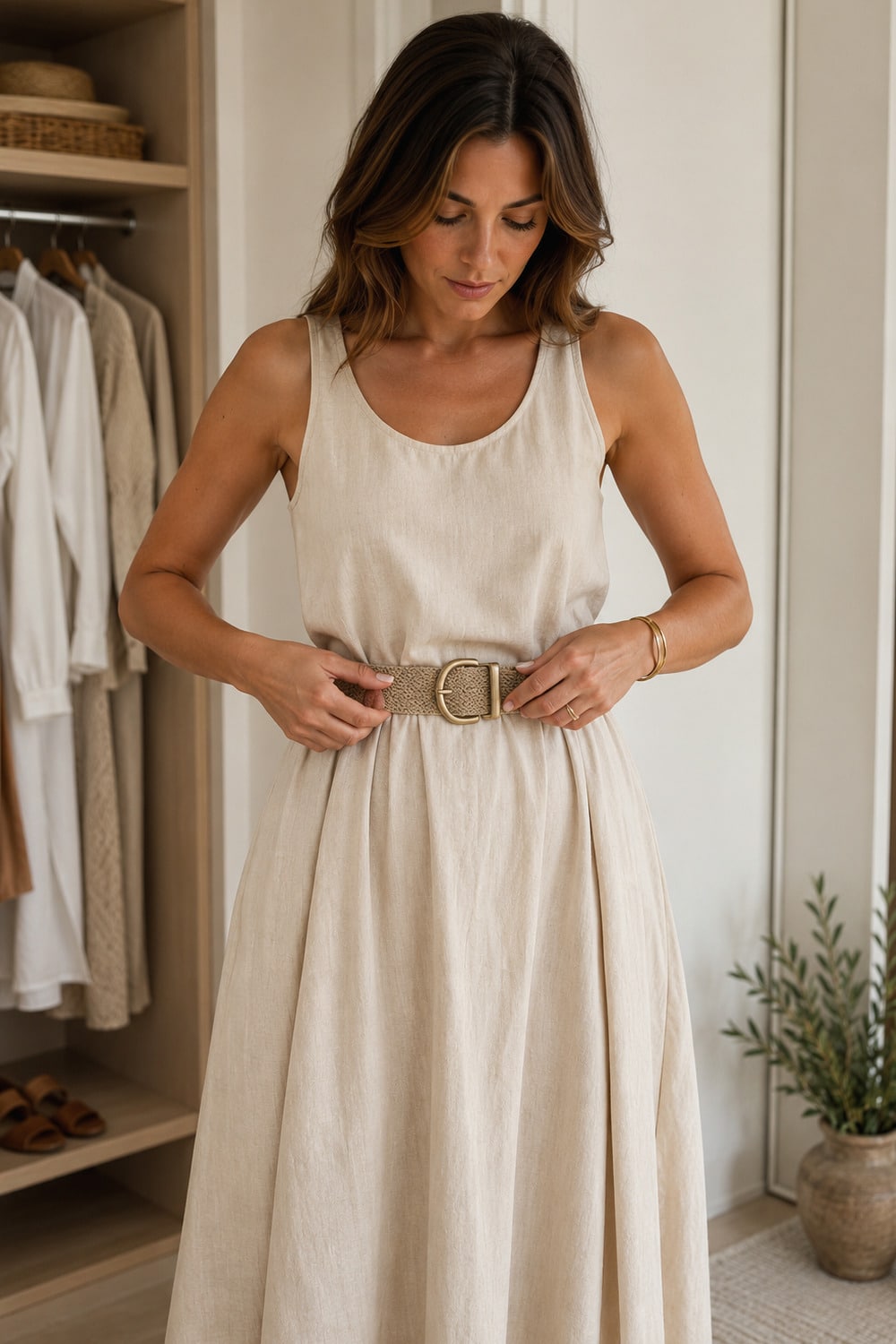
A loose linen dress can feel exactly right in summer until a mirror shows that the fabric has swallowed every other detail. Statement belt style solves that specific problem when the belt adds a clear line without making the outfit hot, stiff or overworked.
Current statement belt coverage ranges from medallions and oversized buckles to braided, chain and Western-inspired designs. The useful question is not which version looks most dramatic, but what the belt needs to do for the clothes already in your wardrobe.
Key Takeaway: Choose the belt by its job first, then test its placement, fabric grip and visual weight with the full summer outfit.
Statement Belt Style Starts with the Belt’s Job
A practical statement belt style begins by deciding whether the belt should hold, shape or decorate, and those jobs call for different designs. A firm leather belt through trouser loops can support the waistband. A wider belt over a loose dress can gather volume. A chain or medallion belt worn low on the hips may be purely decorative, so it should not be expected to stop trousers from slipping.
That distinction prevents a common styling mistake: choosing a beautiful belt that cannot perform the job assigned to it. If the outfit needs support, look for secure holes, a stable buckle and enough width to sit flat. If the outfit already fits, a softer braided belt, curved buckle or jewellery-like chain can add interest without carrying tension.
Before styling, fasten the belt and ask what changes. If the garment becomes easier to wear, the belt is functional. If the silhouette becomes clearer, it is shaping. If only the focal point changes, it is decorative. One belt can do two jobs, but the priority should be obvious.
Placement Changes the Whole Outfit
Placement gives statement belt style much of its effect, and the natural waist is only one option. A belt worn slightly higher can keep the skirt of a full dress long and fluid, while a lower placement can suit a straight shirt dress or a chain belt that is meant to drape. Petite wearers do not need to avoid wide belts; a lower-contrast colour, a buckle that stays within the belt width and a placement that leaves enough dress visible above and below often matter more than the label “wide.”
Use a movement test before leaving home. Sit, raise your arms and walk across the room. If the belt rides up, twists the side seams or creates a hard roll of fabric at the back, move it a little or change the width. A belt that looks right only while standing still will become a distraction during a long lunch, commute or event.
Fabric Decides Whether the Shape Holds
Crisp cotton poplin and medium-weight linen usually keep a gathered shape better than slippery satin or very fine jersey. With soft fabric, a rigid belt may drag the dress downward or bunch it unevenly. A lighter belt with a flexible back, tie closure or braided construction often follows the cloth more naturally.
Volume also needs somewhere to go. When belting an oversized shirt, leave a little blouse above the belt and check that the hem still hangs evenly. With a straight knit dress, too much tightening can create folds that point toward the buckle. Loosening one hole may give a cleaner line than pulling the belt as tight as possible.
On humid days, place the belt over a layer that can move rather than directly against bare skin. A narrow leather edge can rub as the body warms, while a very wide synthetic belt can trap heat. Comfort is part of the final silhouette because constant adjusting is visible.
Let One Detail Carry the Visual Weight
An oversized buckle, fringed leather or a metal chain gives statement belt style a clear visual centre. Keep nearby details quieter: a plain bag, simple earrings or shoes without competing hardware. A tonal base such as monochrome summer outfits gives an ornate belt room to register, while sculptural sunglasses style can share the look when the frames and buckle are separated by clean clothing and do not repeat the same heavy shape. Matching every metal is optional; repeating one finish once is usually enough.
A Small Wardrobe Test Before You Buy
To test belt outfit ideas against your real wardrobe, photograph three outfits you already wear and mark where a belt would sit: trouser loops, natural waist or low hip. Then check the needed length against the actual garment, including any fabric gathered underneath. This is more reliable than buying from a size label alone, especially when the same belt will be worn both through loops and over a dress.
A useful first purchase should work with at least two of those photographs. Clean dark leather suits trousers and tailoring; tan or woven leather is softer against white, cream and blue summer fabrics; a decorative chain works best when several loop-free dresses or skirts already exist. A statement piece that requires a new outfit every time is closer to a costume accessory than a wardrobe tool.
Summer Outfits That Take a Belt Well
A loose dress shows statement belt style most clearly when the fabric has enough ease to gather without pulling across the bust or hips. A long shirt over straight trousers can take a slim or medium belt, especially when the shirt is bloused slightly. A vest and trouser set usually needs less intervention; try the belt under an open vest or through the trouser loops before fastening it over the whole outfit.
For relaxed daytime dressing, a textured belt can give definition to weekend market outfits built from cotton dresses, roomy shirts and flat sandals. The buckle should not press into the body when carrying a crossbody bag, and long fringe should clear pockets and bag straps.
Evening outfits can take more shine, but the same placement rules apply. A chain belt over a slip dress should hang from a stable point rather than pull the neckline or twist the side seam. On cooler, changeable summer days, test the belt with the light cardigan or jacket you will actually carry; added layers can change both the circumference and the balance of the outfit.
Final Thought
The strongest statement belt style begins with a practical match between belt, fabric and placement. When the belt stays comfortable in motion and one detail has room to lead, a simple summer outfit gains shape without losing its ease.
References and Further Reading
- Top Stylists Weigh in on the Statement Belt Trend—Shop Spring’s Most Wanted
- How to Wear a Statement Belt in 2025
- Forget Bags and Shoes—This Celine Belt Makes Every Outfit Look That Little Bit Cooler
- Fringed Leather Belts Are the Spring 2026 Accessory Everyone’s Talking About
Related Reading