Editorial Note: This lifestyle article is for general editorial inspiration only. It is not financial, medical, legal, travel, safety, or professional advice. Adapt every idea to your personal needs, budget, culture, location, and circumstances.
A summer market morning can begin with an empty tote and end with bread, flowers, fruit and an unexpected café table. Weekend market outfits need to handle that change without looking as though every detail was chosen for a photograph.
The useful starting point for summer market dressing is the day itself: the ground underfoot, how far you will walk, what you may carry and whether the morning is likely to warm up or turn breezy. Once those conditions are clear, a linen dress, cotton skirt or relaxed trouser outfit becomes much easier to finish.
The most convincing market look usually has one visual point of interest and several quiet working parts. A print, a woven bag or a small piece of jewellery can set the mood; the shoes, pockets and layer should make the morning simpler.
Key Takeaway: Build a market outfit around the route and carrying load, then add one detail that gives the practical pieces a clear summer mood.
Weekend Market Outfits Begin with the Route
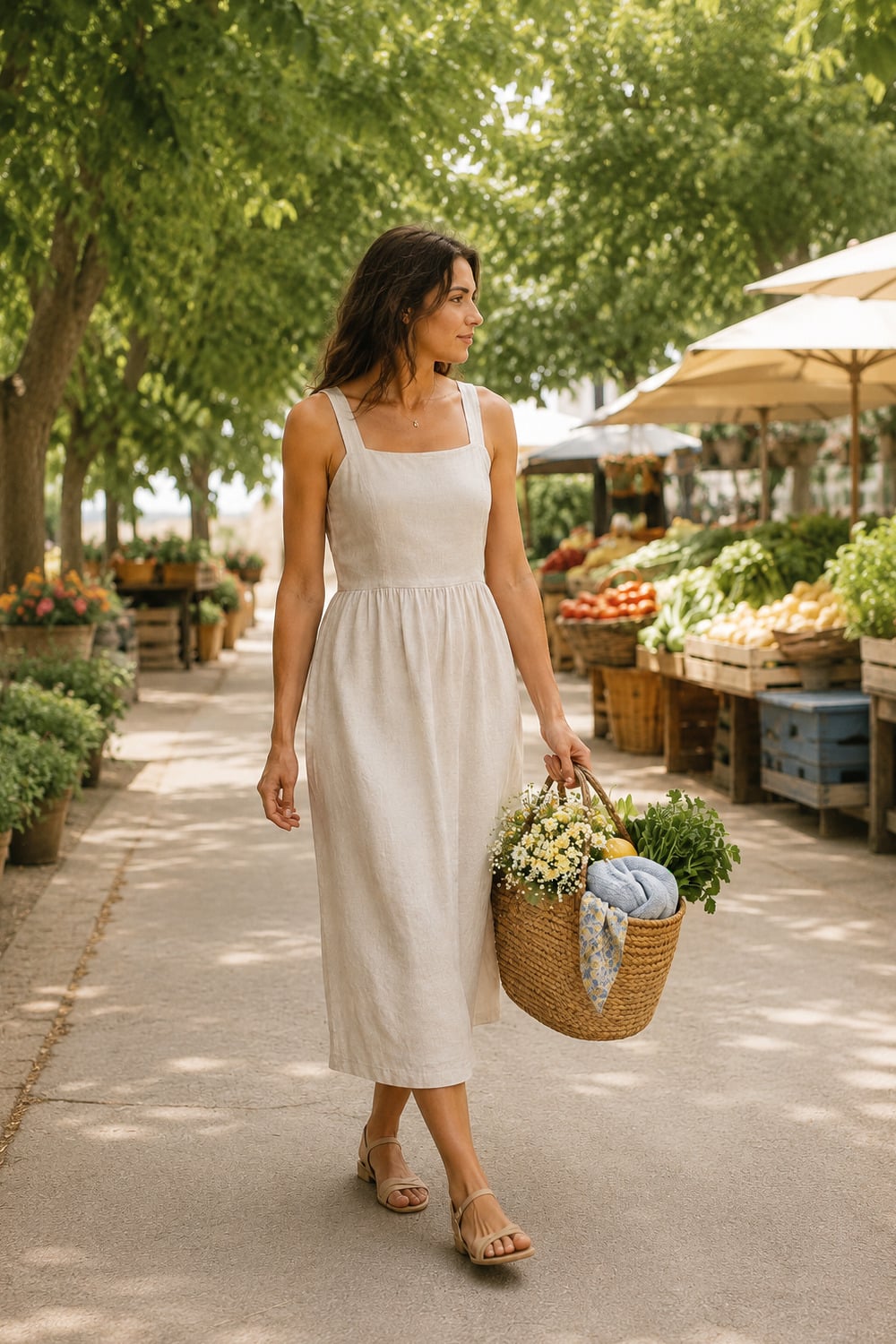
Before choosing a dress or shirt, picture the route. Weekend market outfits for a paved city market followed by brunch ask less than those worn through a field, gravel lot or long walk from public transport. Hem length matters when steps are crowded, and a narrow skirt can become irritating if you need to crouch at low produce crates. On rougher ground, a midi skirt with enough sweep or cropped trousers usually gives more freedom than a trailing hem.
Next, estimate the carrying load. A quick coffee and a bunch of flowers can work with a smaller shoulder bag, but a grocery stop needs a tote that can sit against the body without dragging the neckline or twisting a delicate strap. Pockets are useful for the phone or card you reach for repeatedly, though loose back pockets are a poor place for anything easy to lose.
This route-first check answers the common question of what to wear to a market without prescribing one uniform. A woman walking three blocks on smooth pavement may be comfortable in flat leather slides; someone crossing grass and cobbles may prefer a closed flat or low espadrille. The outfit can still feel graceful because the practical choices are proportioned to the actual morning.
A Cool Base Should Still Work After the Market
A dress is the simplest base for weekend market outfits when you want one decision before leaving home. Cotton poplin, linen and light woven blends can all suit a warm morning, but the cut matters as much as the fibre name. Look for armholes that do not gape when you lift a tote, a waist that does not tighten after sitting, and a skirt that allows a full stride. A slip underneath can solve transparency in bright light, while an unlined dress may be preferable when extra layers feel bulky.
Separates give more control when the market trip may continue into lunch or errands. A relaxed shirt with tailored shorts feels sharper when the shirt has enough length to stay tucked or look deliberate when left open. A cotton skirt with a fitted tank creates a similar balance. For a longer walk, relaxed trousers can be easier than a skirt in gusty weather; for a very hot pavement-heavy morning, a dress may feel less restrictive. The better choice is the one you can sit, reach and carry in without readjusting every few minutes.
Shoes Should Match the Ground Before the Outfit
Walkable summer shoes are not simply flat shoes, and weekend market outfits still need enough grip for the route. The upper should stay secure when your hands are full, and the pair should already be familiar. A backless slide may be comfortable on a short paved visit but tiring on a long route because the foot works to keep it in place. Slingbacks, minimal trainers and sandals with an ankle or heel strap can feel steadier without making the outfit look sporty.
Espadrilles suit a dry, mostly even route and can give a cotton dress or cropped trouser outfit a softer finish. The wider ideas in espadrille style are most useful here when the shoe is chosen for the surface, not just the summer association. A wet forecast, loose gravel or muddy verge calls for a different sole and a material you will not worry about marking.
Test the complete outfit while carrying the bag you plan to take. Walk downstairs, turn quickly and stand for a few minutes. That small rehearsal exposes a slipping strap, rubbing sandal or hem that catches at the knee before the market does.
The Bag Has to Work After the First Purchase
Weekend market outfits are tested again the moment something heavy goes inside the bag. Check the strap width, the way the base holds its shape and whether the opening is easy to manage with one hand. A beautiful basket with a rigid handle can become awkward once it contains jars or bottles, while a soft tote may collapse around delicate fruit. The practical compromise is often a medium bag with a stable base and straps long enough to move from hand to shoulder.
Open weave looks summery, but small items can catch or slip through. A removable cotton pouch keeps keys, lipstick and receipts together without turning the main bag into a jumble. If you are likely to buy flowers, leave one side of the tote uncluttered so stems are not crushed beneath a cardigan or water bottle.
The bag does not need to match the shoes. It only needs to share one cue with the outfit, such as warm leather, a natural texture or a stripe already present in the shirt. This is enough to make a canvas shopper feel considered and keeps a woven tote from becoming a costume prop.
Small accessories can carry the colour when the bag and clothes are neutral. A bracelet or necklace in colorful bead jewelry works especially well when it repeats one shade from flowers, gingham or a striped shirt. Keep anything that catches on basket weave or knocks against produce for another day.
A Light Layer Earns Its Place in the Bag
A light layer gives weekend market outfits more range between the first stall and a late café table. In places where the day heats quickly, an open linen shirt or fine scarf offers a layer that folds small once the sun rises. Where wind or showers are common, a compact cardigan or light jacket is more useful than a decorative knit draped over the shoulders. The choice should fit inside the bag without taking the space reserved for purchases.
A short cardigan keeps a dress line visible and is easier to manage around food stalls than a long trailing layer. The proportions in lightweight cardigan style also apply to an early market start: a neat shoulder line can add warmth without hiding the waist or catching on a tote. Pale colours are attractive but may show contact with fruit boxes or damp benches, so a washable mid-tone can be the calmer option for a working market bag.
Colour and Print Need One Clear Lead
Gingham, stripes and small florals can give weekend market outfits a natural summer lead, yet several nostalgic details together can make the outfit feel themed. Let one print lead. A gingham skirt is clearer with a plain tank and leather sandals; a floral dress needs little beyond a useful bag and simple earrings. The result feels feminine because the print has room, not because every accessory repeats the same mood.
Tonal dressing gives a quieter alternative. Cream with oat, pale blue with denim, or olive with soft beige can hold several textures without looking busy. The ideas behind monochrome summer outfits are particularly useful when the tote is woven or the dress has visible texture. Choose a deeper shoe or bag if the whole look feels washed out in bright morning light.
One personal detail keeps the outfit from becoming a market stereotype. It might be a silk scarf tied close to the neck, a watch with a worn leather strap, red flats under a white dress or a pendant you wear often. Once that detail is chosen, stop adding. The market already supplies colour, movement and texture around you.
Final Thought
Weekend market outfits succeed when the first purchase does not change how you walk, carry or sit. Dress for the route, leave room in the bag and let one print or accessory hold the summer mood; the rest of the morning can unfold without constant adjustment.
References and Further Reading
- How I Dress To Look Like A Farmer’s Market Baddie
- I’m a Stylist Slightly Obsessed With Chic Market Bags—12 Summery Totes I’m Eyeing This Week
- 10 Foolproof Summer Outfit Formulas To Try This Weekend
- Classic Summer Style Comes Down to These 8 Chic Pieces
Related Reading