Editorial Note: This beauty article is for general editorial inspiration only. It is not medical advice, dermatology advice, diagnosis, treatment, or professional care. Adapt every idea to your skin, body, budget, preferences, and qualified guidance when needed.
Wine lipstick can look severe when three things arrive at once: opaque color, a hard outline and equally strong makeup elsewhere. The easier route is to decide how much depth you want first, then control the edge and finish so the color has a clear role on the face.
That makes shade choice less about finding one supposedly perfect wine and more about reading what is actually in the tube. A wine can lean berry, plum, brick red or brown, and the same shade can feel different when it is tapped on as a stain, worn at full opacity or softened with balm.
The useful question is not whether deep lip color belongs only at night. It is whether the color, texture and surrounding makeup fit the setting you have in mind, from a quiet daytime stain to a sharper evening mouth.
Key Takeaway: Wine lipstick feels softer when you control opacity, edge definition and shine before adding more color elsewhere.
Depth and Undertone in Wine Lipstick
Begin with a thin pass of color on the lips before judging the shade at full strength. Press the lips together, look at the color against your bare or lightly finished complexion, then decide whether you want another layer. This simple buildability test separates two decisions that often get confused: whether you like the hue and whether you like the intensity.
The term wine lipstick is a useful umbrella name, not a single color family. Berry and plum wines read cooler; raisin, brick and brown-wine shades bring more warmth. Treat those labels as visual cues, not rules about who can wear what. If one direction makes the mouth look disconnected from the rest of your makeup, compare the neighboring undertone instead of assuming dark lipstick itself is the problem.
Check the result in the light where you will actually wear it. Daylight can reveal a purple, red or brown cast that was less obvious under a warm bathroom bulb, while evening light can make a deep shade appear denser. A quick second look can keep you from adding extra blush or eye makeup to compensate for a color that simply changed under the lighting.
Blurred Edges Change the Weight of the Color
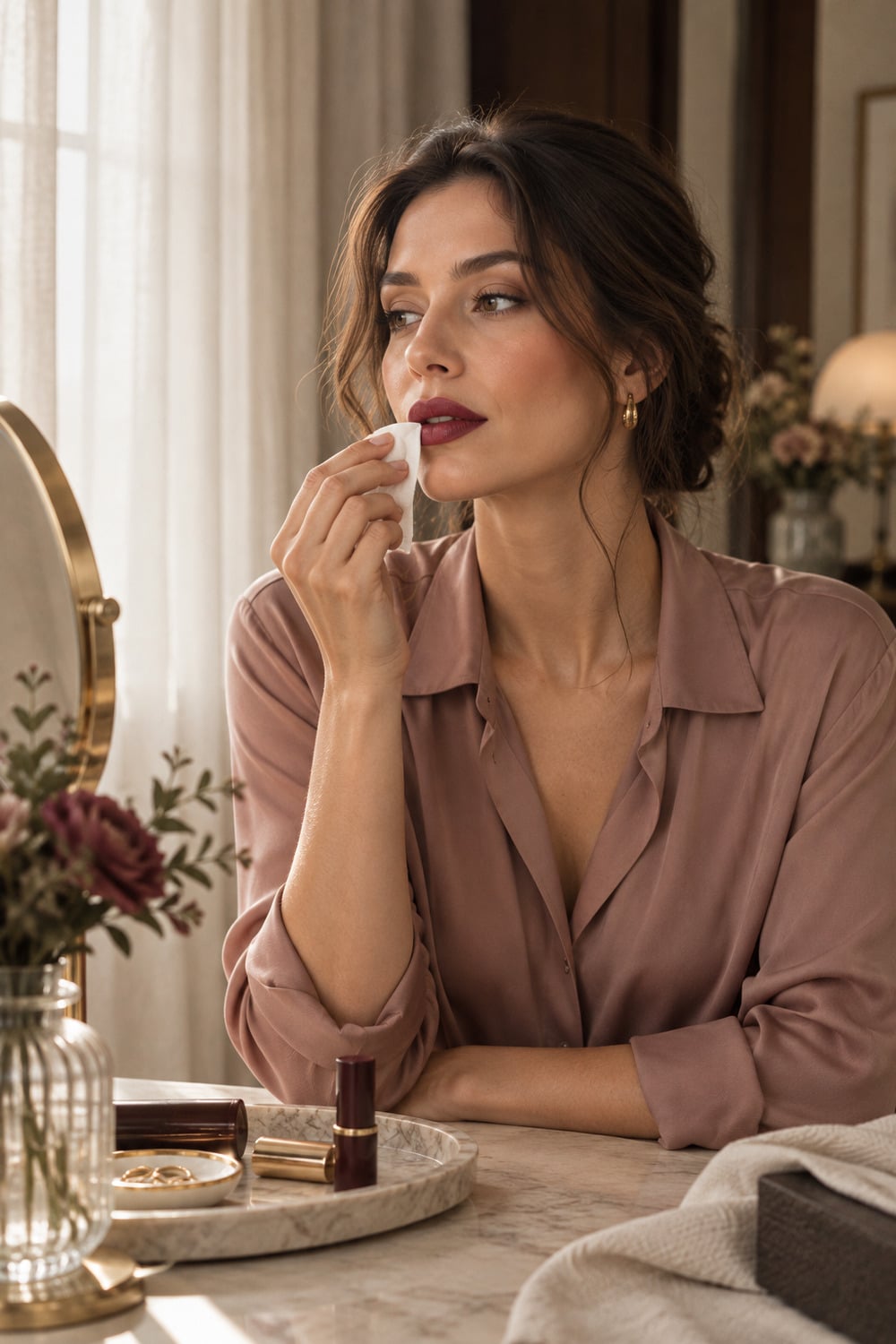
A blurred edge does not mean an uncontrolled smudge. Keep the cupid’s bow and outer corners readable, then soften the long stretches of the lip line with a fingertip, small brush or tissue. The center can stay deeper while the perimeter becomes more diffused. That placement gives wine lipstick the diffused quality of a blurred lip stain without losing the shape of the mouth.
For daytime, stop after one thin layer and blot before adding anything else. For a more defined evening version, use the same shade but reinforce the outline at the corners and cupid’s bow. The difference is useful because you do not need two separate color stories; changing the edge can make the same lipstick feel casual or precise.
Finish Changes How Dark Color Reads
Dark color shows texture clearly, so the finish deserves as much attention as the undertone. A cream formula or satin lipstick finish reflects a little light and usually keeps the surface looking flexible. A soft matte can make the color feel denser and more graphic. Gloss increases reflection and can make the mouth the most visually active part of the face even when the shade itself is not especially dark.
If you want a middle ground, apply lipstick in a thin layer, blot once, then add a small amount back to the center. This keeps the pigment present without building a thick rim around the mouth. If the lips are already flaky, skip aggressive prep; a gentle balm followed by blotting is a simpler way to reduce obvious dry patches before color goes on.
The complexion can echo that controlled finish. A base with some natural surface reflection keeps a deep lip from sitting against a uniformly powdered face, and satin finish makeup is a useful reference when you want the skin to sit between flat matte and high shine.
The Rest of the Face Needs a Clear Role
Once the mouth carries the deepest color, eye makeup can be quieter without disappearing. Curled lashes, a soft taupe wash or a narrow brown line give the eyes definition while leaving visual space around the lipstick. For a similar kind of low-contrast structure, espresso eyeliner keeps the lash line present without automatically turning the look into a dark eye and dark lip combination.
Blush is the point where balance can become too literal. You do not need to match the lipstick exactly. Start with less color than usual, then judge the face as a whole. Muted rose, mauve, soft berry or terracotta can all work depending on the lipstick and your complexion; the useful test is whether the cheek supports the mouth or starts a second competing color story.
This is also why a softer base often works better than adding more contour. If the lips already create strong contrast, heavy sculpting can make every feature look equally emphasized. Keep coverage where you want it, powder only where you need less shine, and let the mouth remain the deliberate point of depth.
Wear Time Changes the Application Choice
A first application of wine lipstick can look good but need a different strategy after coffee, food or conversation. Before leaving, note where your formula tends to fade on you: the center, the inner rim or the corners. Carry the product you actually used and, if the outline matters, the liner or small brush that created it. Touch up the missing area instead of repeatedly coating the whole mouth.
For lower-maintenance wear, a blotted stain leaves less visible contrast between full pigment and faded pigment than a thick opaque layer. If you prefer crisp color, accept the extra maintenance as part of that finish. Removal matters too: take off the remaining pigment gently at the end of the day instead of scrubbing at stubborn edges, especially if the lips already feel dry or irritated by friction.
Clothing Can Shift the Mood
Cream knitwear, grey tailoring, dark denim and simple black pieces give a wine lip room to act as the strongest color without making the whole look formal. Brighter berry shades can move the same idea in a livelier direction; berry lip makeup is a useful neighboring palette when you want less brown or plum depth and more visible fruit-toned color.
Final Thought
Wine lipstick is easiest to wear when you decide what should carry the drama: the depth, the edge or the shine. Let one of those lead, keep the others controlled, and the color can move from a soft stain to a sharper evening lip without changing the basic palette.
References and Further Reading
- Fall 2026 Makeup Trends Put Your Best Features Front and Center
- From Dark Lips to “Tired Girl” Eyes, Fall’s Biggest Makeup Trends Are So Moody
- The 6 autumn makeup trends to know come September
- 5 lipstick trends that will switch up your look in 2026
Related Reading