
Editorial Note: This beauty article is for general editorial inspiration only. It is not medical advice, dermatology advice, diagnosis, treatment, or professional care. Adapt every idea to your skin, body, budget, preferences, and qualified guidance when needed.
Smoky eye makeup often turns heavy when the darkest shade is spread too far before the shape is settled. A softer smoky eye revival starts with a narrow zone of depth at the lashes, then lets taupe, espresso, charcoal or plum fade outward so the eye still has visible space around it.
The useful decision is not how many shades to own. It is how far the darkness travels, how transparent the lid remains and where the lower lash line stops. Those choices let the same soft smoky eye technique work for a quiet daytime look, a dinner look or something more atmospheric after dark.
Key Takeaway: Build the deepest color at the lash roots first, then soften outward until the lid still looks dimensional without becoming uniformly dark.
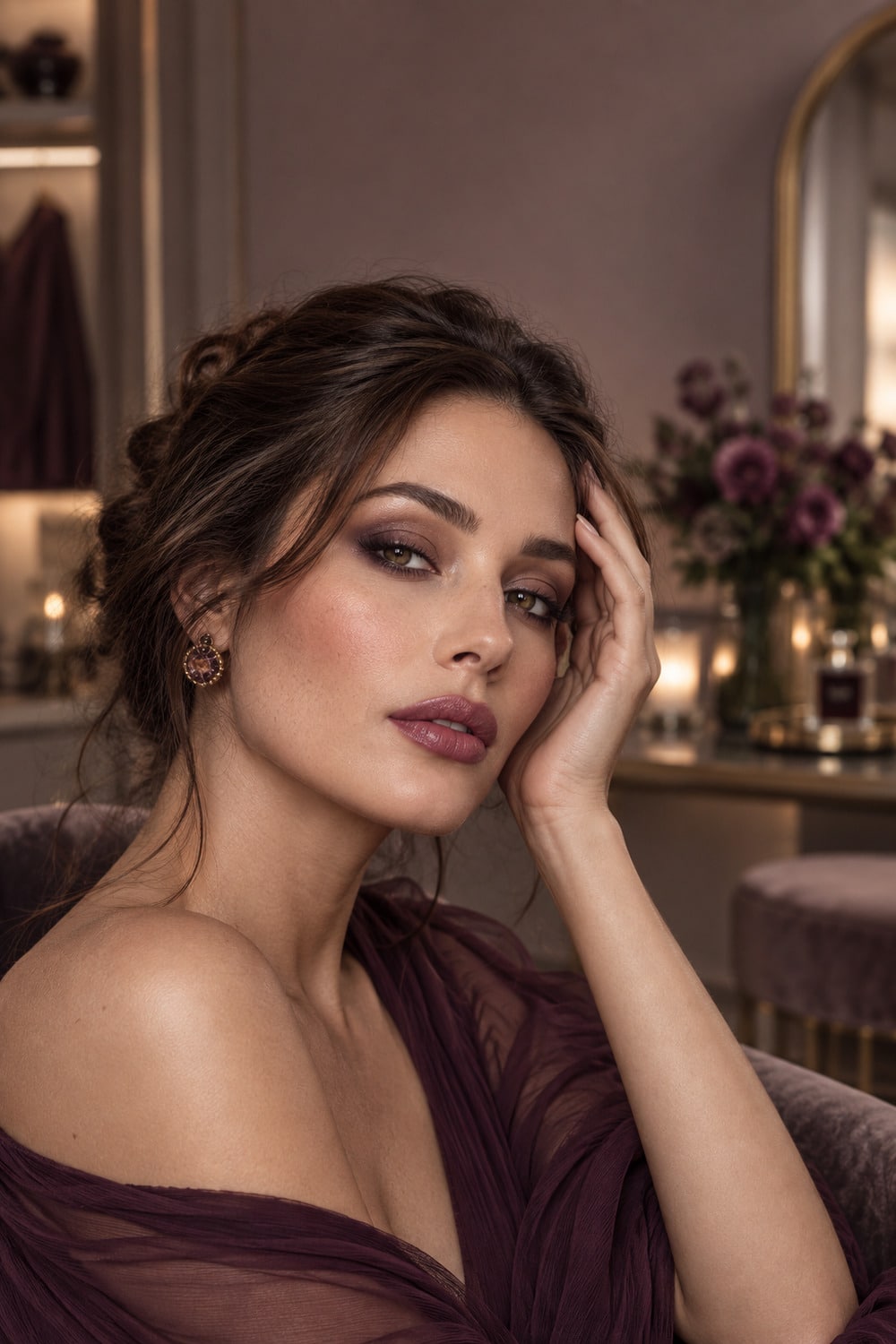
Map the Smoky Eye Revival Before Adding Depth
Begin a smoky eye revival with the eye open and decide where you want the haze to be visible from normal conversation distance. A light taupe or soft brown can sketch that boundary without committing to a dark block of pigment. If much of the mobile lid disappears when the eye is open, let the lighter haze sit a little above the fold while keeping the strongest depth lower.
For daytime, stop once the lash line looks defined and the outer edge reads as a soft shadow without becoming a distinct wing. That is usually enough to give the eye shape without filling the whole lid. Evening smoky eye makeup can use the same map with a slightly wider outer corner or a deeper root color.
Depth Belongs at the Lash Roots
A pencil, cream shadow or compact brush gives the most control where a smoky eye revival needs concentration: directly through the upper lash roots and just above them. Work in short sections, then soften the top edge before adding more. The aim is a dark base that loses intensity as it moves upward.
This keeps the technique close to the easy diffusion seen in soft smoke eye makeup, while making the placement decision more explicit. If the whole lid turns the same depth, the eye can look flatter because there is no lighter area left to show the gradient.
Texture order can make the blend easier. Use pencil or cream only where you need grip and density, then use a small amount of powder shadow to blur the boundary. Cream across the entire lid can become harder to move once it sets, while powder alone may take more passes to build a concentrated lash line.
Shade Changes the Mood Before It Changes the Shape
Espresso and deep brown can give a smoky eye revival softer contrast than pitch black, while charcoal keeps a cooler, more shadowed effect. Plum can add richness without reading as bright color, and bronze introduces warmth when the finish is kept muted. None of these shades needs to cover the full lid to register.
If you enjoy eye color beyond neutrals, blue mascara and soft color shows another restrained route. The same principle applies here: use one noticeable color decision and let the surrounding shades stay quieter. Eye color and undertone can influence preference, but they do not require a fixed matching rule.
Sheer Layers Keep the Lid Visible
Build a smoky eye revival in thin passes instead of trying to reach the final depth immediately. A sheer first layer lets you see whether the smoke is sitting too high, too far inward or too heavily under the eye. Add pigment only where the shape needs more weight, especially at the outer upper lash line.
For extra light in the evening, place satin or fine shimmer on the center of the mobile lid after the matte or satin haze is blended. Keeping that reflective area small preserves the gradient underneath. A full opaque metallic layer can turn a smoky eye into a different finish instead of simply adding dimension.
Lower Lash Smoke Needs an Endpoint
Lower-lash color changes the expression of the look quickly, so decide how far inward it should travel before you blend. Starting at the outer third gives you room to judge the effect. You can extend it toward the center if the upper lid needs more connection, but the line does not have to run all the way to the inner corner.
If the result starts to look messy, check the outer edge from a little farther away before adding more shadow. A clean cotton swab or small clean brush can lift stray pigment from the cheek and sharpen the endpoint without turning the smoke into a hard wing. This is where restraint often matters more than extra blending.
The softer edge also keeps the result distinct from intricate eyeliner, where visible precision is part of the design. With a smoky eye, the boundary should be readable but not outlined. Leave a little bare skin beyond the haze so the shadow has somewhere to fade.
Face Balance Changes How Smoky the Eyes Read
A smoky eye does not require a nude lip, but the finishes should have a clear hierarchy. If the eye is deep and softly matte, a sheer rose, muted berry or balm finish can keep the face from feeling crowded. A stronger lip can still work when the eye remains compact and the skin finish stays simple. The most useful rule is to avoid giving every feature the same visual weight.
Final Thought
A modern smoky eye revival is easiest to control when placement comes before pigment: define the lash roots, leave visible lid space, then decide whether color, lower-lash smoke or a small reflective detail deserves the final emphasis.
References and Further Reading
- Summer 2026’s Biggest Makeup Trends Are Edgy and Unbothered
- Fall 2026 Makeup Trends Put Your Best Features Front and Center
- How to apply eyeshadow the 2026 way, according to top makeup artists
- 5 Summer to Autumn Transitional Makeup Trends to Try
Related Reading