Editorial Note: This beauty article is for general editorial inspiration only. It is not medical advice, dermatology advice, diagnosis, treatment, or professional care. Adapt every idea to your skin, body, budget, preferences, and qualified guidance when needed.
A latte makeup look can lose its softness when every brown product reads equally warm, equally shiny, or equally deep. The face then looks orange, flat, or more heavily made up than intended, even when each product seemed neutral in the pan.
The useful approach is to build warm neutral makeup around temperature, depth, and finish. One shade carries the warmth, another supplies definition, and the complexion keeps enough variation to stop the palette becoming a single block of brown.
Key Takeaway: A convincing latte makeup look uses related brown tones at different depths, with restrained shine and enough contrast to keep the features distinct.
A Latte Makeup Look Needs a Temperature Check
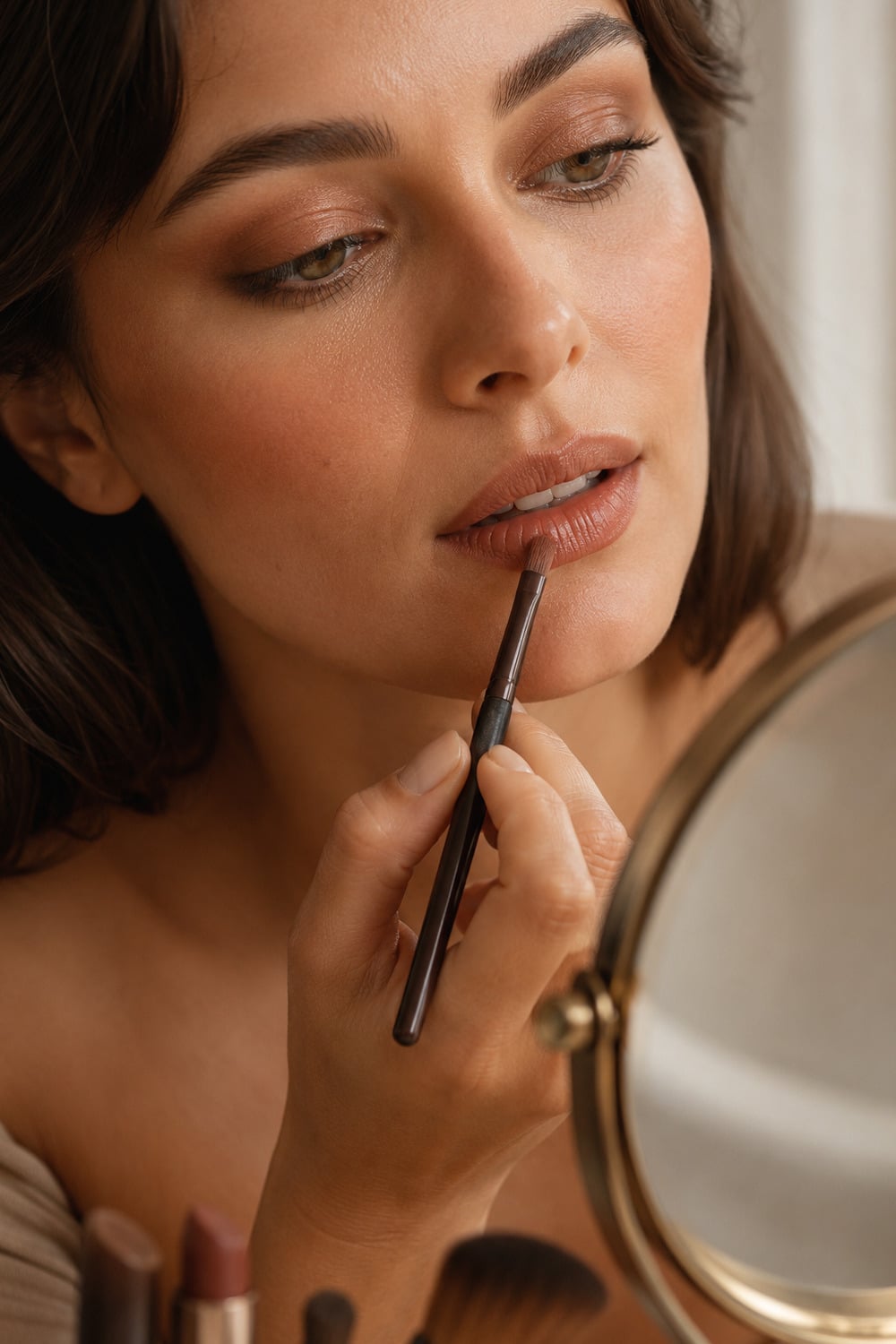
For a latte makeup look, compare the products beside one another instead of judging each shade alone. A caramel shadow, golden bronzer, peach blush, and beige lip may all be described as warm, yet together they can push the face too yellow or orange. Choose one clearly warm feature and let the remaining tones sit closer to neutral brown.
If the eye colors feel heavy, the peach-led direction of an apricot makeup look offers a useful comparison: peach brings visible color, while latte makeup depends on browns softened by beige, rose, taupe, or muted gold. Latte makeup for different skin tones preserves that relationship rather than copying identical shades: on deeper complexions, this may mean cocoa and bronze; on lighter complexions, biscuit, taupe-brown, or beige rose.
Depth Comes Before Shine
Build the eye with a depth ladder. Place the lightest brown over the mobile lid, a medium shade through the crease or outer corner, and the deepest brown close to the lashes. The three colors do not need to come from one palette, but they should separate clearly when swatched so the blending does not erase the eye shape.
Shimmer works best as a small change in finish, not as the main source of definition. Press a satin or fine shimmer onto the center of the lid or inner corner after the matte shades are blended. If the eye already has a reflective base, keep the lower lash line softer so the result does not become uniformly bright.
For a quieter version, use a brown pencil at the upper lash line and soften it before it sets. A short diffused line can define the lashes without introducing the hard black edge that often changes latte makeup into a conventional smoky eye.
Complexion Texture Sets the Finish
Even the skin only where you want coverage, then add bronzer in thin layers. A sheer base leaves room for natural differences in tone and texture, while concentrated concealer can handle smaller areas that need more coverage. This prevents the bronzer from becoming the only visible dimension on an otherwise uniform base.
Bronzer placement should follow the finish you want. Blending it around the outer forehead and upper cheek gives broad warmth; keeping a slightly deeper neutral brown beneath the cheekbone adds structure. Those jobs can be done with one product when its tone suits both areas, but separating them is often easier when a bronzer pulls orange or a contour shade looks gray.
Blush Changes the Color Story
Blush determines whether the face stays coffee-toned or moves toward peach, rose, or terracotta. Muted peach and beige rose add life without breaking the palette, while a stronger pink creates a deliberate contrast. The same color judgment applies beside soft copper hair color: when hair already contributes warmth around the face, a more neutral blush can keep the makeup from becoming overly coppery.
The Lip Test Prevents a Washed Out Finish
Test the lip color after the eyes and cheeks are complete. A nude that looked balanced on bare skin may appear pale once bronzer and brown shadow are in place. The quickest correction is often a brown lip liner one step deeper than the lipstick, blended inward so the edge does not read as a separate stripe.
Brown-pink and rose-brown shades help when caramel nudes turn orange. Toffee, chestnut, or cocoa can hold their shape on deeper lip tones, while beige rose or muted peach-brown may give lighter coloring enough contrast. The useful question is whether the lip remains visible at conversational distance, not whether the product is officially labelled nude.
Finish affects the balance as much as color. A creamy or satin lip softens a mostly matte face; a blurred matte lip can steady a look with shimmer on the eyes. Gloss is optional, and a small amount at the center of the lips is enough when you want reflection without changing the outline.
Wear Checks Matter in Real Light
Check a latte makeup look near a window and again in the lighting where it will be worn. Warm bulbs can make caramel shades appear richer, while cool office or evening light may reveal grayness in taupe products. Adjust one area at a time: soften the bronzer, deepen the lash line, or change the lip before adding more product everywhere.
Keep the surrounding details quiet when the face already carries several brown finishes. Sheer soap nails, simple hair, or restrained jewelry leave the makeup as the main color story. At the end of wear, remove eye and lip products without repeated rubbing, especially where pencil and long-wear textures have been layered.
Final Thought
The most adaptable latte makeup look is built through contrast inside a neutral palette: controlled warmth, visible depth, and a lip that still has enough color to hold the face together.
References and Further Reading
- What is Latte Makeup? Here’s How to Do TikTok’s Latest Beauty Trend
- OK, Rita Ora Has Me Sold on the Latte Makeup Trend
- Hailey Bieber just nailed the latte makeup trend that’s all over TikTok
- ‘Latte make-up’ is the no-fuss summer make-up trend the internet is loving right now
Related Reading