
Editorial Note: This wellness article is for general editorial inspiration only. It is not medical advice, mental health treatment, diagnosis, fitness prescription, nutrition plan, or professional care. Adapt every idea to your body, health, circumstances, and qualified guidance when needed.
Anti-productivity wellness for women invites ambition, responsibility, and rest to share the same life without making every hour prove its usefulness. It asks you to notice when daily living starts to feel like a dashboard: steps counted, moods tracked, mornings optimized, rest justified, and every quiet hour silently measured against output.
For many women, wellness has become another place to perform. A calmer approach asks a different question: what would support your life if it did not have to prove its usefulness? This gentle, modern idea begins with that permission.
Key Takeaway: Anti-productivity wellness gives time, rest, pleasure, and ambition room to exist without turning every moment into proof of usefulness.
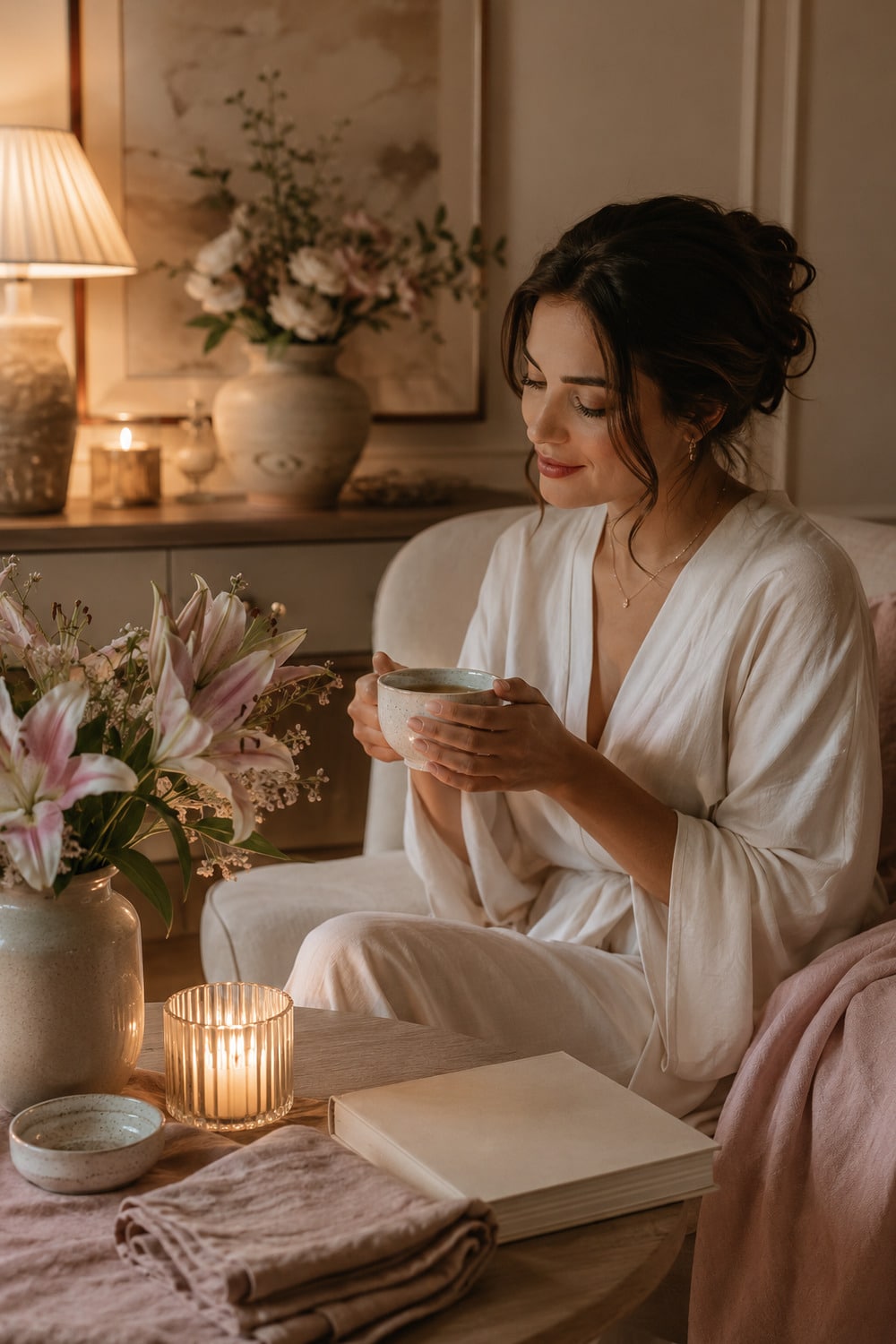
What Anti-Productivity Wellness for Women Really Means
Anti-productivity wellness for women does not reject responsibility. It rejects the belief that a day is only valuable when it can be summarized as progress. It is the choice to let some moments remain untracked, unposted, and unconverted into self-improvement.
This matters because modern wellness culture often borrows the language of performance. Even rest can become a task: sleep scores, recovery metrics, morning routines, habit streaks, and perfect reset days. These tools can be useful, but they can also turn the body into a project instead of a place to live.
Trusted mental health resources such as the NHS guide to stress describe how overwhelm can affect concentration, mood, sleep, and behavior. For an editorial wellness site, that is a reminder to keep this topic gentle: notice pressure as part of daily life, and seek qualified support when stress begins to affect how you function.
1. Let One Part of Your Day Stay Unmeasured
Choose one small pocket of time that does not need a result. It might be your first cup of tea, a quiet walk, ten minutes by a window, or the short pause before opening your laptop. Do not track it, photograph it, or turn it into a ritual with rules.
If your day already feels full of goals, this simple unmeasured space becomes a quiet act of self-respect. It tells your nervous system that not every moment must earn its place.
2. Replace Optimization With Enoughness
Instead of asking, “How can I make this better?” ask, “Is this enough for today?” That one shift changes the emotional texture of wellness. Dinner does not need to be perfect to nourish you. Movement does not need to be intense to count. Rest does not need to be deserved.
Anti-productivity wellness for women can soften the invisible pressure to improve every corner of life at the same time. A day may still hold effort, care, and ambition while leaving a little room for ordinary sufficiency.
3. Build Recovery Into Ordinary Transitions
You do not always need a full reset day. Sometimes the most realistic recovery happens between things: after a meeting, before dinner, between errands, or before answering one more message. A slow breath, a glass of water, or three minutes of silence can create a cleaner transition.
For more small-pause inspiration, the WorldsLadies guide to micro-rest rituals for women pairs naturally with this idea. It keeps rest accessible rather than dramatic.
4. Stop Turning Every Mood Into a Problem
Some days feel flat. Some mornings feel slow. Some evenings feel emotionally full. Not every mood needs to be fixed, decoded, or immediately improved. A gentle wellness practice gives feelings room to move without forcing them into a productivity plan.
The Mental Health UK overview of burnout explains burnout as physical, mental, and emotional exhaustion connected with long-term stress and pressure. That does not mean every tired day is burnout; it simply reminds us that constant pressure deserves care, not more self-criticism.
5. Make Your Digital Life Less Like a Scoreboard
Apps, calendars, reminders, watches, and social platforms can help, but they can also create the feeling that you are always being evaluated. Consider turning off one nonessential notification, removing one visible streak, or checking one metric less often.
If evenings are your most overstimulated time, the guide to a digital sunset routine for women offers a softer way to close the screen-heavy part of the day.
6. Protect Pleasure That Has No Purpose
Read a few pages without trying to become more informed. Arrange flowers without filming them. Wear perfume at home. Sit outside without counting steps. Pleasure can become restorative when it does not need to support a goal.
In 2026 wellness conversations, the Global Wellness Institute noted a broader backlash against over-optimization and a return to joy. Anti-productivity wellness for women fits that cultural shift when it is kept grounded, personal, and realistic.
7. Redefine Success As Feeling Present In Your Own Life
Success can include ambition, income, creative work, health, beauty, relationships, and personal growth. But it can also include being able to enjoy lunch without rushing, sleep without reviewing your failures, and move through a weekend without turning it into a performance.
The APA’s 2025 Work in America survey highlights how workplace uncertainty can affect stress levels. For everyday life, that makes emotional spaciousness even more valuable. You may not control every demand around you, but you can stop measuring your worth only through output.
How To Practice This Without Abandoning Your Goals
Anti-productivity wellness for women should support your real life rather than become another identity to manage. Keep your calendar, plans, and responsibilities. But choose a few places where softness is allowed to exist without explanation.
You might pair this with an emotional energy budget if you often feel drained by invisible demands, or with sleep sanctuary ideas for women if your bedroom has started to feel like another extension of the workday.
A Gentle Anti-Productivity Wellness Map
- Morning: Let one small moment stay unmeasured before the day becomes busy.
- Midday: Ask whether “enough” is possible before adding another expectation.
- Evening: Reduce one digital scoreboard, notification, streak, or metric.
- Weekly: Protect one private pleasure that does not need a purpose.
FAQ
Is Anti-Productivity Wellness for Women the Same as Being Unmotivated?
No. Anti-productivity wellness for women is not a rejection of ambition. It separates self-worth from constant output, tracking, pressure, and comparison.
Can This Approach Work for Busy Women?
Yes, especially when it stays small. A realistic version might mean one unmeasured morning pause, one gentler evening boundary, or one weekly hour that does not need a performance goal.
What If Productivity Tools Genuinely Help Me?
Keep what helps. Notice the moment a tool starts making you feel watched, judged, or never finished, then adjust the boundary around it.
Final Thought
Anti-productivity wellness for women is a quiet permission slip: your life does not have to be optimized to be meaningful. Some days can be simple. Some rest can be private. Some beauty can be ordinary. And some moments can belong to you without becoming proof of progress.
References and Further Reading
- NHS: Stress
- Mental Health UK: Burnout
- Global Wellness Institute: 2026 Wellness Trends
- American Psychological Association: 2025 Work in America Survey
Related Reading