
Neuro cosmetics and scent sits at the edge of two beauty conversations that are easy to blur together. One concerns emerging claims about communication between skin and the nervous system; the other is the familiar sensory experience of a cream that glides well, a perfume that recalls a place, or a routine that simply feels pleasant to use. Those ideas overlap, but they are not interchangeable. A better beauty routine starts by separating the science claim from the sensory preference, then letting skin tolerance decide how much fragrance belongs in the picture.
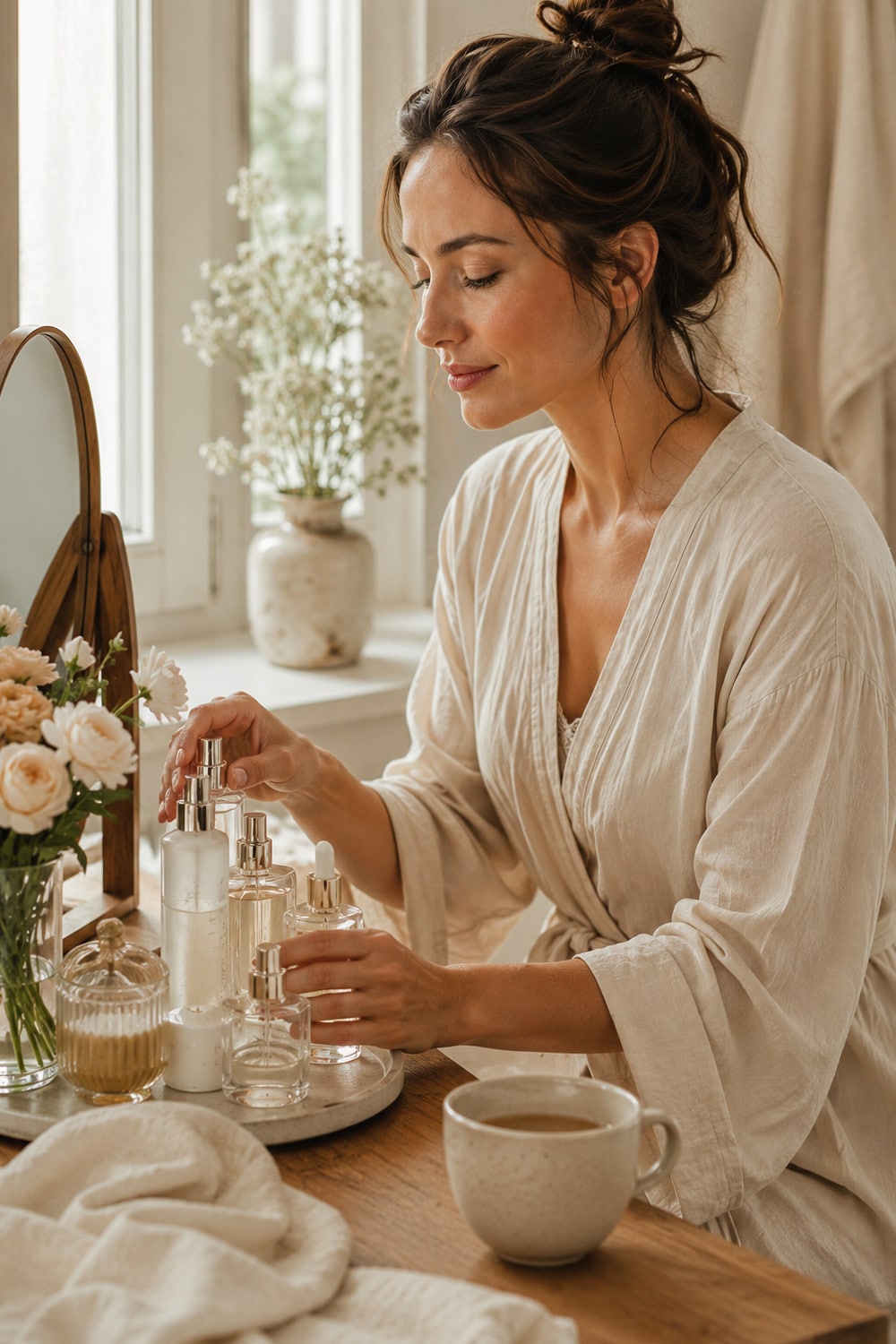
What Neuro Cosmetics and Scent Actually Covers
The word neurocosmetics is still being argued over in dermatology. A 2025 review on neurocosmetics and the skin-brain axis describes the field as an attempt to work with neurocutaneous and neuroimmune pathways through skincare. That is a much narrower idea than saying any product with a soothing smell or silky finish is acting on the brain.
A published dermatology correspondence on neurocosmetic claims makes the boundary sharper: pleasant sensory properties alone do not make a cosmetic neurocosmetic, and claims that reach beyond the skin deserve scrutiny. For everyday beauty, this distinction is useful because it keeps a sensory ritual in its proper lane. You can enjoy how a product feels without asking it to perform as emotional treatment.
Why Scent Can Feel Personal
Smell has a well-established relationship with autobiographical memory. A review of odor-evoked autobiographical memory found that memories prompted by odor can be experienced differently from memories prompted by cues such as words, images, or sounds. The authors also describe the field as still developing, especially when it comes to explaining why those differences occur.
That helps explain why perfume can feel intimate without turning fragrance notes into a universal mood code. Rose might recall a family garden for one person and a hotel soap for another. Vanilla can feel familiar, too sweet, nostalgic, or simply neutral. Even a fragrance you love on paper can become distracting after several hours on skin.
A practical fragrance routine therefore starts with observation. Wear a scent long enough to notice the dry-down, how often you become aware of it, and whether it still feels comfortable in the rooms you actually occupy. Personal association matters here; a label that promises “calm,” “energy,” or “confidence” cannot tell you what a smell will mean to your own memory.
Texture Is a Beauty Decision in Its Own Right
Sensory beauty is also tactile. A lotion may disappear quickly, leave a waxy film, feel cooling for a moment, or stay tacky under sunscreen and makeup. Those details can matter more to daily use than a luxury description on the jar. If a rich cream feels oppressive in humid weather, a lighter texture may be the more workable choice; if a gel pills under makeup, that inconvenience is part of the product experience. This is where a broader set of beauty rituals for women can be more helpful than chasing a sensory trend as a category of its own.
When Fragrance Becomes a Skin Care Issue
Fragrance is not only an aesthetic variable. DermNet describes fragrance allergy as allergic contact dermatitis to a fragrance chemical. Both naturally derived extracts and synthesised fragrance materials can be allergens, so “natural” is not a safety shortcut.
Watch the skin, not the marketing language. Persistent itching, burning, stinging, redness, swelling, or a rash in an area exposed to a fragranced product is a reason to stop using that product. If reactions keep returning or the cause is unclear, a dermatologist can investigate with medical patch testing; that is different from casually trying a product on a small area at home.
For a new skincare product, the American Academy of Dermatology recommends applying the product to a small test spot twice daily for seven to ten days before wider use. This can help predict a negative skin reaction, but it cannot identify a specific allergen. The same guidance advises choosing products labelled fragrance-free if fragrance is causing a reaction and cautions that “unscented” or botanical products may still contain fragrance-related ingredients.
This is the point where neuro cosmetics and scent needs its clearest boundary. A perfume that brings back a pleasant memory can still irritate skin. A fragrance-free moisturiser can still have an elegant texture. Sensory pleasure and skin compatibility are separate checks, and neither should be used to infer a medical effect.
Keep Perfume and Skincare as Separate Decisions
If you enjoy perfume but prefer to minimise fragrance in leave-on skincare, there is no need to make one product do both jobs. A fragrance-free cleanser or moisturiser can keep the base routine simpler, while perfume remains an optional style choice. If fragranced skincare has always been comfortable for you, it can stay in the routine as a preference; introducing one new scented product at a time simply makes it easier to notice what changed if irritation appears.
Scent can also be part of personal presentation without becoming an identity test. For that styling side of the subject, the minimalist fragrance layering guide goes deeper into perfume combinations. If the question is how beauty choices relate to self-image more broadly, see aesthetic identity and psychology. Here, the priority stays narrower: choose scent deliberately, keep shared spaces in mind, and let comfort set the upper limit.
Choose the Sensory Level That Fits the Day
There is no single correct amount of scent in a beauty routine. The simplest way to choose is to separate skin needs from fragrance preference and use the option that creates the least friction for the day ahead.
| Approach | When it makes sense | What to check |
|---|---|---|
| Fragrance-free core | You want fewer fragrance variables in cleanser, serum, or moisturiser. | Read the label carefully; “unscented” is not always the same as fragrance-free. |
| Scented skincare | You already tolerate the formula and genuinely enjoy its scent and texture. | Stop if a new reaction develops and avoid assuming botanical fragrance is automatically gentler. |
| Separate perfume step | You want fragrance as style without building it into every leave-on skincare product. | Keep application proportionate to the setting and skip it when scent would be unwelcome or uncomfortable. |
Related Reading


