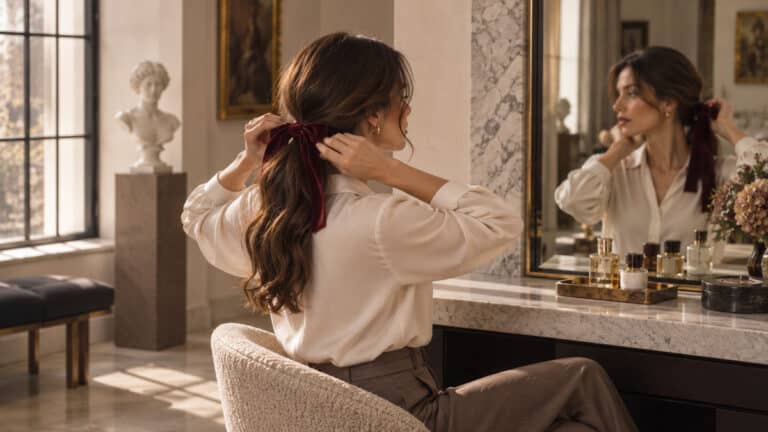
Editorial Note: This beauty article is for general editorial inspiration only. It is not medical advice, dermatology advice, diagnosis, treatment, or professional care. Adapt every idea to your skin, body, budget, preferences, and qualified guidance when needed.
Soft matte skin works best when the complexion has a muted surface without losing every shift of light. In fall, that can mean less visible shine through the centre of the face while the cheeks still keep enough dimension for blush and natural texture to read clearly.
The difficult part is usually product placement, not product quantity. A base can turn dry or cakey when skincare is still slippery, foundation is layered too broadly, or powder is added everywhere by habit. A more controlled approach treats the face in zones and leaves areas alone once they already look balanced.
Key Takeaway: Soft matte skin looks most convincing when thin coverage and selective powder reduce excess shine without flattening the whole complexion.
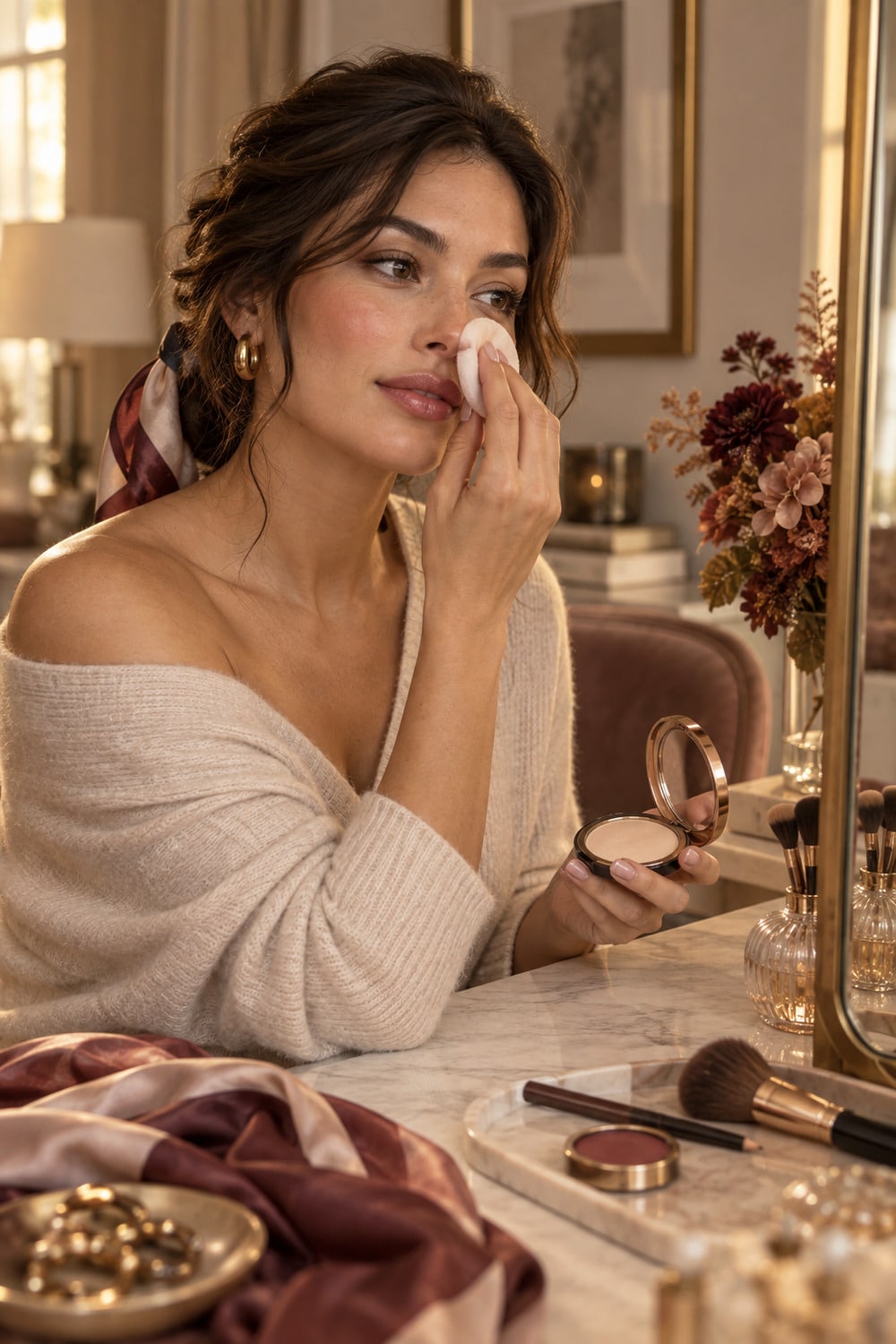
Soft matte skin starts before foundation
A matte base needs skincare to settle before colour goes on top. If moisturiser is still moving under the fingers, give it more time or lightly blot the excess from areas that tend to slip. If the skin already feels tight, adding more powder later is unlikely to make the makeup look smoother. British Vogue’s 2026 matte-foundation guide makes the same practical distinction: the base should feel hydrated without being slippery.
This is also where skin type changes the plan. The American Academy of Dermatology advises that oily skin still benefits from moisturiser and notes that matte-labelled makeup can help reduce visible shine. That does not mean every oily area needs the same amount of powder; it gives a reason to separate skincare comfort from the cosmetic finish you choose.
Coverage works better in thin zones
Build soft matte skin with the amount of foundation needed to even the areas you actually want to soften, then add coverage only where the first layer still looks uneven. Current matte-foundation coverage from both Allure and British Vogue repeatedly favours lighter, buildable layers over a dense coat. The useful part of that matte complexion makeup advice is the pause between layers: once the first layer settles, you can see whether more product is necessary at all.
A damp sponge can press down excess foundation and soften the edge between covered and uncovered areas, while a brush can give more coverage with fewer passes. Neither tool guarantees a better result. Pressure, product load and how quickly the foundation sets matter more than treating one applicator as universally superior.
If you prefer a finish that keeps a little more light at the outer face, the same placement logic appears in satin finish makeup: control the surface where you need it, then let the rest of the complexion keep some movement.
Powder belongs where shine returns
After foundation has settled, check the forehead, sides of the nose, chin and the area around the mouth in ordinary light. Powder the spots that already look shinier than you want, rather than coating the whole face pre-emptively. Allure’s 2026 setting-powder guide recommends strategic application and a light hand, while AAD guidance on oily skin supports blotting papers as a way to absorb surface oil without rubbing.
A useful test is to wait a few minutes after the first powder pass before deciding whether to add more. If the centre looks controlled and the cheeks still show natural texture, the base is finished. Extra powder added after that point can make fine texture more visible and can change the colour or depth of cream products underneath.
Cheek colour restores dimension without extra shine
Muted skin can make cheek colour look sharper than it did on a dewy base, so blend blush beyond the centre of the pigment and soften its edge into the foundation. Soft matte fall makeup works with cream-to-powder and finely milled powder blushes alike; the better choice is the texture that sits cleanly over the base you already have.
Autumn colour does not have to mean a heavier complexion. A softly placed berry blush makeup look can bring warmth back to a restrained base, especially when the cheek colour is diffused instead of drawn as a hard stripe.
Keep highlighter optional. If the top of the cheek already reflects enough light, adding another reflective layer can interrupt the soft matte contrast you built through the centre of the face. On drier areas, leaving powder off altogether may create a cleaner result than trying to restore luminosity afterward.
Touch ups work better after blotting
Midday shine is easier to correct when the first step removes excess oil instead of covering it. Press blotting paper or a clean tissue onto the shiny area, lift it away, then look again before reaching for powder. If the base still needs help, press a small amount of powder only onto that spot. This reset helps soft matte skin stay lighter by avoiding fresh powder stacked over oil and older product, which is one of the fastest ways for a matte base to look thick.
Clean tools keep the surface more even
Residue on brushes, puffs and sponges changes how much product they pick up and where it lands. The American Academy of Dermatology recommends washing makeup brushes every 7 to 10 days; a clean tool also gives you a more predictable application because old foundation and powder are not mixed into the next layer.
Defined eyes can then do more of the visual work without demanding extra complexion coverage. A softly blended Espresso eyeliner keeps the autumn palette grounded while the base stays quiet. If makeup repeatedly causes stinging, a rash or persistent irritation, set the cosmetic experiment aside and seek qualified guidance rather than trying to cover the reaction with more product.
Final Thought
Soft matte skin feels current when the face is allowed to keep variation: less shine through the centre, thinner coverage at the edges and enough natural texture to stop the base from reading as a single flat layer.
References and Further Reading
- 9 Best Matte Foundations for a Pore-Blurring, Camera-Ready Finish
- 9 Best Setting Powders to Lock in Makeup and Block Shine
- Matte Is Back: The New Generation Matte Foundations Have Arrived
- How to control oily skin
- How to clean your makeup brushes
Related Reading