
Editorial Note: This beauty article is for general editorial inspiration only. It is not medical advice, dermatology advice, diagnosis, treatment, or professional care. Adapt every idea to your skin, body, budget, preferences, and qualified guidance when needed.
Soft copper hair color can look restrained in one room and noticeably red in another. That shifting quality is part of its appeal, but it also makes a saved photograph an unreliable salon brief: camera exposure, window light, styling and the model’s starting shade all affect what the copper appears to be.
A useful soft copper salon brief is not simply a statement that you like copper. It explains how much of your existing depth you want to keep, where the warmth should sit, and whether you want it visible indoors or mainly when the hair moves through daylight. Those choices separate a translucent brunette glaze from copper ribbons, strawberry warmth and an all-over red result.
Maintenance deserves the same attention as the shade. A softened root line may grow out quietly while the warm pigment still loses intensity through washing, heat and sun exposure. Choosing the technique and the upkeep together makes the refresh easier to live with after the first glossy week.
Key Takeaway: The most wearable soft copper hair color keeps a deliberate connection to your starting depth and matches the level of visible warmth to the upkeep you will realistically maintain.
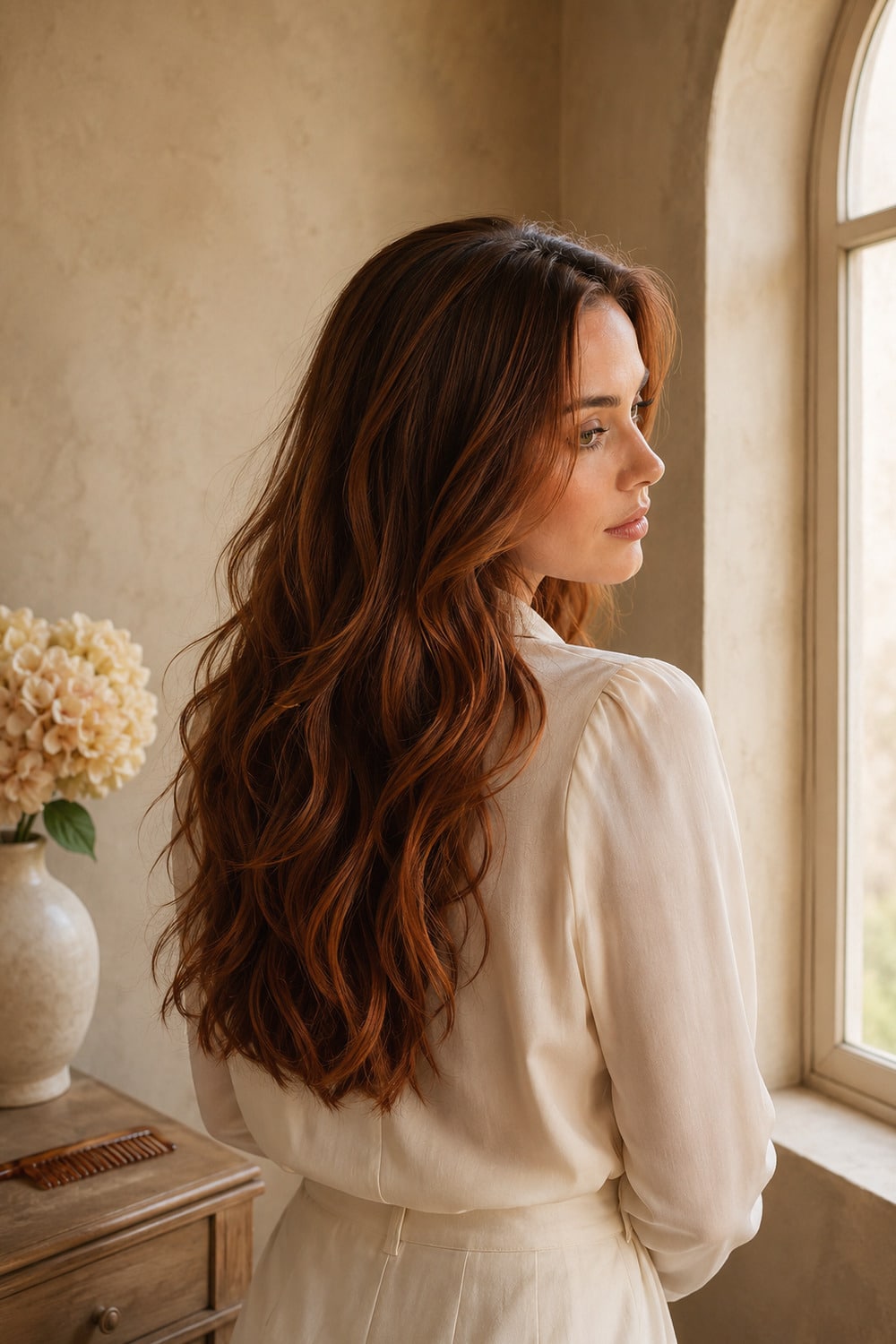
Soft Copper Hair Color Starts With Your Depth
On dark brunette hair, soft copper hair color can read as a warm reflection before it reads as a new color. Keeping the base deep and adding a demi permanent glaze or fine ribbons can produce a russet or chestnut effect that appears strongest in daylight. A lighter, brighter copper may involve lifting the hair first, which changes both the appointment and the condition of the finished hair.
Medium brown hair offers the widest middle ground. A colorist can keep enough brown to stop the result turning vivid, then adjust the reflect toward amber, cinnamon or muted auburn. Dark blonde and naturally light bases can show strawberry or golden copper with less depth underneath, so a formula that sounds subtle may still look clearly red once it is applied.
Previous color matters as much as natural depth when planning soft copper hair color. Lightened ends, old highlights and porous areas can take warm pigment more strongly or release it faster than untouched roots. Bring photographs of your hair in daylight and indoor light, and tell the colorist what has been applied through the lengths; that history is more useful than presenting a single celebrity image as an exact target.
Visibility Matters More Than a Shade Name
Before choosing between soft copper, copper brunette or strawberry copper, decide where you want the change to register. For warmth that mostly appears when the hair catches light, keep the root and much of the base close to your current level, then place copper through a sheer glaze or narrow pieces. For a result that reads copper in ordinary indoor light, the formula needs more saturation or a lighter canvas.
A simple visibility test can clarify the brief: ask yourself whether you want a colleague to notice the color across a room, whether you want it to emerge only outdoors, or whether you mainly want brown hair to stop looking flat. These are different outcomes. The answer tells the colorist more than a trend name, especially when online examples range from peach and rose to cognac, burnt sienna and deep auburn.
Placement and Finish Change the Mood
Face framing pieces make soft copper hair color noticeable close to the skin, even when the rest of the hair stays brunette. Fine pieces through the mid lengths create quieter movement; a full glaze gives a more continuous reflect; and an all-over application creates the clearest identity shift. If you dislike visible striping, ask for the copper to be diffused through the parting and hairline instead of concentrated in thick front panels.
Finish alters the reading too. Smooth waves expose broad reflective surfaces and make copper look brighter, while curls, coils and textured shapes break the color into smaller flashes. A glossy finish can make muted copper feel richer, but shine should not be used to hide a shade that is too orange, too pink or too dark for your preference. Judge the undertone in neutral indoor light before relying on styled photographs.
Makeup Can Rebalance the New Warmth
Copper near the face can make familiar makeup look cooler, pinker or more contrast-heavy. Change one area at a time before replacing a whole makeup bag. A softer brow, a brown liner or a muted rose blush may be enough; peach is an option, not a rule, and very warm makeup can make an amber copper look more orange.
For a coordinated late-summer palette, the restrained peach placement in an apricot makeup look can sit beside copper without repeating it across every feature. A cinnamon brown makeup direction is useful when you want the eyes and lips to stay grounded while the hair supplies most of the warmth.
Keep the wider beauty mood optional. The sheen described in soft glow body care can echo a glossy hair finish, while a summer perfume mist belongs to scent preference and does not need to match the hair color. That separation keeps the result considered without turning every product into a copper themed choice.
Fade and Grow Out Are Different Problems
A darker root, balayage placement or a glaze close to your natural depth can make the regrowth line of soft copper hair color less obvious. It does not stop copper pigment from fading. Reds and coppers can lose their fresh intensity through repeated washing, hot styling and exposure to the elements, so a color can have an easy grow out and still need tonal refreshes.
Decide which change bothers you more: visible roots, reduced copper intensity or dryness through previously lightened ends. That answer shapes the maintenance plan. A close-to-base glaze may fade softly and need a tone refresh; bright pieces may need both toning and root work; lightened ends may need gentler heat habits and conditioning without assuming that a product can permanently repair chemical damage.
The Maintenance Ceiling Belongs in the Brief
Set a hair color maintenance ceiling before the formula is mixed. Tell the colorist how often you are prepared to return, how frequently you wash, whether you use hot tools and how much fading you can tolerate. If the answer is occasional appointments and minimal home toning, keep the copper closer to your base and use placement that leaves a softened root. If you enjoy a consistently vivid result, accept that the tone may need more regular refreshes.
Home Color Needs a Clear Safety Boundary
For boxed or direct dye, follow the product instructions, timing and allergy alert test every time, even when you have used the brand before. Do not color over an irritated, sunburned or damaged scalp, and do not improvise by leaving the formula on longer. A strand test can also show how old highlights or porous ends may take the shade before the mixture is applied more widely.
Stop using the product if burning, swelling, blistering or other reaction symptoms develop. Breathing difficulty, swelling of the lips, mouth, throat or tongue, or rapidly worsening symptoms require urgent medical help. Persistent scalp irritation or uncertainty after a previous reaction belongs with a qualified clinician, not an ordinary color correction appointment.
Final Thought
Soft copper hair color works best when the brief names the starting depth, desired visibility, placement and maintenance ceiling. Those details make a subtle seasonal refresh easier to recognise in real light and easier to keep once the initial salon finish begins to soften.
References and Further Reading
- The Summer 2026 Hair Color Trends Are All About Doing Less
- Hair Dyes
- ‘Soft copper hair colour’ is the most searched-for hair shade right now
- 32 Copper Hair Looks That Prove the Trend Isn’t Going Anywhere
- Coloring and perming tips for healthier-looking hair
- Hair dye reactions
Related Reading