Editorial Note: This lifestyle article is for general editorial inspiration only. It is not financial, medical, legal, travel, safety, or professional advice. Adapt every idea to your personal needs, budget, culture, location, and circumstances.
A summer outfit can lose its shape once the jacket comes off. Modern vest style solves that particular problem with a sleeveless layer that keeps the line of tailoring while leaving the arms free. The useful question is not whether a vest looks current, but whether its cut works as a top, an open layer or part of a set in the heat you actually dress for.
A fitted waistcoat, a relaxed linen vest and a longline cutaway version behave differently around the shoulder, bust and waistband. Those differences decide which trousers sit cleanly beneath it, whether a camisole is needed and how much movement the outfit allows through a commute, lunch or evening plan.
Matching pieces are an easy starting point, yet the vest becomes more valuable when it can also work with denim, a column skirt, a soft dress or the quieter pieces already in the wardrobe. The aim is a repeatable formula for summer vest outfits, not a single photograph-ready look.
Key Takeaway: The strongest modern vest style begins with a clean armhole and comfortable closure then uses length fabric and softer pieces to control the outfit.
Modern Vest Style Begins with the Fit Decision
Decide how the vest will be worn before judging the size, because that choice sets both vest fit and proportion. A vest used as a top needs enough coverage at the armhole and neckline for the undergarments you prefer, while a version worn open over a tank needs a little more ease through the back. Button it, sit down and raise both arms. Pulling at the lowest button, a collar that lifts away from the neck or an armhole that exposes more than intended will become more noticeable after several hours.
The shoulder line gives modern vest style its first clear point of structure and should finish close to the natural shoulder line unless the design is deliberately extended. On a fitted style, the front should lie flat without forcing the bust into a new position. A small alteration at the side seam or button placement may improve a nearly right vest, but a collapsing shoulder or deeply gaping armhole usually changes the character of the whole garment.
Longline and cutaway vests need a second test: look at the hem while seated. A longer front can crease sharply across the lap or flare away from the body, especially when worn with a high waistband. Wearing the vest open avoids some strain, though it also creates a stronger vertical frame around the top underneath.
Vest Length Controls the Proportion
A cropped vest gives modern vest style a clear relationship with the waistband, so it works cleanly with high-rise trousers, a straight midi skirt or tailored shorts that sit without bunching. A hip-length vest covers more of the waist and usually needs a simpler line below: full-length wide-leg trousers, a narrow skirt or straight denim. When both the vest and the bottom are voluminous, a visible wrist, ankle or open neckline can keep the silhouette from feeling dense.
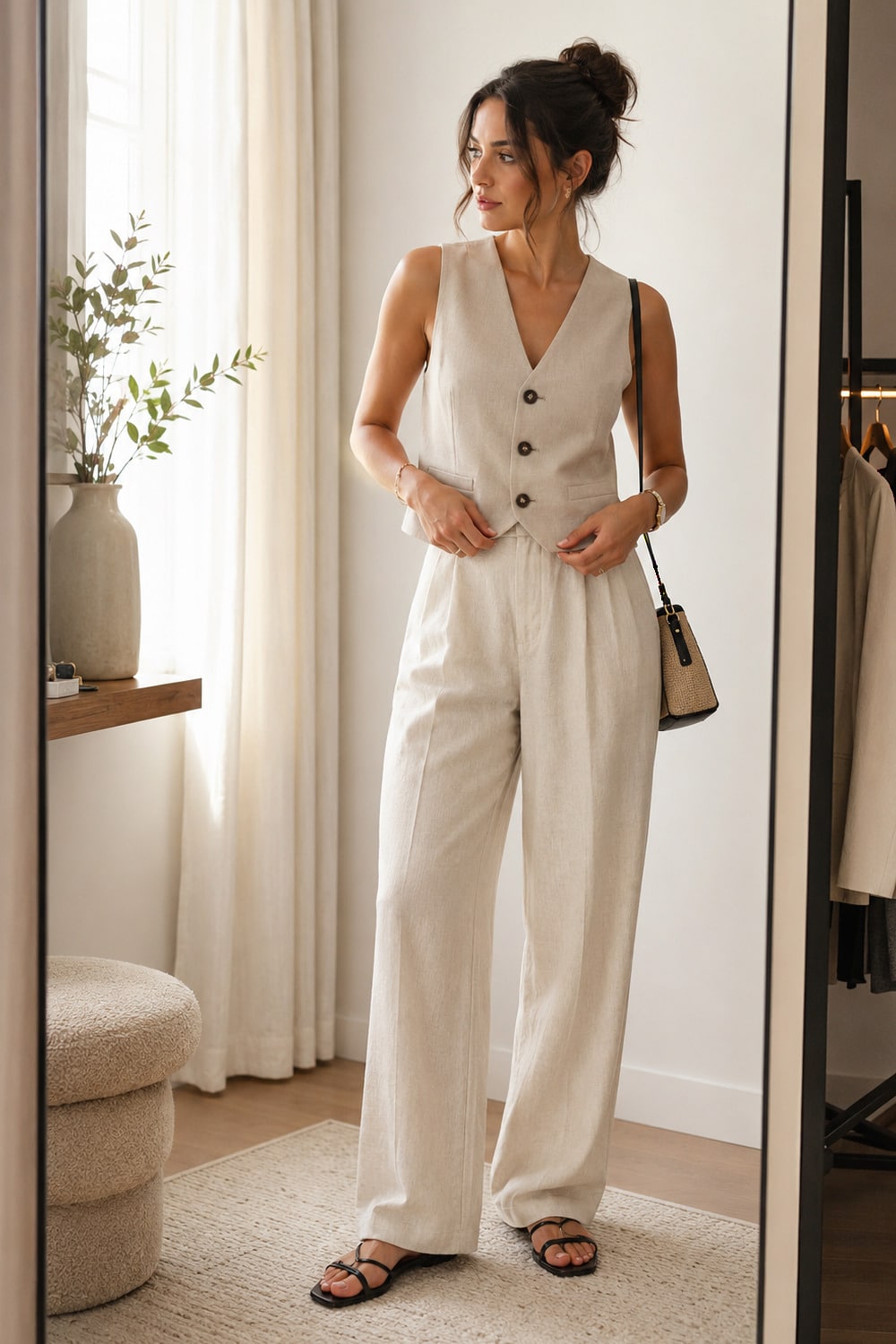
Colour can make these proportion choices easier to read. With monochrome summer outfits, use a slight change in texture or tone between the vest and the bottom so the closure and waistline do not disappear. A cream linen vest over warmer ivory trousers looks connected while still showing where one shape ends and the next begins.
Matching Sets Are Only the Beginning
A coordinated vest and trouser set gives modern vest style a clear line for work, dinner or an event while removing most colour decisions. It is also the version most likely to feel formal. Flat leather sandals, a woven bag or an unstructured tote can bring the outfit back toward daytime, while a closed shoe and compact bag keep it sharper.
Denim changes the mood quickly and offers a useful answer to how to wear a waistcoat beyond a matching set. Straight jeans make a fitted vest feel less corporate; a dark denim skirt gives a longline vest enough weight below the hip; tailored denim shorts work when the hem of the vest does not cover them completely. Very distressed denim can compete with precise tailoring, so the contrast works best when one element carries most of the visual detail.
A soft dress offers a different balance. Leave a long vest open over a column or slip shape, checking that the armholes do not catch the dress straps. On a cotton midi dress, a shorter vest can define the upper body without adding a belt. This is useful when the dress fabric moves easily but the outfit needs a firmer line for the city or an informal workplace.
Belting is worth trying only when the vest has enough ease to gather without pulling its buttons sideways. The existing ideas in statement belt style translate best to an open longline vest or a softly cut linen version. A narrow belt worn over a rigid fitted waistcoat often adds pressure at the waist without improving the shape.
Fabric Changes the Summer Experience
Linen and cotton can support modern vest style on warm days, but the fibre name does not tell the whole story. Check the lining, fabric weight and how tightly the garment sits under the arm. A fully lined vest may feel smoother and hold its shape, yet it can also add a second layer where the body is warmest. An unlined style may feel lighter but can show pocket bags, seams or the outline of the top beneath it.
For changeable evenings, the vest can stay as the tailored daytime layer while a light knit is carried separately. The comparison with lightweight cardigan style is practical rather than decorative: a cardigan adds coverage and warmth, whereas the vest keeps structure. Wearing both at once can crowd the armhole, so test the cardigan sleeve and vest opening together before relying on the combination.
Details That Soften the Tailoring
To keep a vest outfit away from boardroom territory, change the finish before changing the whole formula. A matte linen surface, an open neckline, a soft bag or a flat sandal breaks the visual connection with a three-piece suit. Leaving the lowest button open can also give the hem room over high-rise trousers, provided the vest still sits securely through the chest.
Jewellery should respond to the neckline. A high-neck vest usually needs little at the collar; earrings or a cuff keep the front uncluttered. A deep V can hold a short pendant, but several necklaces may catch against the button line. The same restraint applies to sculptural sunglasses style: one strong frame is enough when the vest already has a defined shoulder and cutaway front.
Footwear changes the occasion more than another accessory often will. Loafers or low mules hold the tailored note, minimal sandals make the set feel summery, and clean trainers suit a vest worn with denim. Choose the shoe after checking trouser length, because a wide hem that works with a heel may drag once the outfit is switched to flats.
The Real Life Mirror Test
A final check keeps modern vest style connected to real movement: view the outfit standing, seated and in motion. Check the armhole from the side, the back hem after sitting, the position of the top underneath and whether the pockets add bulk at the hip. Put the intended bag on the shoulder and walk a few steps; a strap can push a structured shoulder out of place. This short test answers the common summer questions at once: whether the vest can be worn as a top, whether it needs a layer, which bottom keeps the line clear and whether the outfit will still feel composed after the first hour.
Final Thought
Modern vest style works when the vest fits the body in motion and connects with several existing bottoms; that combination gives summer tailoring a life beyond the matching set.
References and Further Reading
- The Cutaway Longline Vest Is Going to Be Everywhere This Spring
- Summer Shopping Tip? Invest in the Suit Vest Set
- I’m lowkey obsessed with waistcoats and here are my favourites
- Not quite ready to embrace spring dresses? You need a transitional waistcoat suit
Related Reading