Editorial Note: This lifestyle article is for general editorial inspiration only. It is not financial, medical, legal, travel, safety, or professional advice. Adapt every idea to your personal needs, budget, culture, location, and circumstances.
A warm day can end with a shaded terrace, a cool train carriage or a dining room where bare shoulders suddenly feel exposed. Lightweight cardigan style works best when the layer has been chosen for that exact change of setting, rather than added as an afterthought.
The most useful summer cardigan is light enough to carry, tidy enough to stay visible and compatible with the clothes already underneath it. Its success depends less on trend language than on three practical decisions: whether it will be worn as a top or a layer, where the hem meets the outfit, and how much texture the rest of the look can hold.
Key Takeaway: Lightweight cardigan style feels most considered when the role, hem and texture suit the outfit and the evening setting.
Lightweight Cardigan Style Begins with Its Evening Role
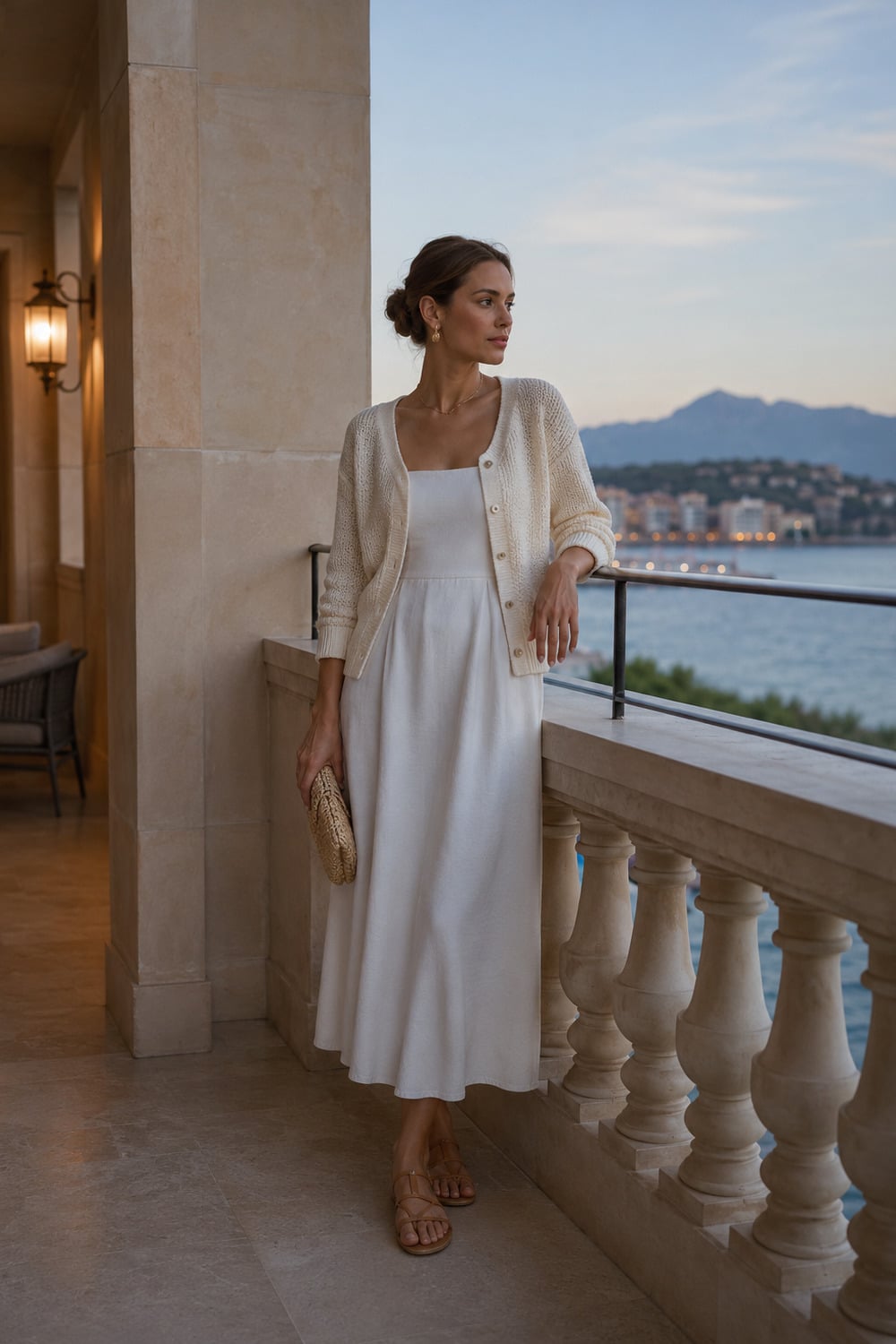
First decide whether the cardigan is part of the outfit or insurance against a cooler room. A cardigan worn as the main top can be fitted, buttoned and slightly shorter because its neckline and closure are meant to be seen. In lightweight cardigan style, a true outer layer needs enough room through the arm and shoulder to sit over a camisole or dress without pulling.
This distinction matters when the cardigan comes off. If it has been used as the only top, the whole outfit depends on it staying in place. For dinner outdoors or a day that moves between heat and air conditioning, a base layer that looks complete on its own gives you more freedom. The cardigan can then be buttoned, opened or removed without leaving the look unfinished.
Before buying or packing one, try the evening test: put on the intended base, fasten the middle buttons, lift both arms and sit down. Check whether the hem rides up, the placket gaps or the sleeves bunch. These small movements reveal more than a mirror pose and help separate a decorative knit from a layer you will actually wear.
Hem Length Changes the Whole Silhouette
A cardigan ending near the natural waist keeps the length of a slip dress or full skirt visible. That is useful when the lower half already has movement. A cardigan reaching the upper hip gives straight trousers and column dresses a calmer line, while a very long style can overwhelm light summer fabrics unless the outfit underneath is narrow and simple.
The same proportion rule helps a dress move through several settings. In a beach-to-city dress style outfit, a shorter cardigan can cover the shoulders without hiding the dress shape, while a relaxed hip-length knit suits a straighter dress worn with flat sandals. This is where lightweight cardigan style becomes a proportion decision: the better choice preserves the outfit line you liked before the layer was added.
Colour and Texture Create the Summer Mood
Summer cardigans look lighter when colour and surface do different jobs. A plain dress can take a fine rib, open stitch or narrow stripe. A printed or ruched dress usually needs a smoother knit so the two surfaces do not compete. Open weaves can feel airy and decorative, though they may catch on rings, bracelets or a textured bag; a close fine knit is easier around jewellery and woven accessories.
Tonal dressing is especially forgiving because the cardigan can add depth without dividing the body into hard blocks. The existing ideas in monochrome summer outfits translate well here: cream with oat, navy with washed blue, or black with charcoal. A slight shift in shade is enough when the fabric already provides contrast.
A Single Detail Gives the Outfit Personality
A soft knit paired with several delicate details can make the outfit feel overly sweet. Choose one point of character instead. A sculptural earring, patterned sandal, narrow silk scarf or bright bead necklace gives the eye somewhere to land while the cardigan stays quiet.
Scale matters as much as colour. A tiny cardigan with tiny buttons, a fine necklace and a miniature bag can look fussy when every element is equally small. Pairing the knit with one cleaner shape, such as a broad cuff, smooth clutch or substantial sandal, gives the outfit a firmer edge. A cream cardigan and linen trousers, for example, can carry colorful bead jewelry without needing another bright accent.
The closure can also be the detail. Fastening only the centre buttons creates a defined waist while leaving the neckline and hem relaxed. Leaving the cardigan fully open works better when the base layer has a clear neckline and the cardigan edges lie flat. If the placket twists or the buttons strain, styling tricks will not correct the fit.
Changing Air Calls for a Practical Layer
Near water, on a shaded terrace or in a heavily cooled interior, the useful cardigan is the one you can put on without rebuilding the outfit. For seaside dinner outfits, test the cardigan over the exact dress or top, then fold it once and place it in the bag you plan to carry. A bulky fold, snag-prone surface or pale knit that marks easily may be a poor match for that setting, even when it looks lovely at home.
A Cardigan That Works Beyond Dinner
A cardigan is more useful when it supports several base shapes instead of one perfect photograph. Try it with a narrow dress, a fuller skirt and the trousers you wear most often. If the hem, sleeve volume and neckline work with all three, the cardigan has a clearer place in the wardrobe and is less likely to become an occasion-only layer.
Wearing it as a top offers another use, but the fabric should feel comfortable against the skin and the button spacing should remain secure through normal movement. A soft camisole underneath can keep the look flexible while allowing the cardigan to be partly unbuttoned. This is often a better summer solution than relying on a close fit that becomes uncomfortable after a long evening.
The layer has passed the practical test when it can be carried without annoyance, added without hiding the outfit and removed without exposing an unfinished base. For lightweight cardigan style to feel repeatable, those conditions matter more than choosing by colour alone, and they make a neutral or softly coloured cardigan easier to wear across the season.
Final Thought
Lightweight cardigan style earns its place when the layer’s role is clear before you leave home. Match its hem to the outfit, keep the base complete, and choose a surface that suits the accessories and setting; the result will feel composed when the evening cools and uncomplicated when it does not.
References and Further Reading
- 25 Cardigan Outfit Ideas to Wear All Year Long
- I’m Ditching My Classic Cardigans for These 7 Trendier Summer Layering Pieces
- The Pretty 2-Piece Outfit Formula You’ll Find Chic Women Across Europe Wearing
- 11 Classic Summer Outfits Fashion People Come Back to Year After Year
Related Reading