
Editorial Note: This wellness article is for general editorial inspiration only. It is not medical advice, mental health treatment, diagnosis, fitness prescription, nutrition plan, or professional care. Adapt every idea to your body, health, circumstances, and qualified guidance when needed.
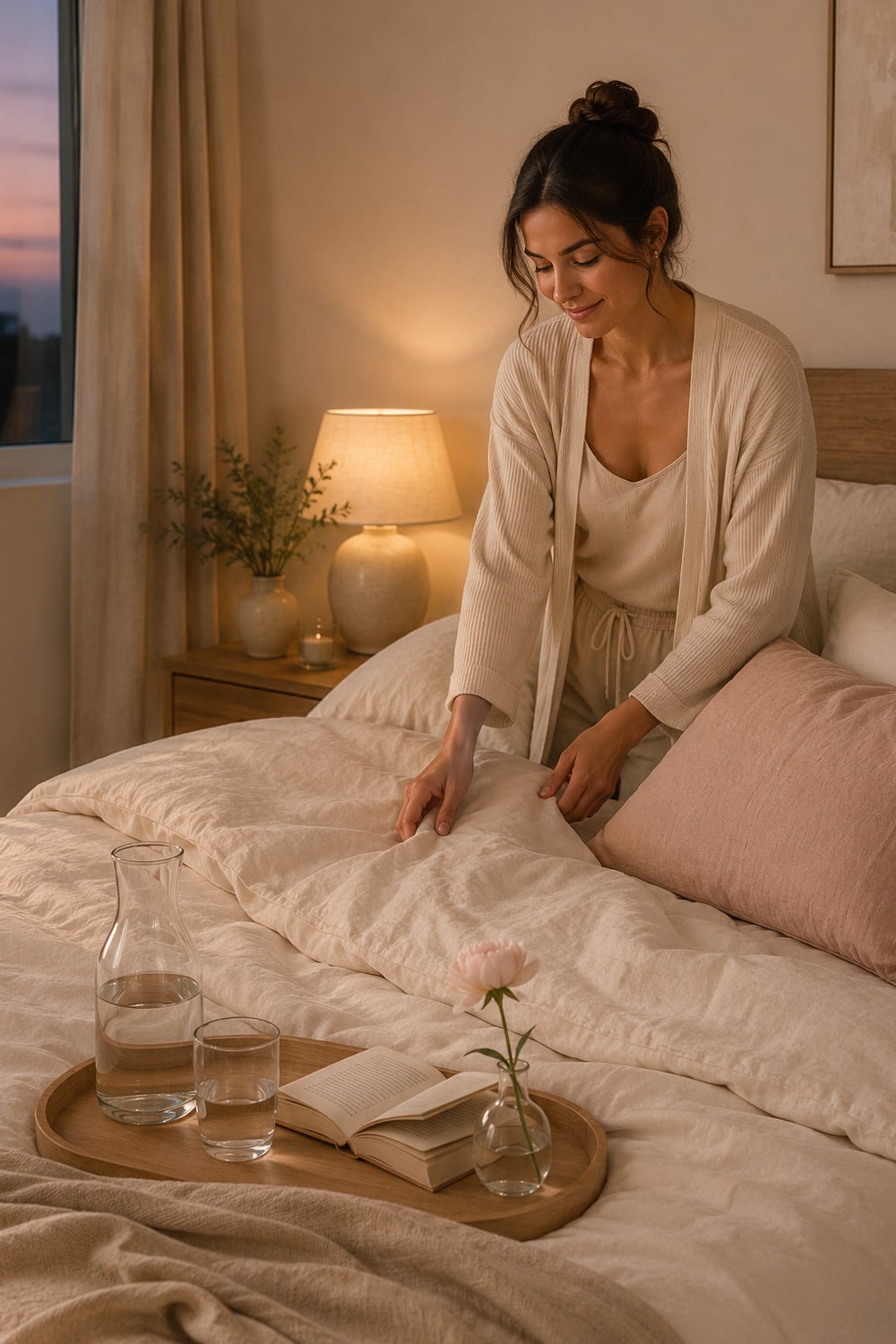
Sleep sanctuary ideas for women begin with a calmer environment rather than a perfect bedroom or a completely new routine. They shape the room around clearer cues: the day is closing, the screen noise can wait, and rest is allowed to feel simple.
A sleep sanctuary can be a full bedroom, a quiet corner, a bedside tray, or a few repeated evening cues. Comfort, softness, order, and a gentler transition from daytime demand into nighttime recovery matter more than luxury for its own sake.
Key Takeaway: A supportive sleep sanctuary uses low light, breathable comfort, fewer screens, softer textures, and a repeatable evening rhythm to help bedtime feel less rushed.
Why Sleep Sanctuary Ideas for Women Feel So Relevant Now
Modern wellness has started moving away from constant optimization and toward simpler environmental cues. The Global Wellness Institute has described a shift in sleep culture from luxury sleep experiences toward simplicity, environments, circadian alignment, and more conscious rest habits.
That shift gives sleep sanctuary ideas for women a useful place in the WorldsLadies wellness direction. Instead of tracking every minute or turning bedtime into another performance, the focus moves toward a space that feels more supportive after visually crowded, emotionally full, screen-heavy days.
1. Lower the Light Before the Room Feels Dark
Soft light is one of the strongest mood setters in a bedroom. Instead of waiting until the moment you lie down, begin dimming the space earlier. Use a table lamp, shaded light, warm bulb, or indirect light source rather than a bright overhead fixture.
Sleep Foundation’s bedroom environment guidance recommends keeping light levels low close to bedtime and avoiding screen devices in the bedroom when possible. This does not need to feel strict. It can be as simple as choosing one small lamp and letting the room become quieter by degrees.
2. Make the Bed Feel Breathable, Not Overdecorated
A sanctuary bed should feel inviting, not complicated. Choose breathable sheets, a comfortable pillow arrangement, and a blanket weight that matches the season. Too many decorative cushions can make bedtime feel like another task, especially when you are already tired.
For summer or warm rooms, think linen, cotton, lighter layers, and air movement. For cooler nights, add warmth gradually. A more elegant bedroom often comes from editing: fewer objects, better textures, and a bed that feels easy to enter.
3. Create a Phone Landing Place Away From the Pillow
The phone does not have to disappear from your life, but it should not be the last object your nervous system meets before sleep. A small charging station outside the bed zone can create a gentle boundary without drama.
This pairs naturally with a digital sunset routine for women. You might set a screen curfew, move your phone to a dresser, or place a book, lip balm, and water beside the bed instead. The point is to make the restful choice visible and easy.
4. Edit Visual Clutter From the Bedside Area
A crowded nightstand can keep the mind half-awake. Old receipts, unfinished books, hair ties, product bottles, and random cables all send small signals of unfinished business. Before bed, remove what does not belong to rest.
Try a three-item rule: one soft light, one practical object, and one calming detail. A carafe of water, hand cream, a small dish for jewelry, or a single flower can feel more peaceful than a full surface. A restful nightstand can feel cared for while staying easy to use.
5. Add a Short Evening Reset Ritual
A sanctuary is not only visual. It is also behavioral. Give yourself a five-minute reset that repeats most evenings: close the curtains, fold the throw, set tomorrow’s clothing, wash your face, lower the lamp, and let the room feel finished.
CDC workplace sleep guidance suggests preparing for sleep with a relaxing routine before bedtime and avoiding screens or stimulating content as the body transitions toward rest. For a gentler lifestyle rhythm, connect this reset with micro-rest rituals for women so the evening becomes smaller, not more demanding.
6. Use Scent and Sound With Restraint
Scent can make a bedroom feel intimate and calm, but it should never feel overpowering. A clean pillow mist, a small sachet, or freshly washed sheets may be enough. If fragrance bothers you, skip it completely and focus on air, fabric, and quiet.
Sound is similar. Some women prefer silence, while others like a fan, soft rain audio, or gentle music. Consistency matters more than novelty; familiar bedroom cues can make comfort easier to recognize.
7. Let Morning Support the Sanctuary Too
A better bedroom evening begins with how the room greets you in the morning. Open the curtains, air the space if possible, smooth the bed, and remove anything that belongs to last night’s rush. This makes the room easier to return to later.
If you are already building a morning light ritual for women, use the same window moment to reset the bedroom. Morning light, a made bed, and one minute of order can make the night routine feel less like repair work.
A Gentle Sleep Sanctuary Checklist
A Simple Starting Version
- Lower the light. Use one small lamp, shaded light, warm bulb, or indirect light source before bed.
- Edit the nightstand. Keep only what supports rest, comfort, or a simple evening habit.
- Move the phone away from the pillow. Create a visible resting place for the device outside the bed zone.
- Choose breathable bedding. Let fabric, pillow comfort, and blanket weight match the season.
- Repeat one evening cue. Close curtains, fold a throw, set tomorrow’s clothing, wash your face, or lower the lamp.
On tense evenings, add slow body care instead of more scrolling. A few minutes of somatic stretching for women can help the transition feel physical, not just decorative. With both the room and body receiving the same message — less pressure, more ease — the evening can begin to soften.
A Simple Sleep Sanctuary Ideas Map
Think of the sanctuary through five quiet layers. Light can dim earlier through a table lamp, warm bulb, or indirect glow, so bedtime does not feel abrupt. Bedding can stay breathable and season-aware, with pillows and blankets chosen for comfort rather than display.
The phone boundary belongs outside the pillow zone, where it is still accessible but no longer the final emotional cue of the night. The nightstand can hold one light, one practical object, and one calming detail, leaving less visual clutter for the mind to process.
The evening reset brings the whole room together. Closing curtains, folding a throw, setting out clothing, washing your face, or lowering the lamp turns rest into a repeatable rhythm rather than a rushed collapse.
When Rest Needs More Than a Pretty Room
A peaceful bedroom can support healthier habits, but it cannot solve every sleep concern. If insomnia, anxiety, pain, nightmares, breathing issues, panic, or ongoing exhaustion affects daily life, consider speaking with a qualified professional.
It is also wise to stay realistic. Some nights will still be interrupted by work, children, caregiving, travel, noise, or stress. A sanctuary cannot guarantee sleep. It gives you a kinder structure to return to when life feels overstimulating.
FAQ
Do Sleep Sanctuary Ideas for Women Require a Large Bedroom?
No. Sleep sanctuary ideas for women can fit a small room, shared room, rental, or apartment. Focus first on light, clutter, fabric texture, and one calming routine rather than expensive furniture.
What Should I Remove From My Bedside Table?
Remove anything that makes the nightstand feel like a task station: work papers, excess products, old cups, random cables, and visual clutter. Keep only what supports rest, comfort, or a simple evening habit.
Is a Sleep Sanctuary the Same as Sleep Hygiene?
Not exactly. Sleep hygiene usually refers to habits and environmental choices that support sleep. A sleep sanctuary is the editorial, lifestyle version: a softer bedroom atmosphere that encourages calmer routines without turning rest into perfectionism.
Final Thought
Sleep sanctuary ideas for women give the evening a softer landing place. With calmer light, cleaner surfaces, breathable comfort, and one repeatable cue, bedtime can feel less like collapse and more like a graceful closing ritual.
References and Further Reading
- Global Wellness Institute: Sleep Initiative Trends for 2026
- Sleep Foundation: Sleep Hygiene
- Sleep Foundation: Bedroom Environment
- CDC NIOSH: Preparing for Sleep With a Relaxing Routine
- American Academy of Sleep Medicine: Screen Time and Sleep
Related Reading